Proxy providers die more often than providers in almost any other infrastructure business, and they die in distinctive ways: seized by law enforcement, erased by a platform, sued out of existence, or simply switched off between one billing cycle and the next. Then something stranger happens: the record of the death disappears too. Announcement posts vanish, news articles go offline, and within two years a dead provider's name mostly returns SEO pages pretending it is alive.
We document the deaths and keep the documentation up. This page is the full map of that record, organized by how each provider went.
Why the record matters
While researching these pieces we found dead vendors marked alive in commercial databases, seized services with prices still listed as purchasable, and shutdown reporting that had itself been taken offline with no archive. A market this good at forgetting is a market where the buyer has to bring the memory.
Seized by law enforcement
The heaviest category, because these networks were built on other people's devices. RSocks was seized in June 2022, a botnet of millions of hacked routers and IoT devices sold as a proxy pool. 911 S5 followed in May 2024, dismantled with its operator arrested after building a 19-million-IP network out of fake free VPN apps, and its story did not end there, because its infrastructure fed successor brands. LuxSocks went the same direction, and its page reconstructs what the takedown left behind.
The most recent entry is the largest: NetNut's seizure in July 2026, FBI and IRS Criminal Investigation taking the domains of a NASDAQ-listed company's proxy network after threat researchers tied its supply to a botnet of roughly two million compromised consumer devices. A seized provider is not a lapsed one: its prices stop being prices, because nobody can go and pay them, which is exactly how our competitor database now records it.
Erased in platform takedowns
A newer death, where no police appear and the provider still ceases to exist. In January 2026, Google erased thirteen proxy brands in one action against a cluster of related operations, and our follow-up went inside the IPIDEA cluster to map how many storefronts shared one network underneath. Within months of that action, most of those thirteen domains stopped resolving at all. When one takedown kills thirteen brands, the real count of independent providers in this market is smaller than the shelf suggests, which is worth remembering every time a comparison lists twenty names.
Sued out of existence
GeoSurf is the cleanest case of legal death: a 2019 patent suit from Bright Data, a settlement it could not survive, and a December 2023 shutdown in which its customers were handed to the company that sued it. It remains the clearest demonstration that in this industry, litigation is a competitive weapon with body-count potential.
The quiet exits
Most providers do not get a seizure banner or a lawsuit. They stop answering, then stop resolving. The what-happened-to series reconstructs each one from the traces left behind: AWMProxy, BuyProxies, HighProxies, LimeProxies, ProxyBonanza, StormProxies, and VIP72, the fifteen-year-old criminal-market fixture whose exit was as quiet as its operation was not.
The free side of the market has its own, faster-spinning cemetery, documented in dead free proxy sites and the free proxy list graveyard.
Rebrands and disguises
Between alive and dead sits renamed. Shifter was Microleaves documents a clean example, and the wider pattern piece, does your proxy provider resell someone else's network, maps the chains: Luminati into Bright Data, Blazing SEO into Rayobyte, Smartproxy into Decodo, and the murkier sequences that followed the 911 S5 takedown. Some disguises are heavier than a rename. Thordata's real founding story checks a vendor's claimed history against registries and trademark filings, one software behind many mobile proxy brands shows how a single stack wears many storefronts, and the best Chinese proxy lists are wrong demonstrates how national labels dissolve the moment you trace actual ownership.
Who owns the survivors
The living half of the map matters as much as the dead half. Who owns your proxy provider traces the portfolios behind the famous names, including the Lithuanian cluster where Oxylabs, Webshare and Decodo share a family tree. And the DePIN proxy tokens reality check examines the newest arrivals, token-funded bandwidth networks, against the unglamorous economics of the companies that actually win the supply side.
Those economics have a number attached now: our supply-chain study works out what a residential gigabyte costs to source, the figure this industry structurally avoids printing, and it reframes every price and every death on this page.
The survivors, measured
Documenting deaths earns the right to judge the living, so the review series tests the majors hands-on: Bright Data, Oxylabs, Decodo, IPRoyal, SOAX, Webshare and PIA Proxy. The measured pricing record sits in the residential price study, advertised rates against what an entry customer actually pays, and where we compete directly we publish the head-to-heads under our own name: Geonode, IPBurger, Massive, Proxy-Seller and Shifter among them.
Reading a graveyard before you buy
- 1
Check liveness like a researcher, not a status code
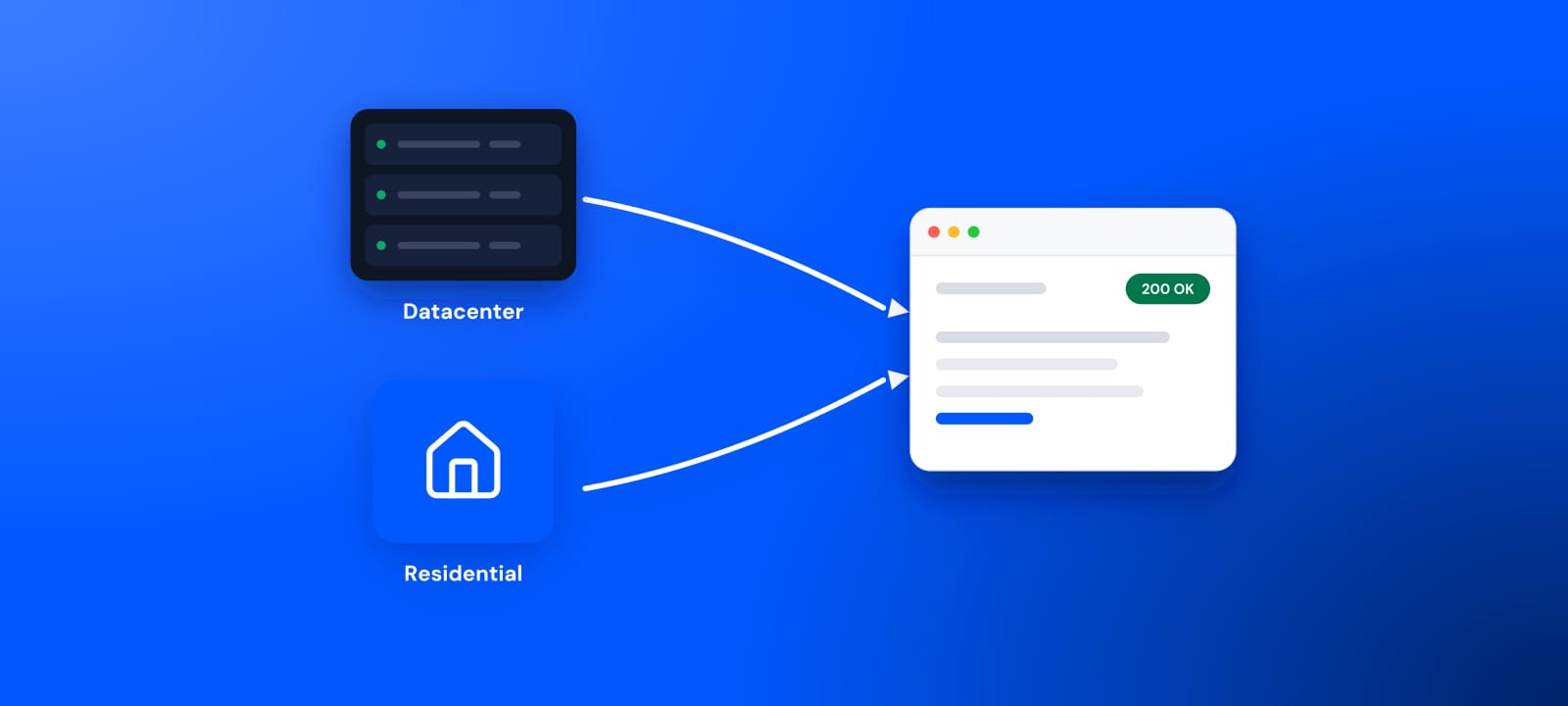
Dead vendors serve HTTP 200 through parked domains and SEO squatters. Look at the nameservers, the page title, and whether a checkout actually exists, the same checks that separate our record above from the databases that still mark seized services alive.
- 2
Trace the name backwards
Search the provider's name plus rebrand, plus the founder's name. A clean history survives that search in one piece. The rebrand pieces above show what the other outcome looks like.
- 3
Test the sourcing story against arithmetic
Residential supply costs real money, and the supply-chain study puts a floor under it. A price meaningfully below that floor is answering a question you should be asking.
- 4
Keep balances small and portable
Prepaid credit died with every provider on this page. Pay as you go, export your configs, and treat any balance as money already spent.
The full vetting routine is in how to vet a proxy provider, and the setup map covers everything that comes after a good choice. The graveyard grows a few names a year. The point of keeping it is that yours never has to be a customer of the next one.
Check liveness like a researcher
nameservers, the page title, a real checkout, not just HTTP 200
Trace the name backwards
the name plus rebrand, plus the founder's name
Test the sourcing story against arithmetic
a price far below the supply floor is a question
Keep balances small and portable
prepaid credit died with every provider on this page