Mobile Proxies
Per GBStarting at
$1.50/ GB
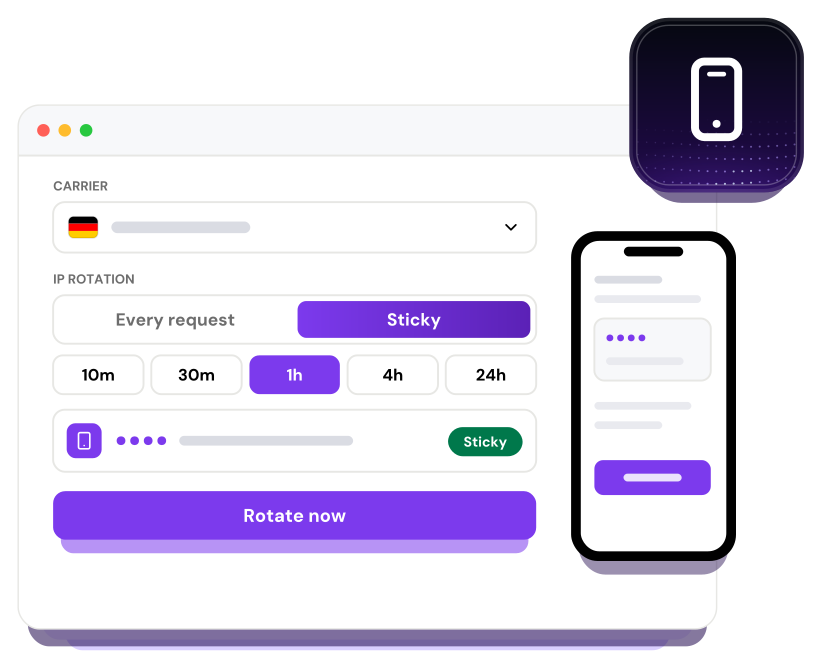
- Real 4G and 5G carrier IPs
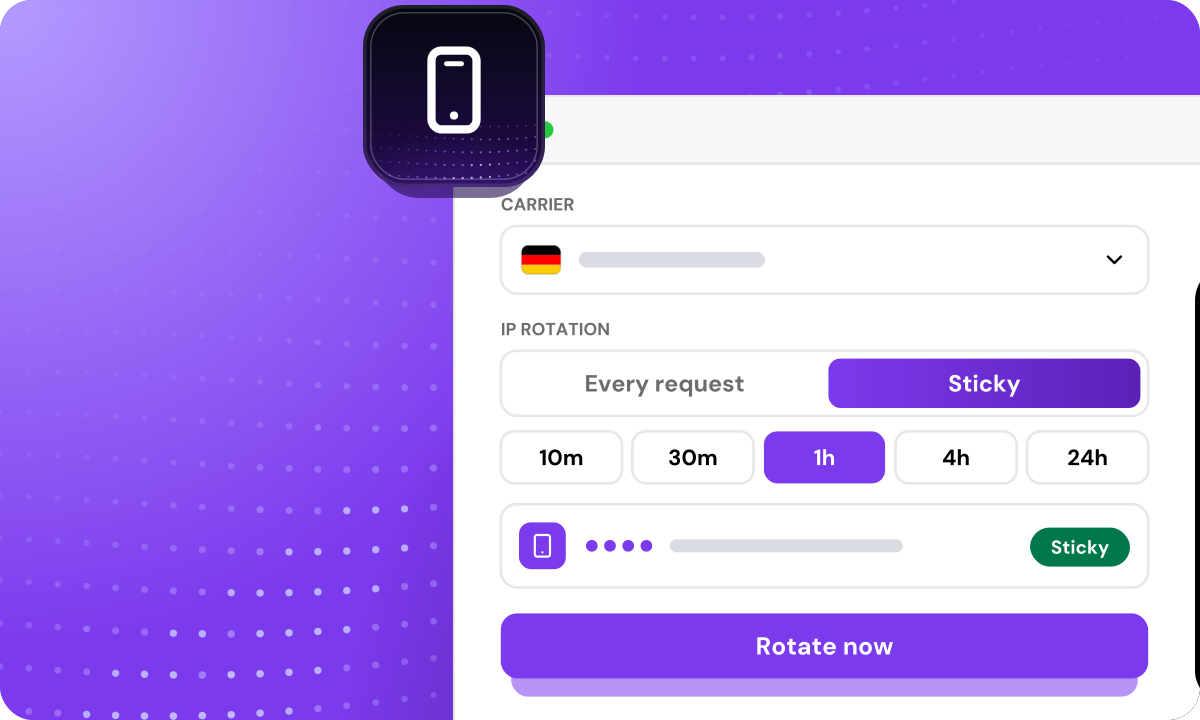
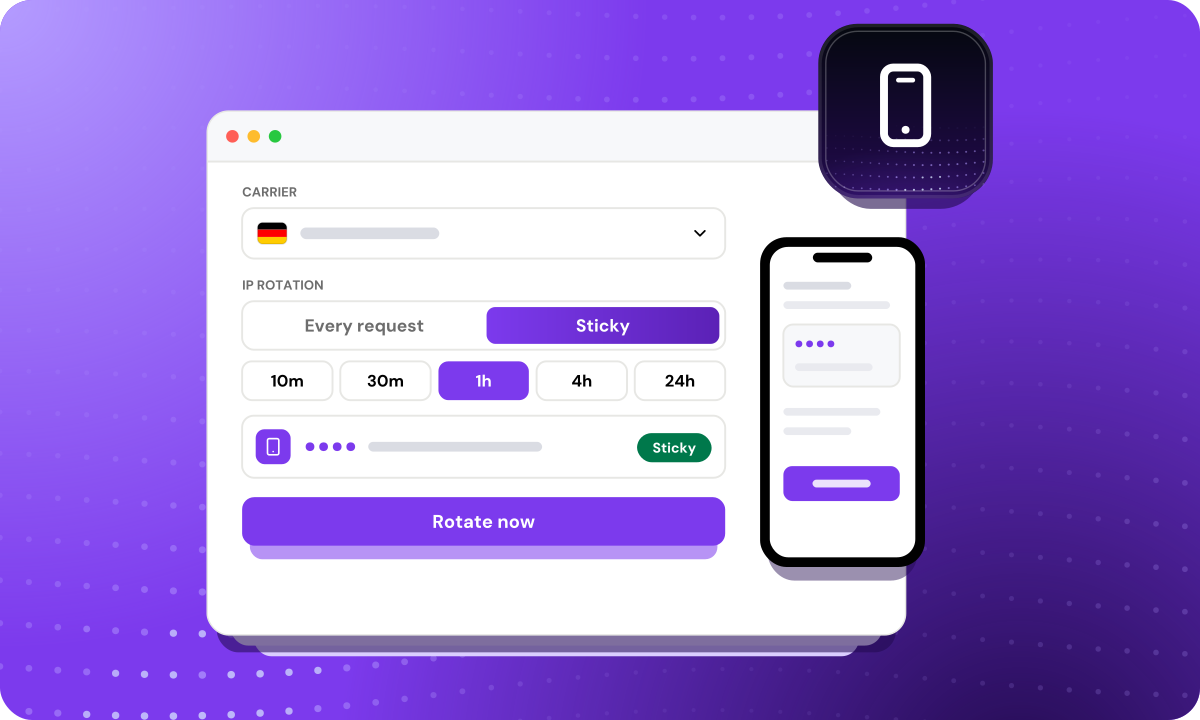
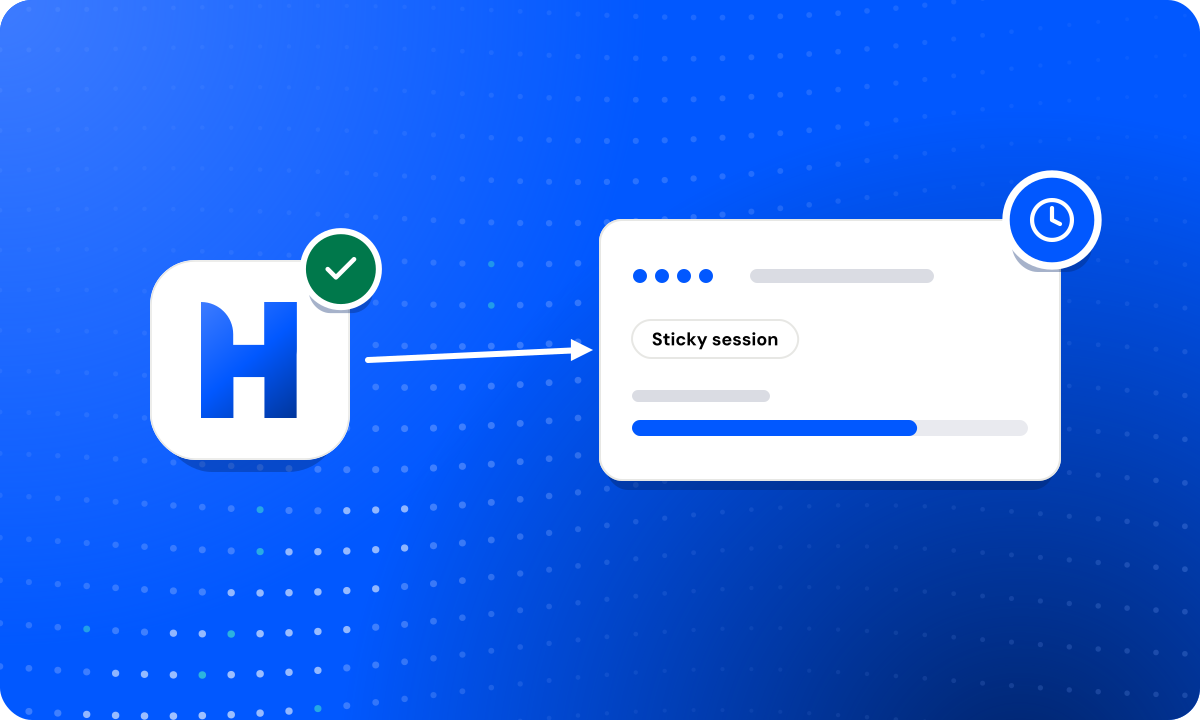
- Rotating, or sticky up to 7 days
- Country targeting
- HTTP, HTTPS and SOCKS5
- Billed per GB, pay as you go, 1 GB minimum
Real 4G and 5G carrier IPs, the highest trust tier there is. Rotating or sticky, country targeting, billed by the gigabyte.
The products
Starting at
Mobile proxies
IP type
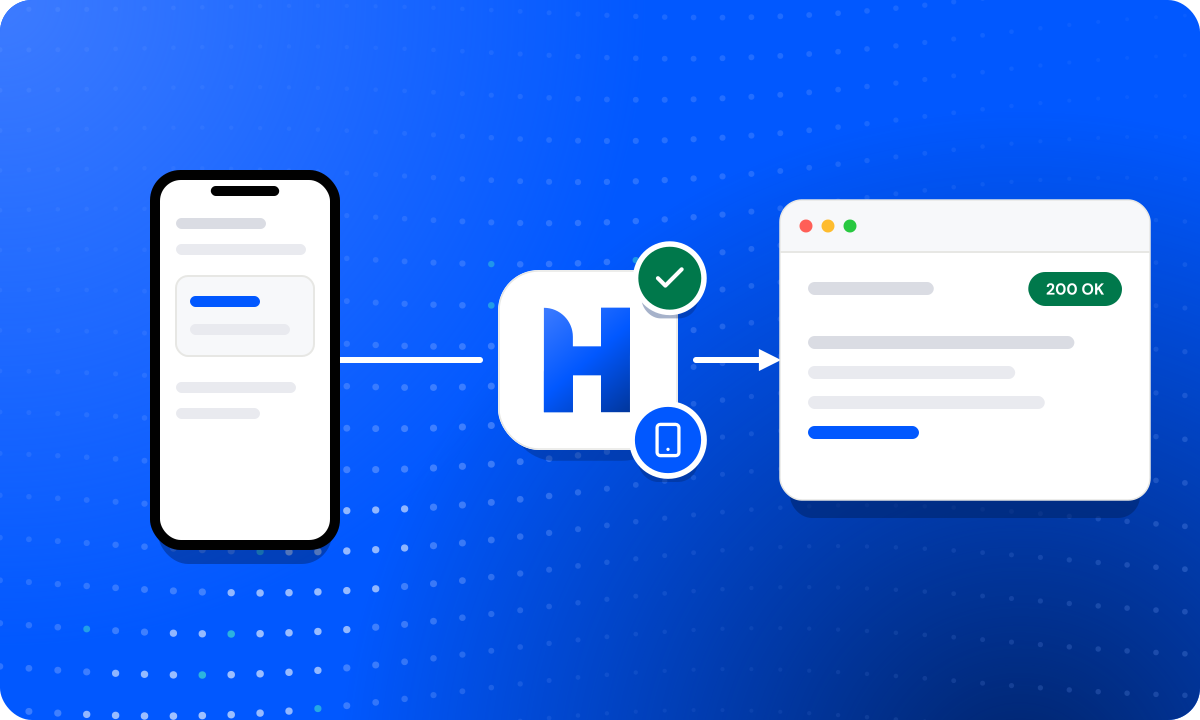
Real 4G and 5G mobile carrier IPs
Trust
Highest tier, carrier-grade NAT
Rotation
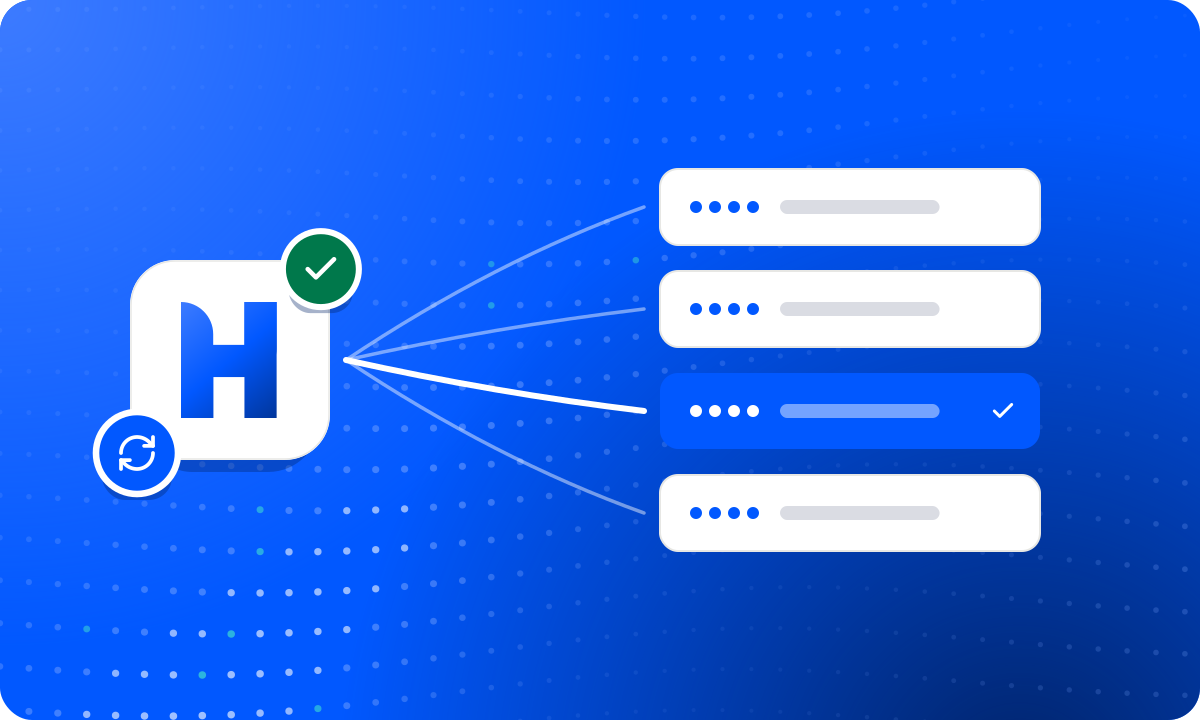
Rotating, or sticky up to 7 days
Targeting
Country
Protocols
HTTP, HTTPS, SOCKS5
Sessions
Rotating or sticky
Billing
Per GB, pay as you go
Minimum
1 GB
Works with your stack, and with your assistant.
A REST API for buying and generating, the whole documentation as markdown for Claude, Cursor and ChatGPT, and the free tools as a CLI and as an MCP server at mcp.hproxy.com/mcp.
Comparison
Trust level
IP source
Rotation
Speed
Billing
Best for
| What matters | Mobile | Residential | Datacenter |
|---|---|---|---|
| Trust level | Highest, carrier IPs | Residential-grade | Datacenter-grade |
| IP source | 4G and 5G carriers | Real home devices | Cloud servers |
| Rotation | Rotating or sticky | Rotating or sticky | Static or rotating |
| Speed | Fast mobile network | Varies by device | Fastest |
| Billing | Per GB | Per GB | Per GB or per IP |
| Best for | Mobile-first testing & research | Wide, changing IPs | Raw volume |
If something goes wrong
You report the IP
One button in your dashboard, on the proxy itself: it does not work, or it is in the wrong country.
We test it live, not from a status page
The check runs through the proxy from our own network with your credentials: HTTP CONNECT first, SOCKS5 second, twelve seconds each.
If it answers, we tell you what to fix
You get the result of a test that ran seconds ago and the port to use.
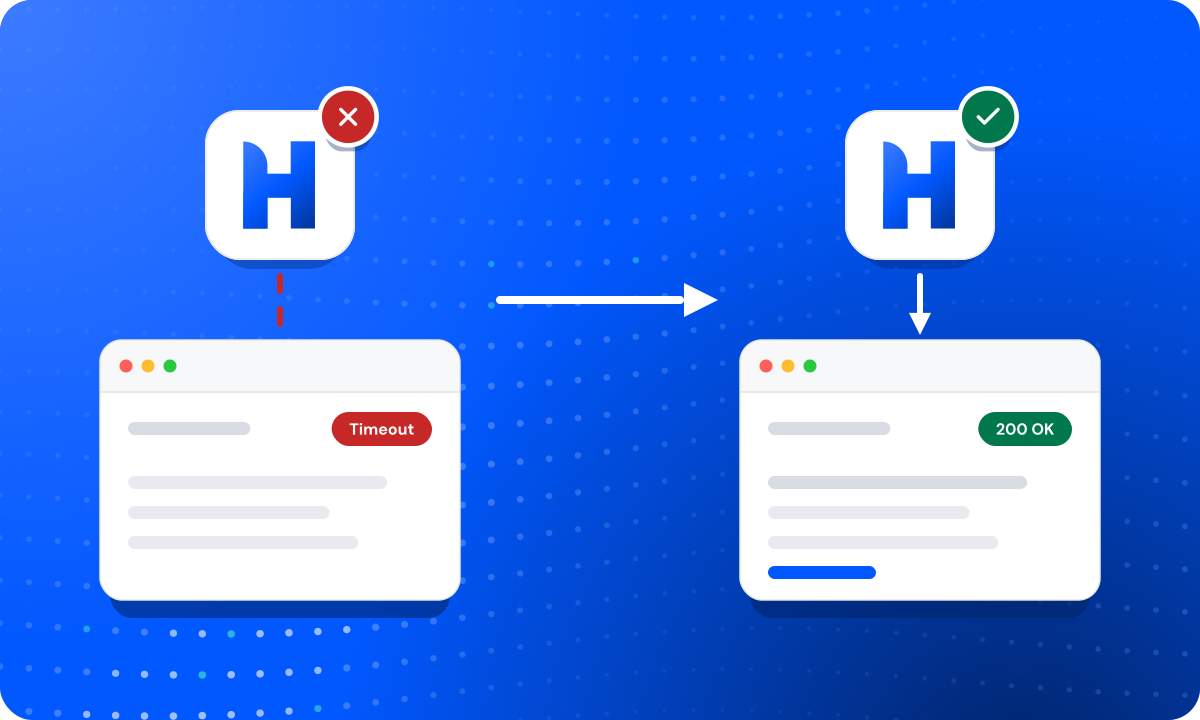
If it fails, it is replaced automatically
A verified failure, or an IP outside the country you bought, is swapped at the supplier automatically and the new address appears in your dashboard.
You can also issue a new username and password for any single IP yourself, without waiting for support. The new login works immediately. The old one keeps authenticating at the gateway for about three minutes after it is revoked, which matters if you are rotating because a credential leaked.
Why HProxy
Several networks, one contract: yours
One network's bad day is not your project's. A second source is always under contract, and switching is a plan, not a migration.
Start with $3, no sales call
Top up, generate, go. Nobody books a demo, and the balance never expires.
Real people, real names
Six people in Denkendorf, Germany run the network, backend to design. Their names and signatures are below, not a support alias.
Billal Ainaoui
Founder

Richard Rivera
Head of Operations

Sammilan Vilvaranjan
Full Stack Developer

We accept








“Hproxy has been great so far! The proxies are super fast and work without any detection issues, which is a big plus.”
Abdul Basit
Dec 2024
 Verified
“They just keep delivering. The proxies are fast, stable and easy to set up, and I never have to worry about downtime or speed drops. The dashboard is super clean and support is always quick to help.”
freshstylez
Oct 2025
Verified“Hproxy has great anonymity. Comparing HProxy to other providers, it definitely wins in terms of speed and price.”
Lenny
Feb 2024
Verified“I was skeptical at first, but it turned out worth every cent. The service is affordable and reliable too. Kudos to the devs behind this.”
Dezzy
Jul 2025
VerifiedAll products
Real-device IPs
from$0.44/GB
Raw speed
from$0.10/IP
Static and trusted
from$0.65/GB
Carrier exits
from$1.50/GB
One request, structured data
from$1.49/1k
For companies
Contact us for a custom plan: high volume, your own pool, dedicated infrastructure, annual invoicing, or a price that does not fit the public tiers. Tell us the workload and a person answers.
Use cases

FAQ
Everything you need before your first gigabyte. Still stuck? Our team replies the same day.
A mobile proxy routes your traffic through a real 4G or 5G mobile connection, so websites see an ordinary phone on a carrier network instead of a server. It is the closest thing there is to browsing from a real handset.
Carrier-grade NAT places thousands of real subscribers behind each IP, so a mobile address carries the reputation of a live mobile network. That is what makes mobile the most accurate tier for mobile-first work: the pages, prices and ads you load through it match what a genuine mobile user in that region actually sees.
Both are real mobile carrier networks and both carry the same high trust. 5G adds more speed and lower latency where the carrier supports it, while 4G LTE has the widest coverage. Either way you get genuine carrier IPs.
Both. Rotate on every request for a fresh IP each time, or hold a sticky IP for up to seven days when you need the same address for a full session.
Yes. Choose the country your traffic comes from, and every proxy you generate uses a carrier IP in that country. The per-GB mobile product targets by country; picking a specific carrier is not offered on it.
Per gigabyte. You buy a balance of GB and spend it across as many proxies as you generate, with no monthly modem fee. You see exactly what a gigabyte costs before you buy, so there are no metering surprises, and you only pay for the traffic you actually move.
Reach for mobile when you need the most accurate view of a mobile network: verifying how your own mobile ads and pages render across carriers and regions, checking mobile-only pricing or content, and QA-testing apps and sites from a real carrier connection.
Common uses include mobile ad verification (confirming your own ads render correctly across carriers and regions), market and price research on mobile-first sites, managing your brand's own social and marketplace accounts, QA-testing apps and websites from real mobile networks, and mobile SEO rank tracking. Anywhere the goal is to see the mobile web exactly as a real user does.
Generate as many as you like. The per-GB product does not charge per proxy, so you can create as many endpoints as your workflow needs and pay only for the traffic they move. Size your GB balance to how much data you expect to push, not to a proxy count.
For mobile-first work, yes. Mobile is the most trusted tier because carrier IPs are the hardest to obtain and represent genuine mobile subscribers, and per-GB billing means you only pay for the traffic you move instead of a fixed monthly line. If your target works fine with residential or datacenter IPs, those cost less; choose mobile when you specifically need real mobile-network accuracy.
Why mobile addresses are trusted, and what you trade for it.
Mobile proxy
A proxy that routes traffic through an IP address assigned by a mobile carrier to a phone or cellular modem, carrying the strongest trust of any proxy type.
CGNAT
Carrier-grade NAT, the technique of putting many subscribers behind one shared public IP address to conserve scarce IPv4 space.
IP reputation
The accumulated trust score a site or third-party service assigns to an IP address based on its network, history and behaviour.
Latency
The delay between sending a request through a proxy and getting a response, driven largely by physical distance to the exit.
Browse the full glossary for every term across proxies, networking and scraping.
Reselling proxies?
Mobile is on the partner rate card, per gigabyte. Dedicated mobile addresses sell through the same account at the public price.
Or talk to us at support@hproxy.com