Residential Premium
FlagshipStarting at
$1.00/ GB
Real Canadian household IPs, aimed down to a state, a city or a single ISP. Sticky sessions up to 24 hours, SOCKS5 with UDP, and a block list for what you want to avoid.
 Canada Proxies
Real Canadian IP addresses with targeting down to the city, from a network of millions across 150+ countries that we verify around the clock. No subscription, pay as you go, and a balance that never expires. From $0.44/GB.
Just need a few free ones? Browse the live free Canadian list.
Dedicated Canadian IPs
Prices come from the live catalog. The dedicated IP cards are confirmed against it before they render, and residential targets Canada per GB when you generate.
Starting at
Real Canadian household IPs, aimed down to a state, a city or a single ISP. Sticky sessions up to 24 hours, SOCKS5 with UDP, and a block list for what you want to avoid.
Starting at
The same Canadian household network at the lowest per-GB rate, targeted by country rather than by city. Rotating or sticky, pay per GB, balance never expires.
Starting at
Dedicated Canadian IPs registered to consumer ISPs, held for weeks or months. The stability of a server with a residential footprint.
Starting at
Dedicated Canadian IPv4 and IPv6 addresses for volume work where raw speed matters more than a residential footprint.
How you use them
Rotating Canadian proxies
A line generated with country CA exits from a different Canadian address on every request. Ask for count: 10 and each worker gets its own line.
How it worksSticky Canadian proxies
Add stickyMinutes and the line holds one Canadian address for 3 to 1,440 minutes on Premium, or for as long as you keep using it on Lite.
How it worksSOCKS5 Canadian proxies
Every line answers SOCKS5 as well as HTTP, with the same credentials; Premium adds a UDP relay with udp: true.
How it worksResidential Premium
Lite reaches Canada by country and rotates. Premium turns every one of these on, from the same balance.
ISP targeting
13,800+ networks
State or city
26,000+ cities
Sticky sessions to 24 hours
3 min to 24 h
Device OS
4 platforms
Exclusions
Country, state, city, network
IP whitelist
150 IPs per plan
SOCKS5 with UDP
HTTP, HTTPS, SOCKS5, UDP
Per-plan statistics
30-day window
Coverage
17,126 listed places, cities down to villages, in a country of 37 million people, 13 provinces, the capital is Ottawa. Every one of them is a page and a targeting request.
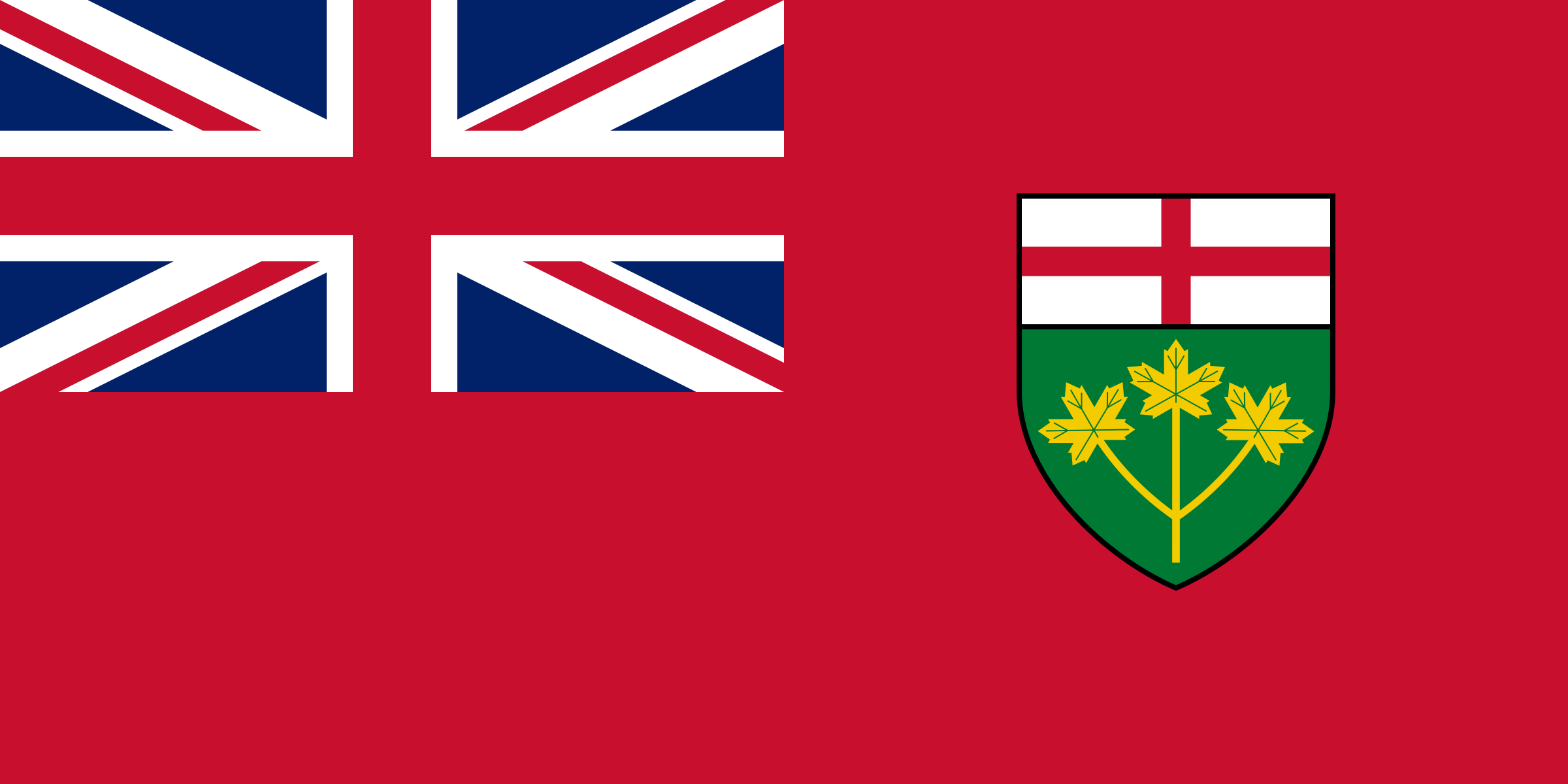 Ontario
 Quebec
 British Columbia
 Alberta
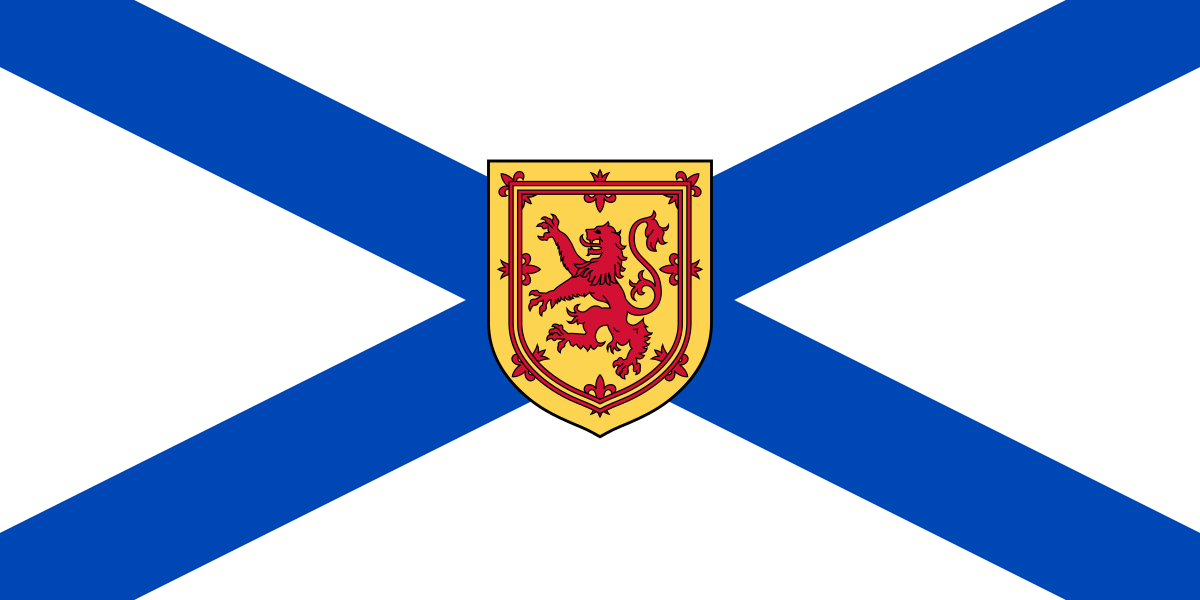 Nova ScotiaManitoba
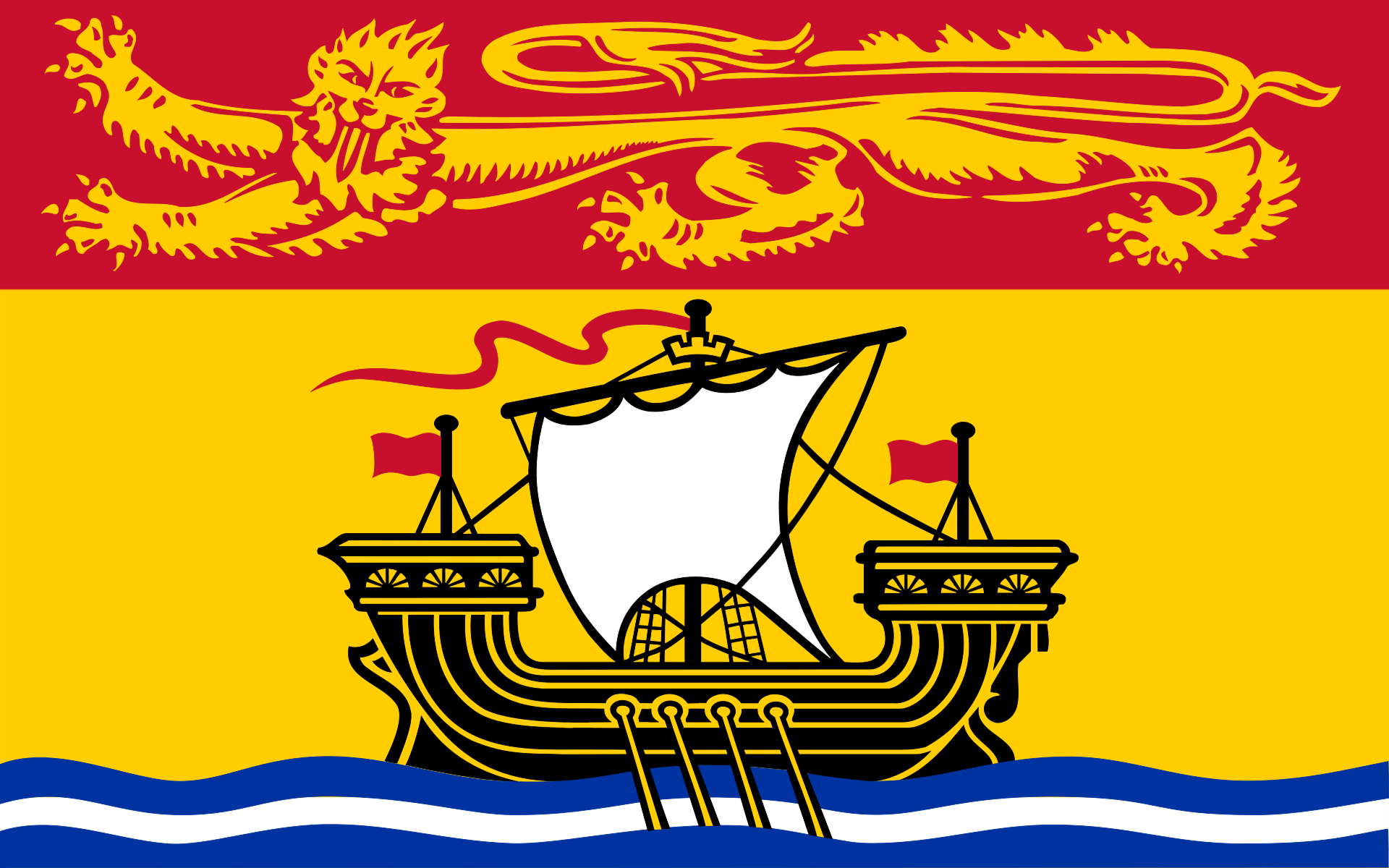 New Brunswick
 Saskatchewan
 Newfoundland and Labrador
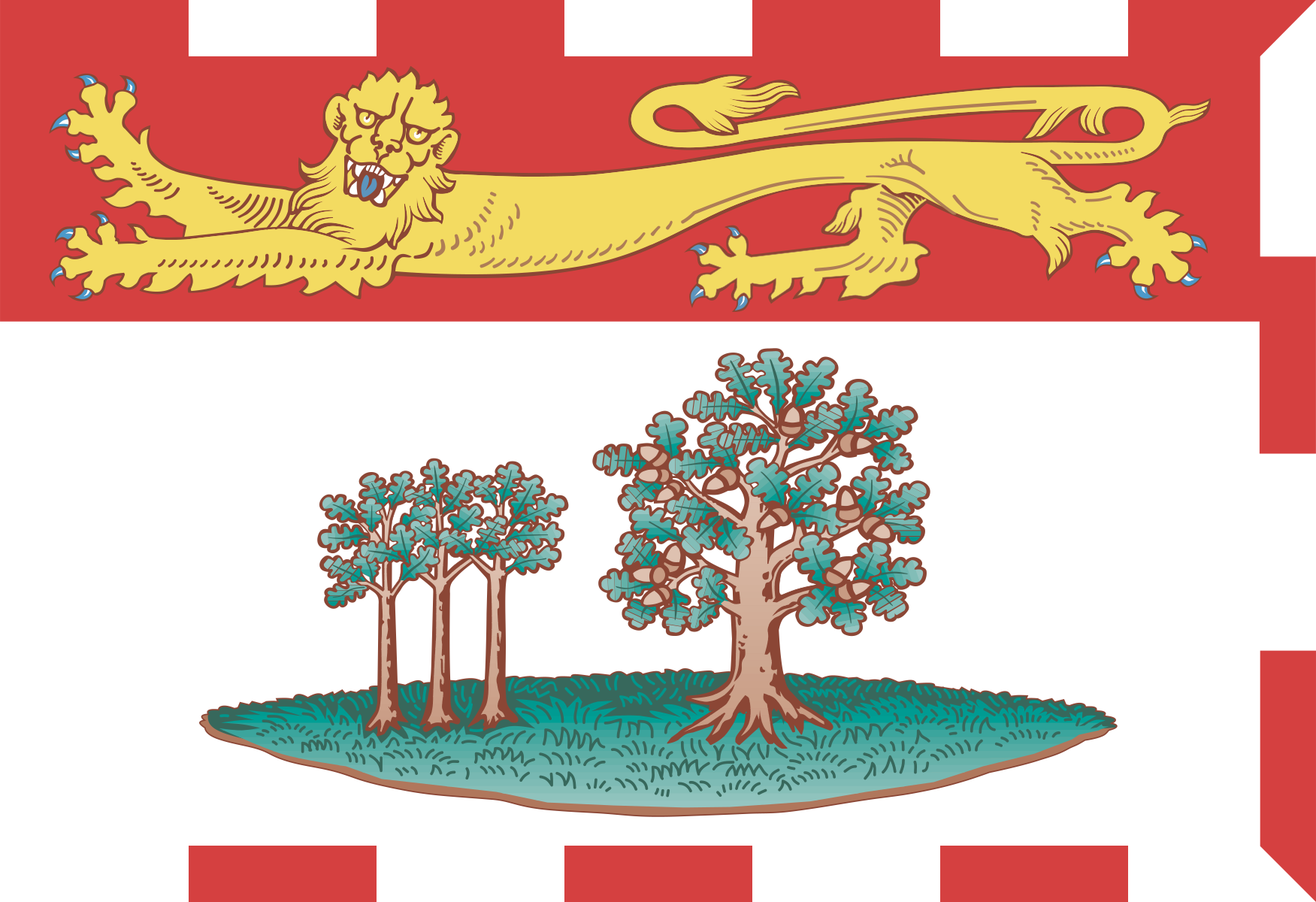 Prince Edward Island
 Northwest Territories
 YukonNunavut
Working around Canada instead? United States borders it.
The 12 biggest listed cities marked.
Canada on the world map.
The network decides, not the flag
Canada has a small number of very large carriers split along an old east-west telephone-monopoly line, Bell and its Atlantic arm in the east, Telus in the west, Rogers on cable nationally, with Videotron and Freedom as the fourth force. That legacy boundary still shows up cleanly in the routing data, and it produces a fact worth pausing on: on IPv6, the two biggest incumbents sit roughly nine to one apart. One of them serves almost all customers over IPv6 while another barely offers it at all, in the same country, measured the same day. A "Canadian IPv6 proxy" as a national claim is close to meaningless, because whether IPv6 even exists depends on which network the address belongs to.
That is the argument for reading the network picture on our free list rather than a flag and a count. Which Canadian networks the pool actually sits on decides IPv6, and it shapes how an address is judged. A number beside a maple leaf cannot tell you that; the per-network view can.
Necessary, not sufficient
Here is something most providers will not tell you. Plenty of major Canadian sites sit behind bot-management layers that decide for themselves whether to serve you, and they do it independently of where your IP says you are. Some return an outright block, others return a normal-looking success status with a block notice hidden in the body, which quietly poisons any tool that trusts the status code alone. A Canadian address is necessary to look Canadian; it is not sufficient to get clean data, and pretending otherwise just sets you up to fail.
There is a measurement lesson underneath that, and it is why our numbers work the way they do. You cannot gauge "Canada" by timing Canadian domain names, because most of them resolve to content-delivery edges in Europe or the US and answer in milliseconds without a packet ever reaching Canada. So we measure the actual proxy endpoints in the pool, not brand hostnames, and we do not print a single national latency figure that a trans-Atlantic hop would only distort.
Two languages, one market, real rules
Most Canadian-IP work is retail and search monitoring across amazon.ca, Canadian Tire, Best Buy and the grocers, and Canada adds a wrinkle nowhere else in this set has: it is genuinely bilingual, and the French surface is a separate one. Because Quebec law now requires businesses to offer an equivalent French version of their sites, a French Canadian result set is its own tracking target rather than a translation of the English one. Search underlines the point. The google.ca domain redirects to google.com like every Google country domain does, so the domain never selects the country; a Canada-resolving IP is what returns Canadian results, and an English-Canadian versus French-Canadian view can differ enough to be worth watching separately. The automated version runs a Canadian exit through our scraper APIs.
One myth worth retiring while we are here: Canada is no longer the world's most expensive mobile market. The regulator's own index shows Canadian mobile prices down sharply since 2021, after Freedom Mobile was handed to Videotron's owner as the price of the Rogers-Shaw merger. On the rules, PIPEDA is still the federal privacy law (the 2022 reform bill died in early 2025 and a fresh attempt is only at second reading), and it carries a specific provision against harvesting addresses by automated means or collecting data through unlawful access. Quebec layers its own stricter regime on top. We sell the Canadian footprint for legitimate work; our terms ask you to respect all of that, and anything personal or behind a login is a lawyer's question, not ours.
Trust
Same network, same team and same terms behind every page on this site, Canada included.
114 reviews on Trustpilot, 92% of them five-star. The badge links to the live profile, judge for yourself.
Live chat sits on every page, bottom right. Ask about Canada targeting before you pay and a person from the team that runs the network answers, whatever the hour.
Pay as you go, no subscription, and a balance that never expires. Not ready to spend? The free Canada list is public and measured around the clock.
FAQ
Our live free list shows the live count from our verification engine, together with the networks and cities it is drawn from. It re-checks every few minutes, so it is a reading of the current pool rather than a fixed marketing number.
Canada's big carriers are far apart on IPv6: one of the largest serves nearly all its customers over IPv6 while another barely offers it, in the same country. So IPv6 is a per-network fact, not a national one, and the network picture on our free list is what actually tells you whether a given Canadian address can do IPv6 at all.
Residential plans support city-level targeting inside Canada, so a session can exit in Toronto, Montreal, Vancouver or wherever a task needs, subject to what is live in that area at the time.
Three, each confirmed against the live catalog before it shows here: rotating residential, static ISP and datacenter. We do not currently sell a dedicated Canadian mobile product, so there is no mobile card rather than a promise we cannot keep.
It is necessary but not sufficient. Many large Canadian sites run bot-management layers that judge the request on their own terms regardless of your IP, and some return a normal success status with a block hidden in the body. A Canadian address makes you look Canadian; getting clean data past those defenses is a separate problem, and we would rather say so plainly.
PIPEDA is the federal privacy law and includes a provision against harvesting addresses by automated means or collecting data through unlawful access, and Quebec adds a stricter regime. Collecting genuinely public information is a different matter from either. This is context, not legal advice: anything personal or behind a login is a question for a lawyer.
Or talk to us at support@hproxy.com
