
Germany Proxies · Deutschland
Buy German proxies. Ready in minutes.
- Just need a few free ones? Browse the live free German list.
Dedicated German IPs
Five ways to hold a real German address
Every price below is live. The dedicated IP products are checked against what is in stock for Germany before this page shows them, and residential is aimed at Germany when you generate your proxies, billed per GB.
Residential PremiumFlagship
Real German household IPs, aimed down to a state, a city or a single ISP. Sticky sessions up to 24 hours, SOCKS5 with UDP, and a block list for what you want to avoid.
- A state, a city or an ISP
- Sticky up to 24 hours
- SOCKS5 with UDP
From
$1.00/ GB
Residential LiteLowest price
The same German household network at the lowest per-GB rate, targeted by country rather than by city. Rotating or sticky, pay per GB, balance never expires.
- Targeted by country
- Rotating or sticky
- Balance never expires
From
$0.44/ GB

Static ISP
Dedicated German IPs registered to consumer ISPs, held for weeks or months. The stability of a server with a residential footprint.
- Registered to consumer ISPs
- Yours for weeks or months
- Unlimited bandwidth
From
$2.50/ IP

Datacenter
Dedicated German IPv4 and IPv6 addresses for volume work where raw speed matters more than a residential footprint.
- Private IPs, only yours
- Unlimited bandwidth
- IPv4 and IPv6
From
$0.10/ IP
Mobile 4G/5G
Real 4G and 5G carrier IPs on genuine carrier networks, billed per GB, rotating or sticky. The highest-trust footprint there is, and the hardest to distinguish from a phone.
- Real 4G and 5G carriers
- Rotating or sticky
- HTTP, HTTPS and SOCKS5
From
$1.50/ GB
Targeting in Germany
German proxies by city, region and network
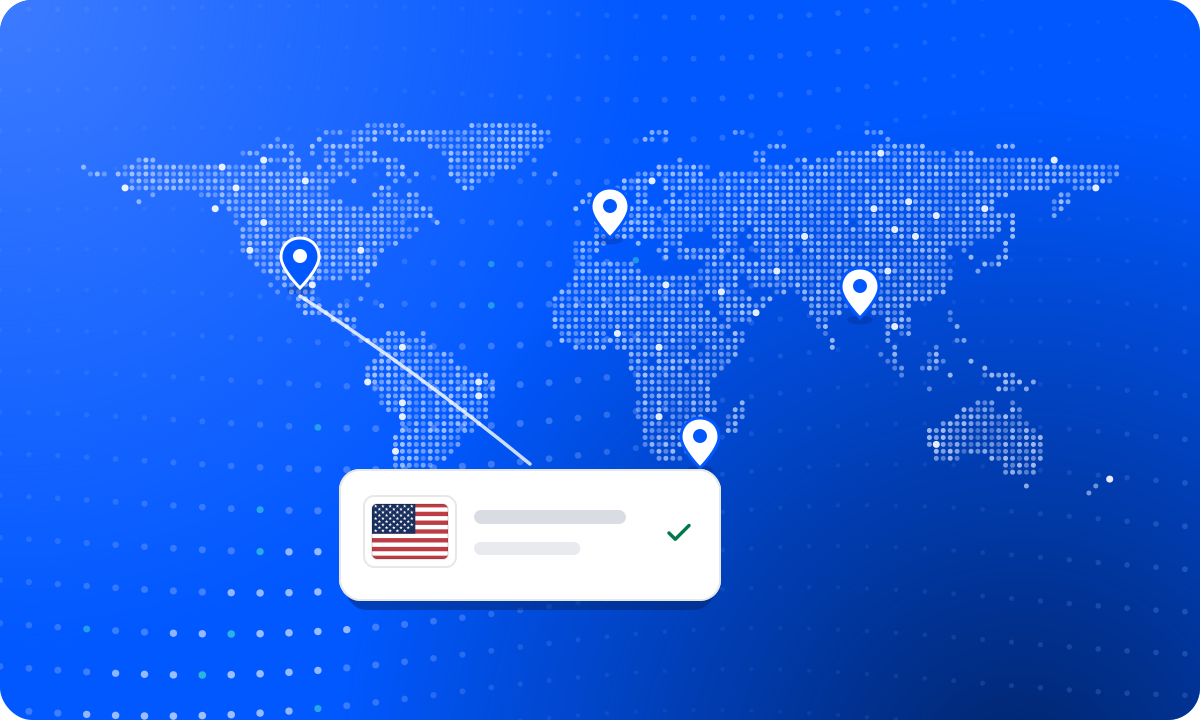
Premium lists 1,188 cities in Germany across 17 regions. A line can exit in Berlin, Hamburg, Munich and Frankfurt am Main, or in any of the other 1,184. Only 4 countries have a longer city list in the pool.
Premium can also hold a line on one network, chosen by its AS number. The 217 networks it lists in Germany include Vodafone, Deutsche Telekom, M-net Telekommunikations, Kevag Telekom and e.discom Telekommunikation.
Mobile proxies reach Germany too: 4G and 5G carrier addresses, sold per GB.
Counted on 9 October 2026 from the pool's own lists, the same lists the dashboard reads when it generates a line.
1,188
cities
17
regions
217
networks
How you use them
Rotating, sticky and SOCKS5 in Germany.
Rotating German proxies
A line generated with country DE exits from a different German address on every request. Ask for count: 10 and each worker gets its own line.
How it works →Sticky German proxies
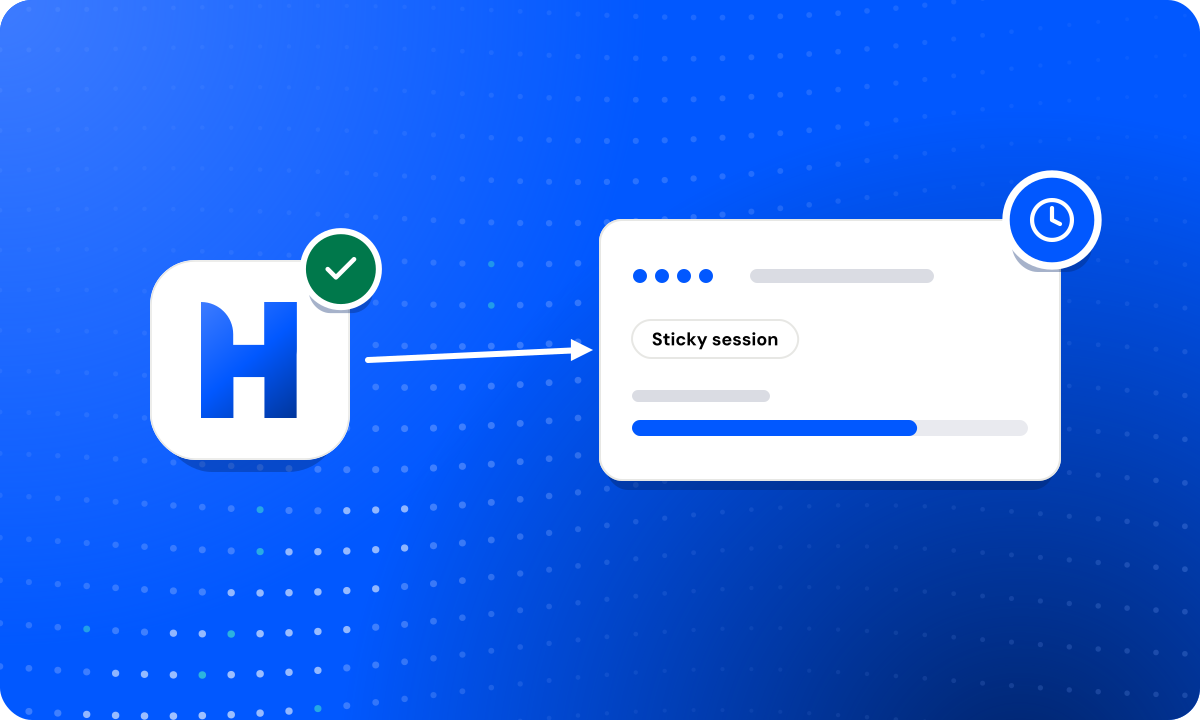
Add stickyMinutes and the line holds one German address for 3 to 1,440 minutes on Premium, or for as long as you keep using it on Lite.
How it works →SOCKS5 German proxies
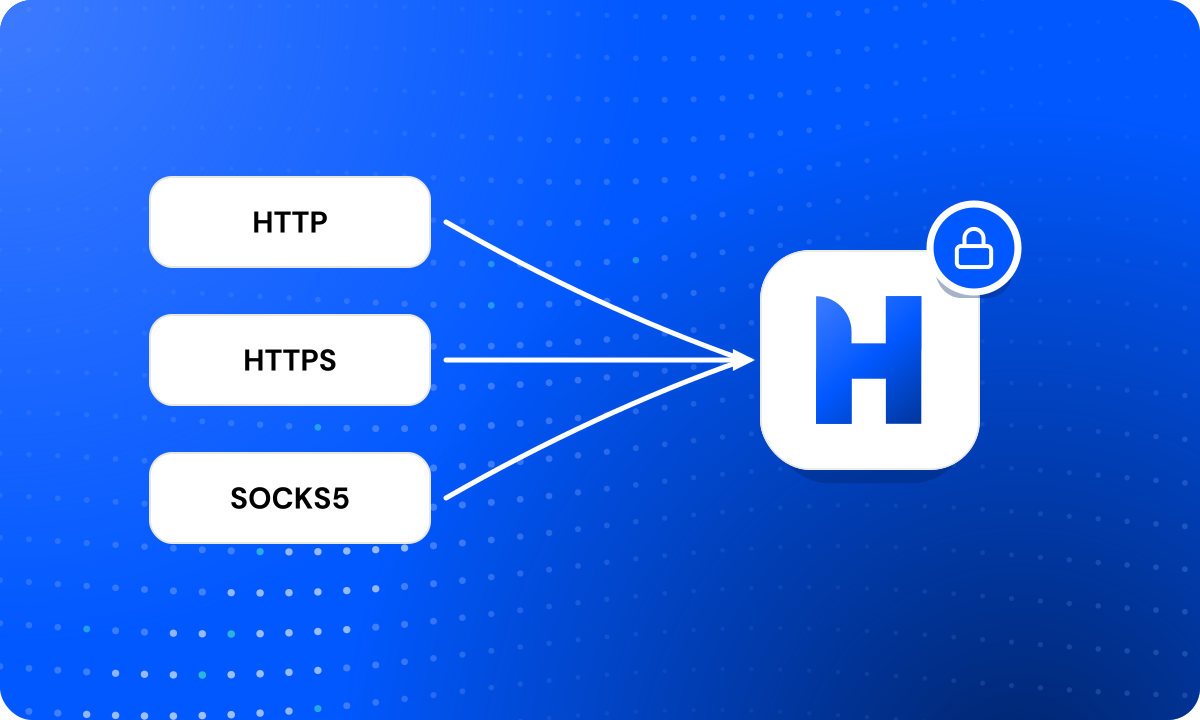
Every line answers SOCKS5 as well as HTTP, with the same credentials; Premium adds a UDP relay with udp: true.
How it works →Pin one German carrier
Premium lines can be pinned to one network by its AS number. These are the Germany carriers the gateway lists today; each has its own page.
Residential Premium
What Premium adds in Germany
Lite reaches Germany by country and rotates. Premium turns every one of these on, from the same balance.
ISP targeting
13,800+ networks
State or city
26,000+ cities
Sticky sessions to 24 hours
3 min to 24 h
Device OS
4 platforms
Exclusions
Country, state, city, network
IP whitelist
150 IPs per plan
SOCKS5 with UDP
HTTP, HTTPS, SOCKS5, UDP
Per-plan statistics
30-day window
Coverage
Target Germany down to the city
59,521 listed places, cities down to villages, in a country of 83 million people, 16 states, the capital is Berlin. Every one of them has its own page.
Germany by state
 North Rhine-Westphalia
 Bavaria
 Baden-Wurttemberg
 Lower Saxony
 Hesse
Hesse Saxony
 Rheinland-Pfalz
 Berlin
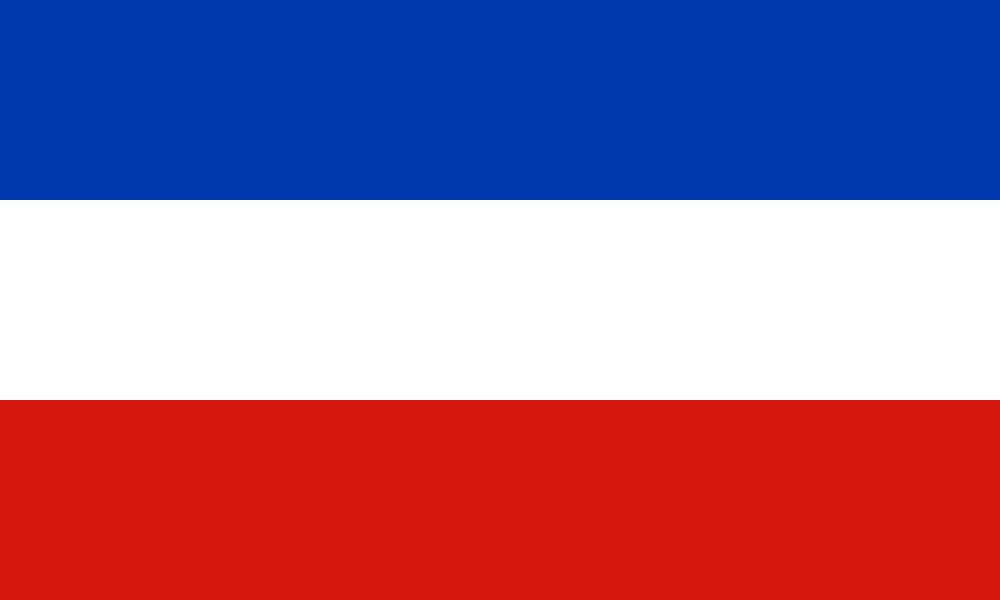 Schleswig-Holstein
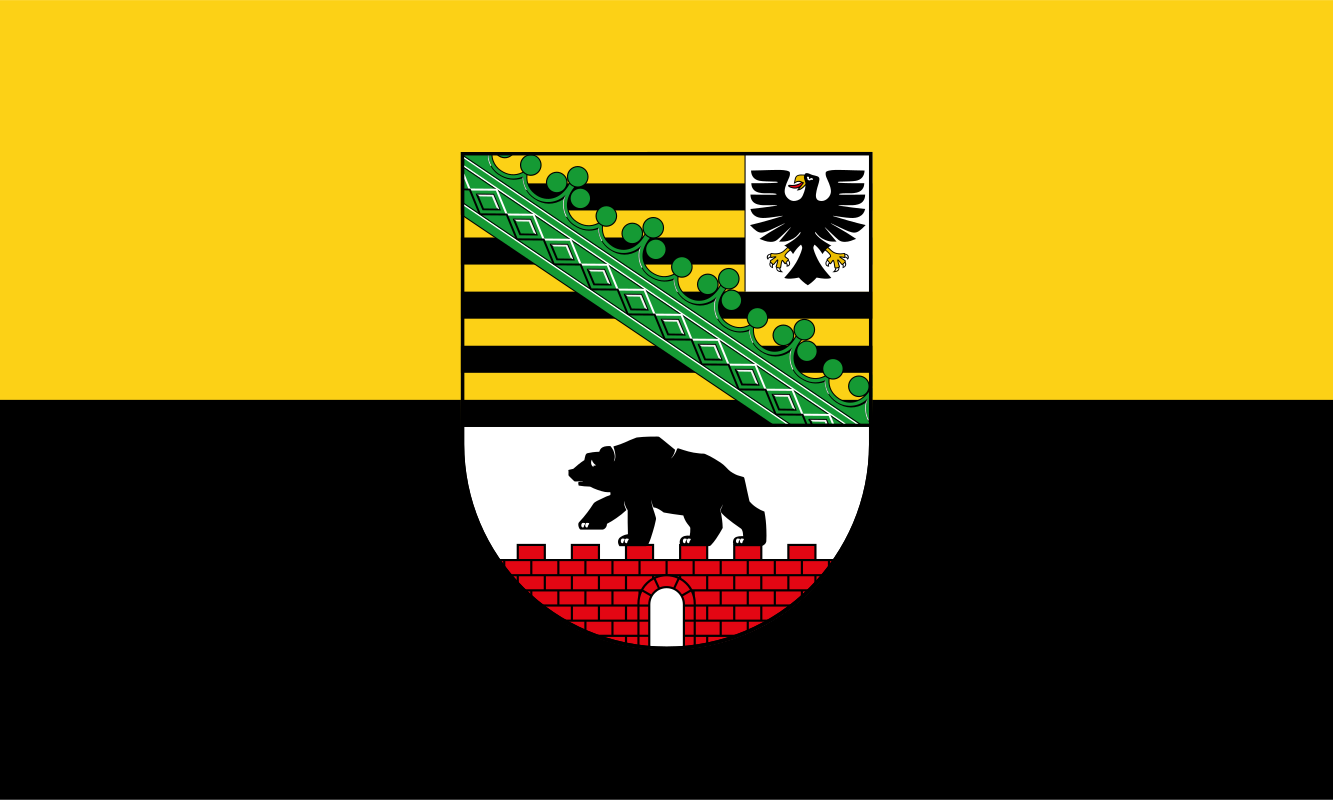 Saxony-Anhalt
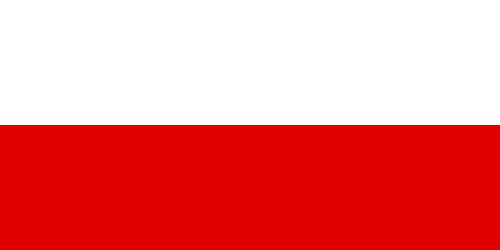 Thuringia
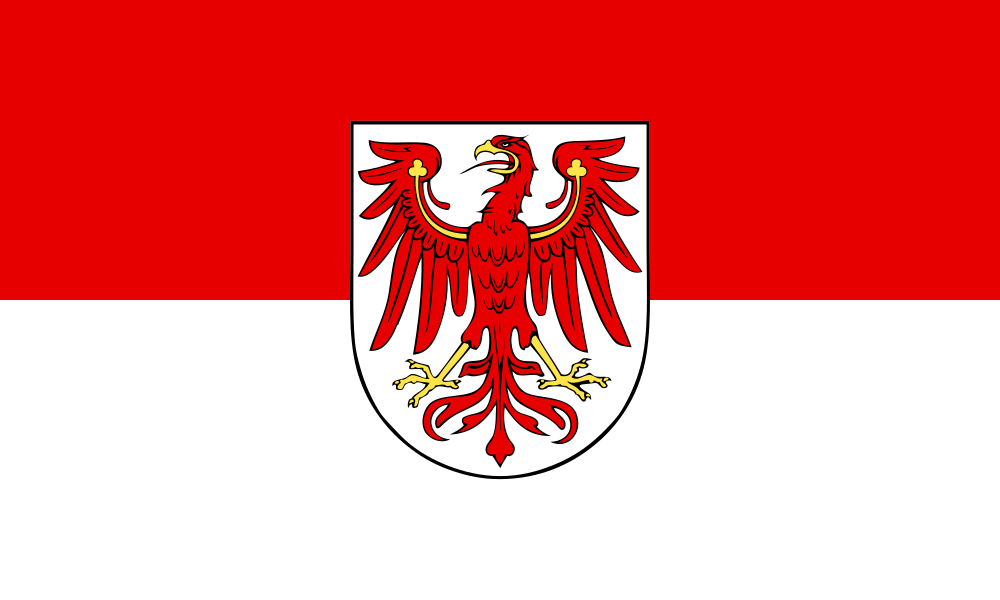 BrandenburgHamburg
 Mecklenburg-Vorpommern
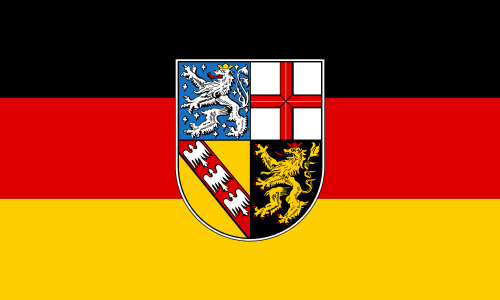 Saarland
 Bremen
Biggest cities first
Working around Germany instead? Switzerland, Poland, Netherlands, Denmark, Belgium, Czechia, Luxembourg, France, Austria border it.
The 12 biggest listed cities marked.
Germany on the world map.
The Frankfurt problem
Most "German" proxies live in one city
Frankfurt is where the German internet physically meets. DE-CIX Frankfurt peaked at 19.6 terabits per second in July 2026 (a World Cup knockout match did it), roughly a thousand networks interconnect there, and counting the whole metro cluster, more than a third of Germany's datacenter capacity sits around the city. The cheap compute nearby (AWS Frankfurt, plus the Hetzner and netcup clusters in Bavaria and Saxony) is where free German proxies overwhelmingly spawn. Our live free list usually shows the result: the bulk of the free pool resolves to Frankfurt, on a handful of hosting networks.
That matters because a datacenter IP in Frankfurt does not look like a person. Retail sites and ad platforms classify hosting ranges in bulk, so for any job where you need to look like a German household (price checks, account work, ad verification), the free pool's geography works against you. A dedicated residential or ISP address on a consumer network is a different starting position entirely.
Use cases
What buyers run on German IPs in 2026
Price monitoring leads, and in Germany it is a compliance job, not just a competitive one. German price-indication law anchors every advertised discount to the lowest price of the previous 30 days, and the EU Court of Justice ruled in 2024 that the percentage itself must be computed from that 30-day low. So a retailer advertising a sale on Amazon.de, Otto or Zalando needs a defensible 30-day price history, and everyone watching that retailer needs the same history to price against it. German online retail turned over about 97 billion euros in 2025, and the trade association bevh puts short-notice dynamic pricing at roughly 40 percent of sellers. That is a lot of price history being written from German IPs.
Search tracking changed shape recently, and most proxy pages have not noticed: google.de itself is gone. Since April 2025 the domain redirects to google.com, so your IP's location (or an explicit country parameter) is what decides whether you see German results. From a German IP, an unauthenticated search first hits the EU consent interstitial, which non-EU scraping never sees. And since Google dropped the 100-results-per-request parameter in September 2025, reading a full German results page costs ten requests where one used to do, which multiplied the IP volume serious rank tracking burns. German exits went from useful to structural.
The rest is monitoring and QA: Kleinanzeigen, Germany's largest classifieds platform, reports more than 50 million active listings with about a million new ones a day, and car marketplaces move millions of used vehicles a year, all of it watched by dealers and pricing tools. Broadcasters like ARD and ZDF still geo-fence licensed streams, so teams verify from German addresses that fences and catalogs behave. And German display advertising is now roughly 80 percent programmatic on an eight-billion-euro market, which means advertisers cannot see their own placements without independent German eyes. Germany's invalid-traffic rate actually runs below the global average, so the point of verification here is coverage, not fraud panic. If you run your own tooling, the scraper APIs take a German exit too.
The network behind the address
What a German residential IP actually is
German household internet runs through a short list of carriers: Deutsche Telekom with about 15 million broadband lines, Vodafone with close to 10 million (mostly on its cable network), then 1&1 and O2. The four together carry roughly four in five German lines, so a residential address on one of those networks blends into tens of millions of ordinary connections. Mobile is its own story: since 1&1 lit up its own 5G network in 2025, Germany has four mobile networks, and per-GB mobile here rides carrier ranges that anti-bot systems treat the most gently of all.
One nuance our engine sees daily: not every German "residential" IPv4 is equal. Vodafone's cable lines commonly ship DS-Lite (a shared IPv4 behind carrier-grade NAT), and several regional fibre operators hand out CGNAT addresses too, while Telekom lines typically hold a real public IPv4. Germany is also IPv6-heavy on the user side (roughly two thirds to three quarters of users, depending on who measures) while much of the content side still lags on IPv6. Pool quality, in other words, is about which networks the addresses come from, not just the country label. That is exactly what the live picture on our free list is for.
On the legal side: Germany sits under the GDPR, and our terms require you to respect it along with the target site's rules. We sell infrastructure with a German footprint; what you do through it stays your responsibility, and anything touching personal data or protected access deserves a careful read of the rules first.
Trust
Who you are buying from
Same network, same team and same terms behind every page on this site, Germany included.
Rated by paying customers

114 reviews on Trustpilot, 92% of them five-star. The badge links to the live profile, judge for yourself.
Real people, around the clock
Live chat sits on every page, bottom right. Ask about Germany targeting before you pay and a person from the team that runs the network answers, whatever the hour.
Terms that do not trap you
Pay as you go, no subscription, and a balance that never expires. Not ready to spend? The free Germany list is public and measured around the clock.
FAQ
German proxy questions, answered
Our live free German proxy list shows the current count our verification engine sees, along with how concentrated the pool is and how well it holds up, refreshed every few minutes. This page is about the dedicated German plans, which draw on a far larger pool than the free one.
google.de itself now redirects to google.com: since April 2025 the country domain no longer selects the country. German results follow the searcher's location, which makes a German IP one of the only reliable ways to see what German users see. Note that EU-located requests also pass Google's consent interstitial, which requests from outside the EU never encounter.
Yes. Residential plans support city-level targeting inside Germany, so sessions can exit in Berlin, Munich, Hamburg or wherever the job needs, subject to live pool availability in that city.
Frankfurt hosts DE-CIX, one of the largest internet exchanges in the world, and counting the whole metro cluster, more than a third of Germany's datacenter capacity sits around the city. Free proxies spawn where compute is cheap, so the free pool clusters there. Residential and ISP proxies come from consumer networks across the whole country instead.
All four families on this page are confirmed against our live catalog for Germany: rotating residential with country and city targeting, ISP addresses rotating or static, per-GB mobile on 4G/5G German carriers, and datacenter IPv4/IPv6.
German courts have treated retrieving freely accessible data without technical protection and without taking an essential part of a database as permissible, and treated circumventing access protection very differently, up to criminal liability. The GDPR applies whenever personal data is involved. We are not your lawyers: treat anything behind a login or touching personal data as a question for one.