


ISP Proxies Rotating
Per GBFrom$0.65/GB
- A fresh ISP IP on every request
- Residential trust, datacenter speed
- Country targeting
- HTTP, HTTPS and SOCKS5
- Billed per GB, no subscription
- One fixed address you hold
Home/ISP proxies


IPs on real ISP networks, hosted for datacenter speed. Rotating by the gigabyte, or one static address you hold.
The plans
From$0.65/GB

From$2.50/IP
Pricing
Pay as you go. No contract, and the balance never expires.
| Amount | Per GB | Total |
|---|---|---|
| 1 GB | $0.65 | $0.65 |
| Amount | Per IP | Total |
|---|---|---|
| 1 IP | $2.50 | $2.50 |
Why ISP
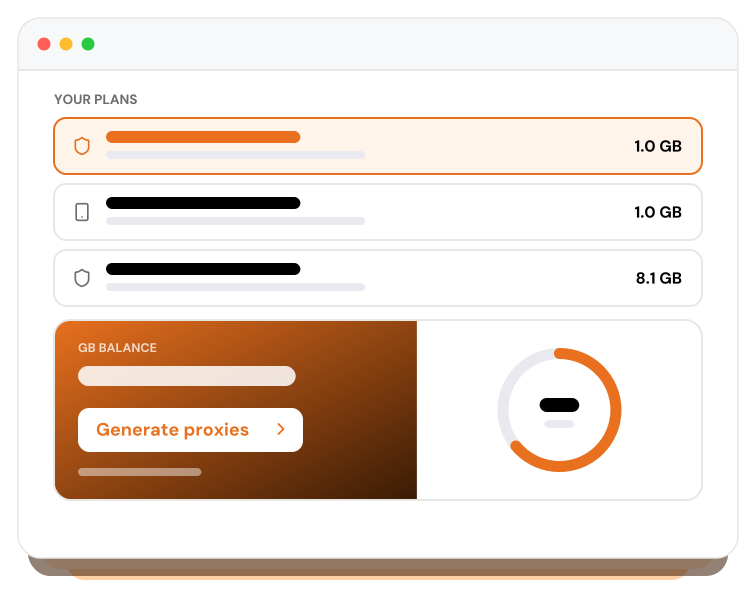
An ISP proxy is an address a real internet provider registered, hosted where the connection is fast and always on. Rotating by the gigabyte, or held as one static IP.
Dedicated static ISP
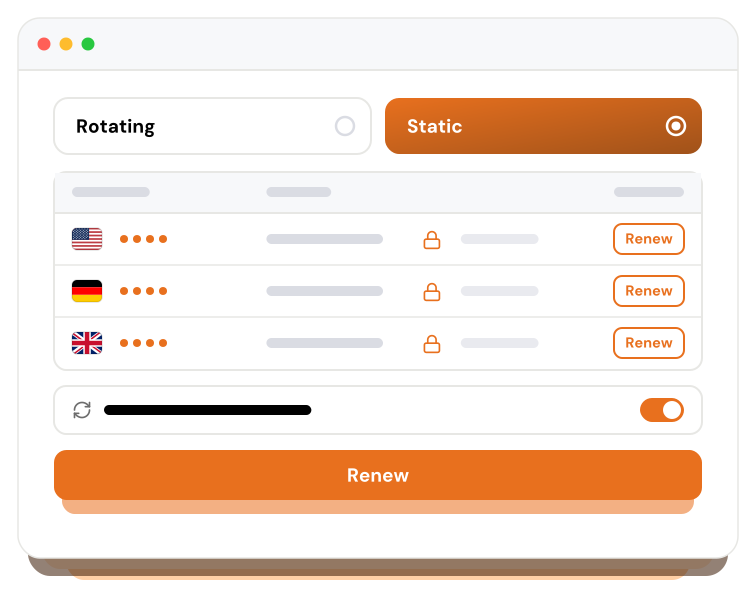
Need an address that never changes? A dedicated static ISP IP is yours for as long as you keep it, billed per IP with unlimited bandwidth through it, country picked at purchase.
What you get
Every IP sits on a real ISP's range, so sites see a genuine home connection, not a cloud server.
Hosted on fast, stable infrastructure for full port speed, with none of the jitter of a real home line.
A pool of ISP exits with a fresh IP on every request, billed per GB. You pay for the traffic you move and nothing more.
Prefer one fixed address? Hold a dedicated static ISP IP for as long as you keep it, with unlimited bandwidth through it.
When it fails
One button in your dashboard, on the proxy itself: it does not work, or it is in the wrong country.
The check runs through the proxy from our own network with your credentials: HTTP CONNECT first, SOCKS5 second, twelve seconds each.
You get the result of a test that ran seconds ago and the port to use.
A verified failure, or an IP outside the country you bought, is swapped at the supplier automatically and the new address appears in your dashboard.

Who uses us
From our support chat
We're at an early stage and traffic has boomed. This is the most reliable proxy we've used to date. Unbelievable value for money.

The ad measurement platform for brands like


Companies running on HProxy















Specifications
Residential IPs on ISP ASNs
Residential-grade
Datacenter-grade, full port
Fresh IP per request, per GB
One held IP, unlimited bandwidth
Country
HTTP, HTTPS, SOCKS5
Per GB, or per IP for static
Connect
curl -x http://demo_k3f9q2x:••••••@demo.hproxy.com:8000 \
  https://api.ipify.org
import requests
proxy = "http://demo_k3f9q2x:••••••@demo.hproxy.com:8000"
r = requests.get("https://api.ipify.org",
proxies={"http": proxy, "https": proxy})
print(r.text)import { ProxyAgent, fetch } from "undici";
const agent = new ProxyAgent("http://demo_k3f9q2x:••••••@demo.hproxy.com:8000");
const r = await fetch("https://api.ipify.org", { dispatcher: agent });
console.log(await r.text());The real line, with your own login and your targeting, is in your dashboard the moment you top up.
Works with your stack, and with your assistant.
A REST API for buying and generating, the whole documentation as markdown for Claude, Cursor and ChatGPT, and the free tools as a CLI and as an MCP server at mcp.hproxy.com/mcp.
Read the API docsCompared
For companies
Contact us for a custom plan: high volume, your own pool, dedicated infrastructure, annual invoicing, or a price that does not fit the public tiers. Tell us the workload and a person answers.
Reselling proxies? ISP rotating is on the partner rate card, per gigabyte. Dedicated ISP addresses sell through the same account at the public price.
See the reseller programRated and awarded







An IP that lives on a real internet provider's network but runs on fast, stable infrastructure. Websites see the trusted residential ISP while you get datacenter speed. HProxy offers ISP two ways: a rotating pool billed per gigabyte, and a dedicated static IP billed per IP.
Rotating ISP is a large pool of ISP exits: every request can come out of a fresh IP, and you are billed for the gigabytes you move. Static ISP hands you one fixed address that never changes and that you hold for as long as you keep it, billed per IP with unlimited bandwidth. Rotating suits volume and changing footprints; static suits accounts and long sessions that need the same trusted IP.
Both carry residential trust. Residential IPs come from real home devices; ISP IPs sit on ISP ranges hosted for datacenter speed and stability. Rotating ISP works much like residential but on ISP-grade IPs, while static ISP holds one address for as long as you own it.
Datacenter IPs sit on known cloud ranges. ISP IPs are registered to consumer internet providers instead and run on data-center hardware, so you get a home-provider IP with datacenter speed.
Two ways. The rotating pool is billed per gigabyte, so you pay for the traffic you move. A dedicated static IP is billed per IP with unlimited bandwidth through it, so a fixed address that never changes costs a flat rate rather than being metered.
US and EU ISP ranges, with more regions added over time. Country targeting is included on both the rotating and the static product.
Anything that benefits from a trusted, stable IP: managing multiple accounts for your own brand, keeping long research or dashboard sessions on a single address, ad verification, price and market research, and collecting public data from sites that block datacenter ranges. Static ISP keeps one identity on a single address, while rotating ISP spreads trusted traffic across a pool.
For rotating ISP, size your GB balance to how much traffic you expect to move. For static ISP, one IP per identity you want kept separate: roughly one address per account or small group of accounts. Rotating scales by adding gigabytes, static by adding IPs.
They carry the same residential trust signal as a home connection, so they behave far more consistently than datacenter ranges that get filtered in bulk. Used at a normal pace, an ISP IP delivers stable, reliable sessions, which is why they hold accounts and long logins so well.
Know the words
What ISP actually means, and how it differs from residential.


