
Brazil Proxies · Brasil
Buy Brazilian proxies. Ready in minutes.
- Just need a few free ones? Browse the live free Brazilian list.
Dedicated Brazilian IPs
Five ways to hold a real Brazilian address
Every price below is live. The dedicated IP products are checked against what is in stock for Brazil before this page shows them, and residential is aimed at Brazil when you generate your proxies, billed per GB.
Residential PremiumFlagship
Real Brazilian household IPs, aimed down to a state, a city or a single ISP. Sticky sessions up to 24 hours, SOCKS5 with UDP, and a block list for what you want to avoid.
- A state, a city or an ISP
- Sticky up to 24 hours
- SOCKS5 with UDP
From
$1.00/ GB
Residential LiteLowest price
The same Brazilian household network at the lowest per-GB rate, targeted by country rather than by city. Rotating or sticky, pay per GB, balance never expires.
- Targeted by country
- Rotating or sticky
- Balance never expires
From
$0.44/ GB

Static ISP
Dedicated Brazilian IPs registered to consumer ISPs, held for weeks or months. The stability of a server with a residential footprint.
- Registered to consumer ISPs
- Yours for weeks or months
- Unlimited bandwidth
From
$2.50/ IP

Datacenter
Dedicated Brazilian IPv4 and IPv6 addresses for volume work where raw speed matters more than a residential footprint.
- Private IPs, only yours
- Unlimited bandwidth
- IPv4 and IPv6
From
$0.10/ IP

Mobile 4G/5G
Real 4G and 5G carrier IPs on genuine carrier networks, billed per GB, rotating or sticky. The highest-trust footprint there is, and the hardest to distinguish from a phone.
- Real 4G and 5G carriers
- Rotating or sticky
- HTTP, HTTPS and SOCKS5
From
$1.50/ GB
Targeting in Brazil
Brazilian proxies by city, region and network
Premium lists 1,130 cities in Brazil across 27 regions. A line can exit in São Paulo, Rio de Janeiro, Belo Horizonte and Salvador, or in any of the other 1,126. Only 5 countries have a longer city list in the pool.
Premium can also hold a line on one network, chosen by its AS number. The 1,945 networks it lists in Brazil include Claro, Telium Telecomunicações, Ampernet Telecomunicações, BR.Digital Telecom and Ligga Servicos EM Telecom.
Mobile proxies reach Brazil too: 4G and 5G carrier addresses, sold per GB.
Counted on 9 October 2026 from the pool's own lists, the same lists the dashboard reads when it generates a line.
1,130
cities
27
regions
1,945
networks
How you use them
Rotating, sticky and SOCKS5 in Brazil.
Rotating Brazilian proxies
A line generated with country BR exits from a different Brazilian address on every request. Ask for count: 10 and each worker gets its own line.
How it works →Sticky Brazilian proxies
Add stickyMinutes and the line holds one Brazilian address for 3 to 1,440 minutes on Premium, or for as long as you keep using it on Lite.
How it works →SOCKS5 Brazilian proxies
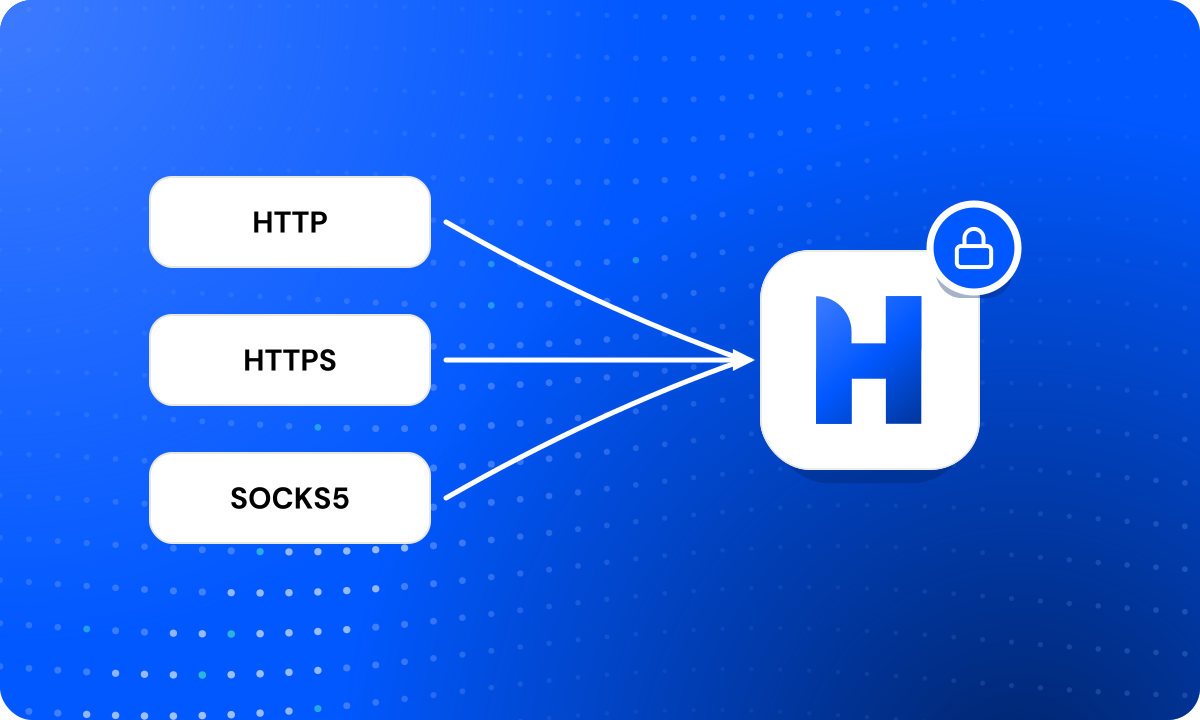
Every line answers SOCKS5 as well as HTTP, with the same credentials; Premium adds a UDP relay with udp: true.
How it works →Pin one Brazilian carrier
Premium lines can be pinned to one network by its AS number. These are the Brazil carriers the gateway lists today; each has its own page.
Residential Premium
What Premium adds in Brazil
Lite reaches Brazil by country and rotates. Premium turns every one of these on, from the same balance.
ISP targeting
13,800+ networks
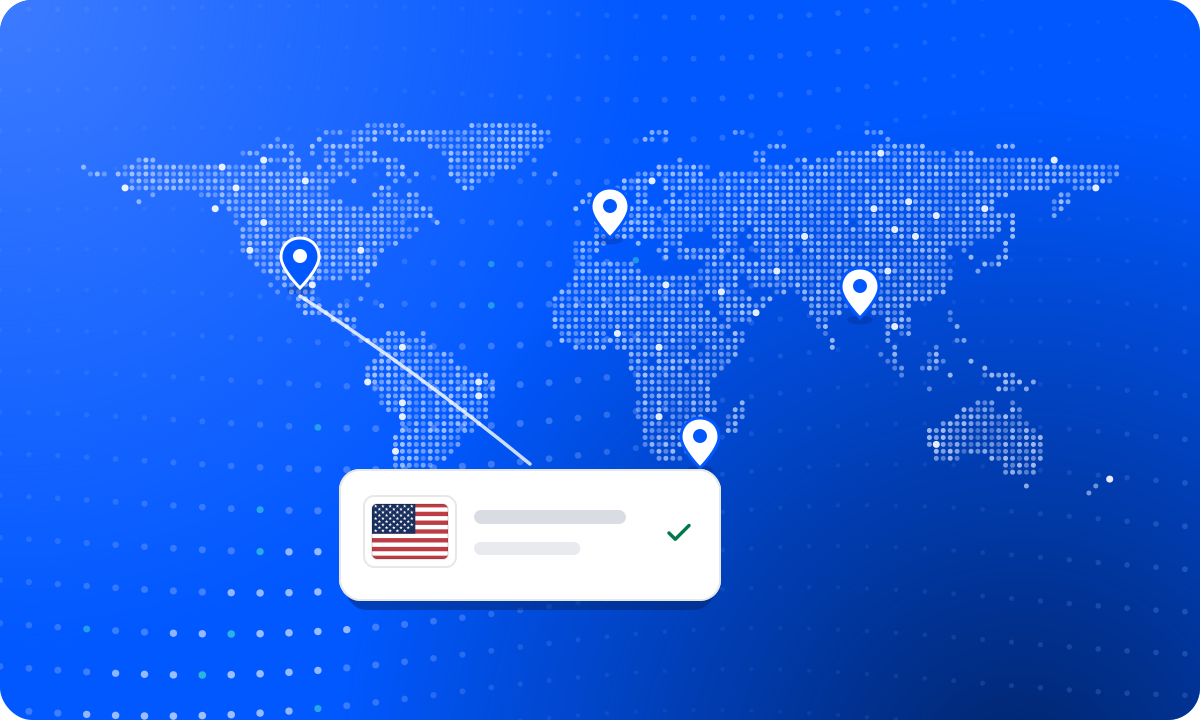
State or city
26,000+ cities
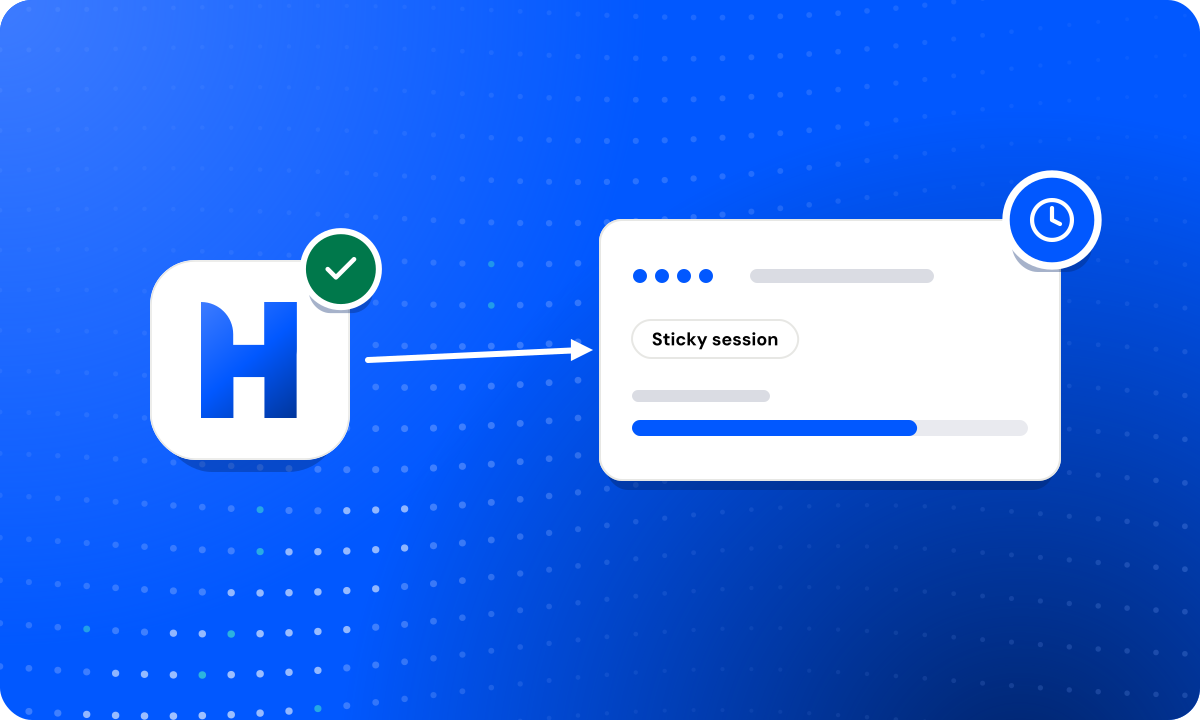
Sticky sessions to 24 hours
3 min to 24 h
Device OS
4 platforms
Exclusions
Country, state, city, network
IP whitelist
150 IPs per plan
SOCKS5 with UDP
HTTP, HTTPS, SOCKS5, UDP
Per-plan statistics
30-day window
Coverage
Target Brazil down to the city
36,284 listed places, cities down to villages, in a country of 209 million people, 27 states, the capital is Brasília. Every one of them has its own page.
Brazil by state
 São Paulo
 Minas Gerais
 Rio de Janeiro
 Bahia
Bahia Paraná
 Rio Grande do Sul
 Pernambuco
 Pará
Pará Ceará
Ceará Santa Catarina
 Goiás
Goiás Maranhão
 Federal District
 Amazonas
 Paraíba
 Espírito Santo
 Mato Grosso
 Rio Grande do Norte
 Piauí
Piauí Alagoas
 Mato Grosso do Sul
 Sergipe
 Rondônia
 Tocantins
 Acre
Acre Amapá
Amapá Roraima
Biggest cities first
Working around Brazil instead? Suriname, Peru, Bolivia, Uruguay, Guyana, Paraguay, French Guiana, Venezuela, Colombia, Argentina border it.
The 12 biggest listed cities marked.
Brazil on the world map.
Diversity is the signal
Brazil has no single "residential ISP", and that is the point
Most countries have three or four carriers that own the home-broadband market. Brazil does not. Alongside Claro, Vivo and TIM sits an enormous long tail of regional fibre providers, thousands of them, that together carry roughly six in ten Brazilian broadband connections. The scale of that is easy to underrate: it takes on the order of a couple of thousand separate networks to account for ninety percent of Brazilian users. There is no canonical Brazilian residential network the way there is a Deutsche Telekom or a BT.
That flips how you should read a Brazilian pool. In a concentrated market, a spread of many networks might look like noise. In Brazil it is the opposite: heavy network diversity is exactly what genuine residential supply looks like, because that is how Brazilian homes actually connect. So when the live picture on our free list shows a long list of networks rather than a tidy top three, that is the signature of the real thing, not a warning sign.
Latin America's commerce engine
What Brazilian IPs are for
Brazil is the commerce heart of the region, and the marketplace order is its own, not a copy of the US one: Mercado Livre leads by a wide margin, Shopee is a strong second, and Amazon sits behind both, with Magazine Luiza, Casas Bahia and a recovered Americanas rounding out the field. So most Brazilian-IP work is price and listing monitoring across that specific set, plus search tracking where a Brazilian IP is what returns Brazilian results now that google.com.br redirects to google.com. One honest caveat worth more than a feature claim: the biggest retailers run their own bot- management layers, so a Brazilian IP gets you to the page but not automatically a clean response, and treating those as two separate problems is what actually works.
The genuinely Brazil-specific thread is payments. PIX, the central bank's instant- payment system, reshaped Brazilian checkout, so anything modelling Brazilian pricing, fintech or conversion is working in a market that behaves differently from a card-first one. Streaming and its Globoplay geo-fences are the usual QA target on top. The automated version of all of it can run a Brazilian exit through our scraper APIs.
The rules you are operating under
A maturing legal picture, stated plainly
Brazil's data protection law, the LGPD, is in force, and its regulator, the ANPD, became a full agency in early 2026, so this is a real supervisory regime rather than a paper one. Brazil also brought in an online child-safety law in 2026 that requires reliable age verification on a per-access basis and reaches services regardless of where they are located. As with similar laws in other countries, we treat that as part of the legal landscape you operate within, not as something to design around: this page is about legitimate Brazilian-IP work, and our terms require you to respect Brazilian law and each site's rules.
The short version is the same as everywhere else in this series. Collecting genuinely public information is a different matter from touching personal data or crossing into a logged-in area, and the second kind is a question for a lawyer rather than for us. We sell the Brazilian footprint; the responsibility for what runs through it stays yours.
Trust
Who you are buying from
Same network, same team and same terms behind every page on this site, Brazil included.
Rated by paying customers

114 reviews on Trustpilot, 92% of them five-star. The badge links to the live profile, judge for yourself.
Real people, around the clock
Live chat sits on every page, bottom right. Ask about Brazil targeting before you pay and a person from the team that runs the network answers, whatever the hour.
Terms that do not trap you
Pay as you go, no subscription, and a balance that never expires. Not ready to spend? The free Brazil list is public and measured around the clock.
FAQ
Brazilian proxy questions, answered
Our live free list shows the live count from our verification engine, next to the networks and cities it is drawn from. It refreshes every few minutes, so it is a reading of the current pool rather than a fixed figure.
Residential plans support city-level targeting inside Brazil, so a session can exit in Sao Paulo, Rio de Janeiro or wherever a task needs, subject to what is live in that area at the time.
It is necessary but not the whole story. Brazil's largest retailers run their own bot-management layers that assess requests on their own terms regardless of geography, so a Brazilian IP gets you to the page while getting a clean response past those checks is a separate problem. We would rather say that than imply an IP alone solves it.
Because that is what real Brazilian home internet looks like. Alongside the big three carriers, thousands of regional fibre providers carry most Brazilian broadband, so it takes on the order of a couple of thousand networks to cover the bulk of users. Heavy network diversity is the expected signature of genuine Brazilian residential supply, not a red flag, which is why the per-network breakdown matters here.
All four, each confirmed against the live catalog before it shows here: rotating residential, static ISP, dedicated 4G and 5G mobile on Brazilian carriers, and datacenter IPv4 and IPv6.
Brazil's LGPD is in force with an active regulator, and collecting genuinely public information is a different matter from handling personal data or entering logged-in areas. This is context rather than legal advice: anything personal or behind a login is a question for a lawyer.