United States Proxies
Buy US proxies. Ready in minutes.
- Just need a few free ones? Browse the live free US list.
Dedicated US IPs
Five ways to hold a real US address
Every price below is live. The dedicated IP products are checked against what is in stock for the United States before this page shows them, and residential is aimed at the United States when you generate your proxies, billed per GB.
Residential PremiumFlagship
Real US household IPs, aimed down to a state, a city or a single ISP. Sticky sessions up to 24 hours, SOCKS5 with UDP, and a block list for what you want to avoid.
- A state, a city or an ISP
- Sticky up to 24 hours
- SOCKS5 with UDP
From
$1.00/ GB
Residential LiteLowest price
The same US household network at the lowest per-GB rate, targeted by country rather than by city. Rotating or sticky, pay per GB, balance never expires.
- Targeted by country
- Rotating or sticky
- Balance never expires
From
$0.44/ GB
Static ISP
Dedicated US IPs registered to consumer ISPs, held for weeks or months. The stability of a server with a residential footprint.
- Registered to consumer ISPs
- Yours for weeks or months
- Unlimited bandwidth
From
$2.50/ IP

Datacenter
Dedicated US IPv4 and IPv6 addresses for volume work where raw speed matters more than a residential footprint.
- Private IPs, only yours
- Unlimited bandwidth
- IPv4 and IPv6
From
$0.10/ IP
Mobile 4G/5G
Real 4G and 5G carrier IPs on genuine carrier networks, billed per GB, rotating or sticky. The highest-trust footprint there is, and the hardest to distinguish from a phone.
- Real 4G and 5G carriers
- Rotating or sticky
- HTTP, HTTPS and SOCKS5
From
$1.50/ GB
Targeting in United States
US proxies by city, region and network
Premium lists 5,090 cities in the United States across 52 regions. A line can exit in New York City, Los Angeles, Brooklyn and Chicago, or in any of the other 5,086. No other country has a longer city list in the pool.
Premium can also hold a line on one network, chosen by its AS number. The 1,112 networks it lists in the United States include CenturyLink Communications, Verizon Business, 360 Broadband, Cablelynx and Dialog Telecommunications.
Counted on 9 October 2026 from the pool's own lists, the same lists the dashboard reads when it generates a line.
5,090
cities
52
regions
1,112
networks
How you use them
Rotating, sticky and SOCKS5 in United States.
Rotating US proxies
A line generated with country US exits from a different US address on every request. Ask for count: 10 and each worker gets its own line.
How it works →Sticky US proxies
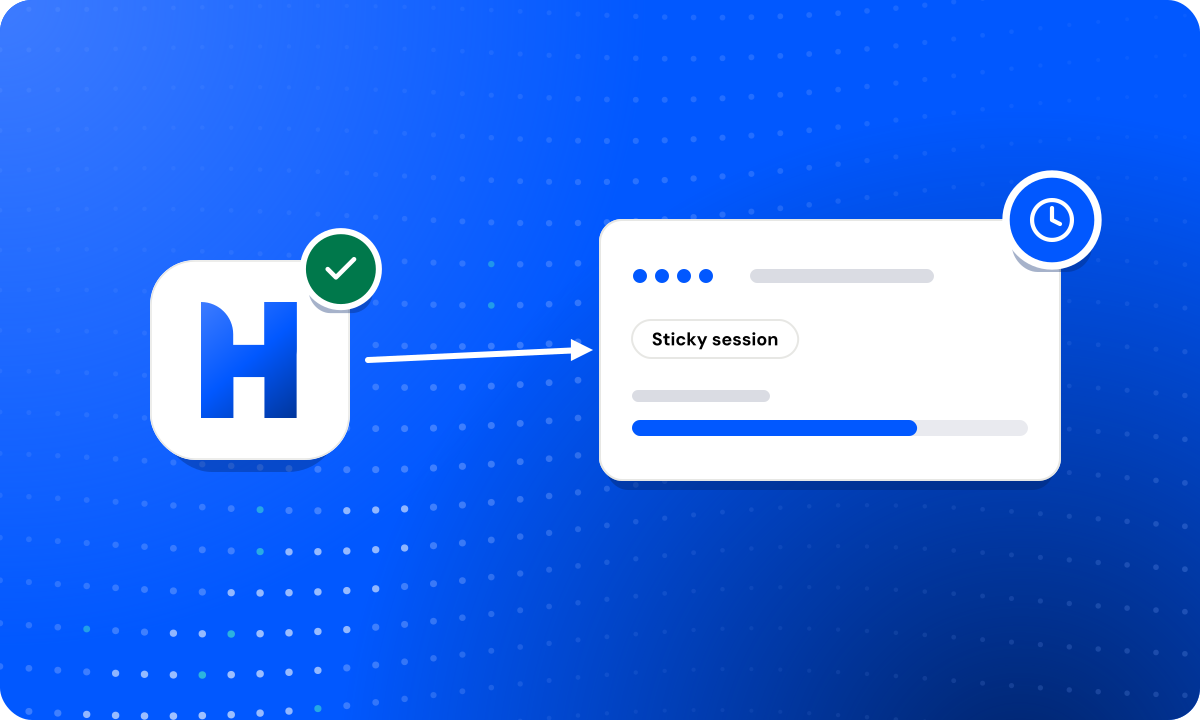
Add stickyMinutes and the line holds one US address for 3 to 1,440 minutes on Premium, or for as long as you keep using it on Lite.
How it works →SOCKS5 US proxies
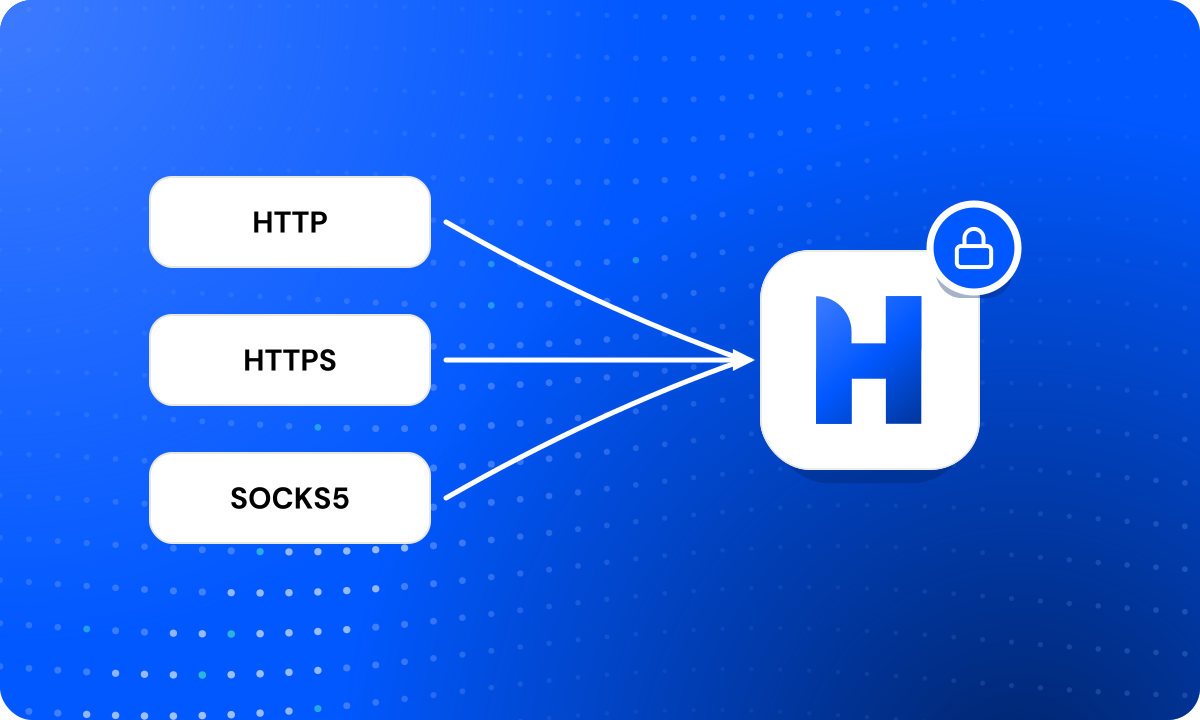
Every line answers SOCKS5 as well as HTTP, with the same credentials; Premium adds a UDP relay with udp: true.
How it works →Pin one US carrier
Premium lines can be pinned to one network by its AS number. These are the United States carriers the gateway lists today; each has its own page.
Residential Premium
What Premium adds in United States
Lite reaches United States by country and rotates. Premium turns every one of these on, from the same balance.
ISP targeting
13,800+ networks
State or city
26,000+ cities
Sticky sessions to 24 hours
3 min to 24 h
Device OS
4 platforms
Exclusions
Country, state, city, network
IP whitelist
150 IPs per plan
SOCKS5 with UDP
HTTP, HTTPS, SOCKS5, UDP
Per-plan statistics
30-day window
Coverage
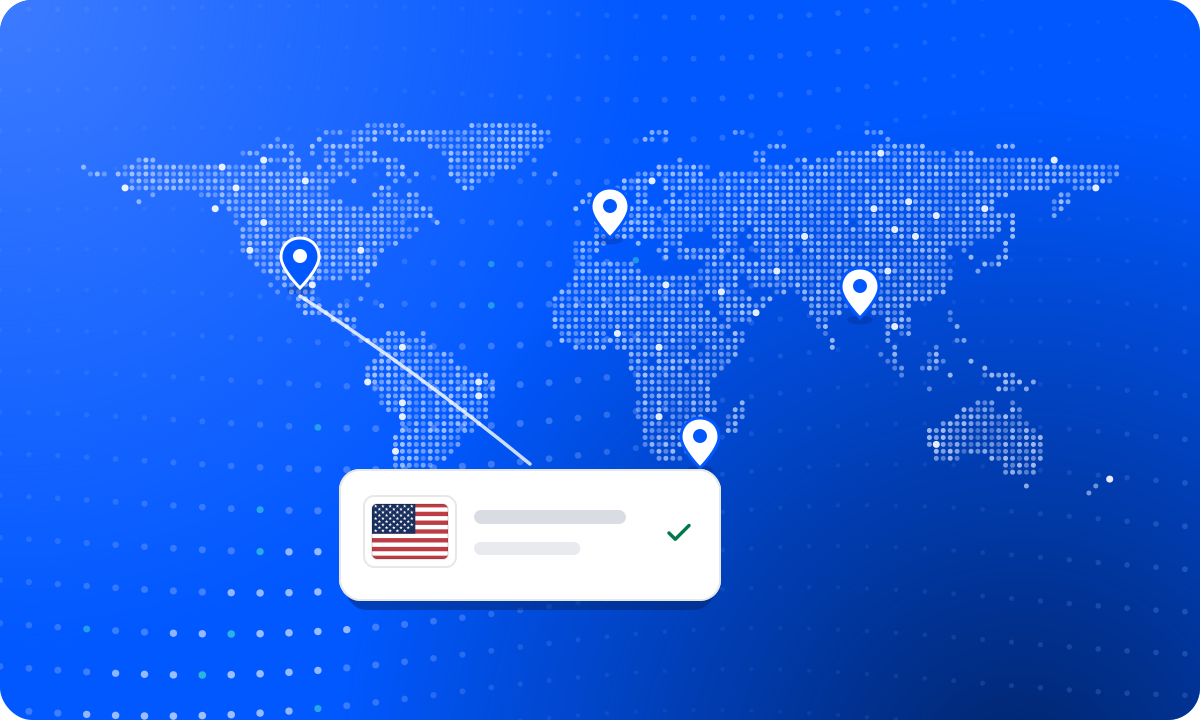
Target United States down to the city
96,478 listed places, cities down to villages, in a country of 327 million people, 51 states, the capital is Washington. Every one of them has its own page.
United States by state
 California
 New York
 Texas
Texas Florida
 Illinois
 Massachusetts
 New Jersey
 Pennsylvania
 Ohio
Ohio Arizona
 Washington
 North Carolina
 Michigan
 Virginia
 Maryland
 Colorado
 Tennessee
 Minnesota
 Georgia
 Wisconsin
 Indiana
 Missouri
 Oklahoma
 Louisiana
 Connecticut
 Oregon
 Kentucky
 Nevada
 Utah
Utah Alabama
 Hawaii
 Iowa
Iowa Kansas
 South Carolina
 New Mexico
 Arkansas
 District of Columbia
 NebraskaMississippi
 Idaho
Idaho Rhode Island
 Maine
Maine New Hampshire
 Alaska
 Montana
 West Virginia
 North Dakota
 South Dakota
 Wyoming
 Vermont
 Delaware
Biggest cities first
Working around United States instead? Canada, Mexico, Cuba border it.
The 12 biggest listed cities marked.
United States on the world map.
One country, many rulebooks
The US has internal borders now
For most of the internet's life a US IP was a US IP. That stopped being true. Somewhere around 25 to 27 states now require age verification to reach adult content, after the Supreme Court upheld Texas's law in 2025, and the exact count moves every few months as more take effect. Legal sports betting runs in 39 states, each fenced to its own borders by compliance-grade geolocation. Which state an address resolves to now decides what it can reach, inside a single country.
That makes state-accurate geolocation a real requirement rather than a nicety, and it is measurable from outside: our own checks see US services sort visitors by where the IP sits, not just by the country. For legitimate testing (does my state-by-state content gate behave, does my regional catalog render correctly in each market) a US address that resolves to the right state is the whole job. Where an operator uses geolocation to enforce a legal restriction, such as a sportsbook or an age wall, that enforcement looks past the IP on purpose, so we do not sell proxies to defeat it, and this page will not pretend otherwise.
What US IPs are for in 2026
The real jobs, minus the ones that expired
Price and search work is the bulk of it. Retailers like Amazon, Walmart and Target price by market, and search results follow the searcher's location now that google.com is the single domain (the old country domains fold into it, so an IP is what selects a US result). A newer driver is legal: New York's surveillance-pricing law, signed in June 2026, joins Maryland and Connecticut in restricting prices personalized to an individual. Personalized pricing is invisible from any single vantage point by design, so proving it happened takes many independent US views, which is exactly what a proxy pool provides. That is the cleanest US price-monitoring argument on the table, and it is eight weeks old.
Two jobs that competitors still advertise have quietly expired, and saying so is worth more than repeating them. Beating your local baseball blackout with a US IP no longer applies to most teams: for the 2026 season, 22 of the 30 clubs stream in-market without a blackout. And nobody needs a proxy to reach TikTok, which was resolved by a US ownership deal in January 2026, not banned. We would rather tell you what stopped being true than sell you a 2023 use case.
The evergreen work is still here: verifying that US ad campaigns actually render to US users in a market that is around 80% programmatic and therefore invisible to the buyer, checking real-estate and jobs listings that vary by metro, and running scraper APIs through a US exit. On US ad fraud specifically, the honest note is that the US invalid rate is not wildly above the global average, so the point is coverage, not panic.
The residential question
Not every US home IP is what it looks like
US home internet runs through a handful of large networks: Comcast Xfinity and Charter Spectrum on cable, AT&T and Verizon on fiber, and Cox and others regionally. The fastest growing category is not any of those, though. It is fixed wireless, T-Mobile and Verizon selling home internet over the cellular network, and it now counts more than twenty million lines. That matters for proxies because fixed-wireless lines sit behind carrier-grade NAT by default, so many addresses that geolocate to a US home are shared gateways rather than one household. A US residential IP is not automatically the clean one-home footprint the label implies.
Our live free list shows the flip side. Unlike some markets, the free US pool is not piled into a single city or a single hosting company: it spreads across metros and carries a real share of consumer-network addresses alongside the datacenter ranges. That is a better starting point than most free pools, and it still is not a production footprint, which is what the dedicated residential, ISP and mobile options are for. Residential plans target down to the city, so a session can exit in the specific US metro a job needs.
On the legal side, US courts have generally protected the scraping of publicly available data, and drawn a hard line at circumventing access controls or crossing into a logged-in area. Our terms require you to stay on the right side of that line and of each site's own rules. We sell the US footprint; the responsibility for what runs through it is yours.
Trust
Who you are buying from
Same network, same team and same terms behind every page on this site, United States included.
Rated by paying customers

114 reviews on Trustpilot, 92% of them five-star. The badge links to the live profile, judge for yourself.
Real people, around the clock
Live chat sits on every page, bottom right. Ask about United States targeting before you pay and a person from the team that runs the network answers, whatever the hour.
Terms that do not trap you
Pay as you go, no subscription, and a balance that never expires. Not ready to spend? The free United States list is public and measured around the clock.
FAQ
US proxy questions, answered
That live count on our free list is exactly that, live: our verification engine reports what it can reach in the US this minute, then splits it by datacenter versus residential and by metro. It re-runs every few minutes, so you are reading an instrument, not a brochure.
Down to the city, on residential plans. In the US that has shifted from a nice-to-have to close to a necessity: as more states gate content by location, landing in the right state is often what separates a page that loads from a wall that does not.
Usually not, and this is where a lot of older advice is out of date. For the 2026 baseball season most teams stream in-market without a blackout, and TikTok was resolved by a US ownership deal in early 2026 rather than banned. We would rather point you at what changed than sell you a use case that expired.
The United States has many large metros and many hosting regions, so free proxies surface across the country rather than piling into one city the way smaller markets do. Our live network table shows the actual split, usually a mix of major cloud ranges and consumer-ISP addresses across several states.
Four, each checked against the live catalog before it appears here: rotating residential with state and city targeting, static ISP lines on consumer networks, dedicated 4G and 5G mobile on US carriers, and datacenter IPv4 and IPv6.
US courts have largely protected the scraping of public data while treating access controls and logged-in areas very differently, with the Computer Fraud and Abuse Act in play once you cross that line, and state privacy laws layering on when personal data is involved. This is not legal advice: a login wall, or anything personal, is a question for a lawyer rather than for us.