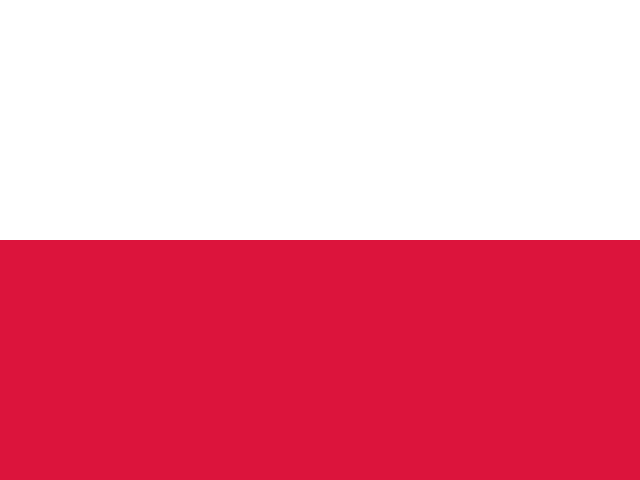
Poland Proxies · Polska
Buy Polish proxies. Ready in minutes.
- Just need a few free ones? Browse the live free Polish list.
Dedicated Polish IPs
Five ways to hold a real Polish address
Every price below is live. The dedicated IP products are checked against what is in stock for Poland before this page shows them, and residential is aimed at Poland when you generate your proxies, billed per GB.
Residential PremiumFlagship
Real Polish household IPs, aimed down to a state, a city or a single ISP. Sticky sessions up to 24 hours, SOCKS5 with UDP, and a block list for what you want to avoid.
- A state, a city or an ISP
- Sticky up to 24 hours
- SOCKS5 with UDP
From
$1.00/ GB
Residential LiteLowest price
The same Polish household network at the lowest per-GB rate, targeted by country rather than by city. Rotating or sticky, pay per GB, balance never expires.
- Targeted by country
- Rotating or sticky
- Balance never expires
From
$0.44/ GB
Static ISP
Dedicated Polish IPs registered to consumer ISPs, held for weeks or months. The stability of a server with a residential footprint.
- Registered to consumer ISPs
- Yours for weeks or months
- Unlimited bandwidth
From
$2.50/ IP

Datacenter
Dedicated Polish IPv4 and IPv6 addresses for volume work where raw speed matters more than a residential footprint.
- Private IPs, only yours
- Unlimited bandwidth
- IPv4 and IPv6
From
$0.10/ IP
Mobile 4G/5G
Real 4G and 5G carrier IPs on genuine carrier networks, billed per GB, rotating or sticky. The highest-trust footprint there is, and the hardest to distinguish from a phone.
- Real 4G and 5G carriers
- Rotating or sticky
- HTTP, HTTPS and SOCKS5
From
$1.50/ GB
Targeting in Poland
Polish proxies by city, region and network
Premium lists 280 cities in Poland across 17 regions. A line can exit in Warsaw, Kraków, Wrocław and Łódź, or in any of the other 276.
Premium can also hold a line on one network, chosen by its AS number. The 233 networks it lists in Poland include Orange Polska Spolka Akcyjna, T-Mobile Polska, Virtual Telecom, Telekomunikacja Podlasie and StarNet Telecom.
Mobile proxies reach Poland too: 4G and 5G carrier addresses, sold per GB.
Counted on 9 October 2026 from the pool's own lists, the same lists the dashboard reads when it generates a line.
280
cities
17
regions
233
networks
How you use them
Rotating, sticky and SOCKS5 in Poland.
Rotating Polish proxies
A line generated with country PL exits from a different Polish address on every request. Ask for count: 10 and each worker gets its own line.
How it works →Sticky Polish proxies
Add stickyMinutes and the line holds one Polish address for 3 to 1,440 minutes on Premium, or for as long as you keep using it on Lite.
How it works →SOCKS5 Polish proxies
Every line answers SOCKS5 as well as HTTP, with the same credentials; Premium adds a UDP relay with udp: true.
How it works →Pin one Polish carrier
Premium lines can be pinned to one network by its AS number. These are the Poland carriers the gateway lists today; each has its own page.
Residential Premium
What Premium adds in Poland
Lite reaches Poland by country and rotates. Premium turns every one of these on, from the same balance.
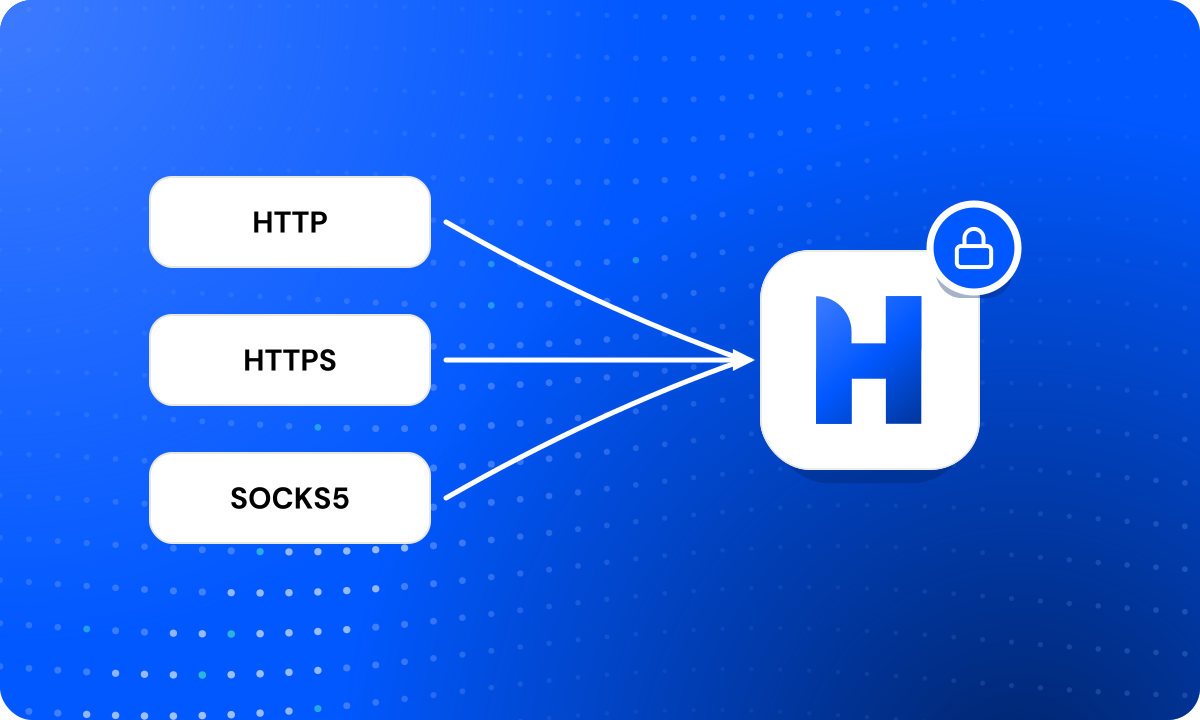
ISP targeting
13,800+ networks
State or city
26,000+ cities
Sticky sessions to 24 hours
3 min to 24 h
Device OS
4 platforms
Exclusions
Country, state, city, network
IP whitelist
150 IPs per plan
SOCKS5 with UDP
HTTP, HTTPS, SOCKS5, UDP
Per-plan statistics
30-day window
Coverage
Target Poland down to the city
30,865 listed places, cities down to villages, in a country of 38 million people, 16 regions, the capital is Warsaw. Every one of them has its own page.
Poland by region
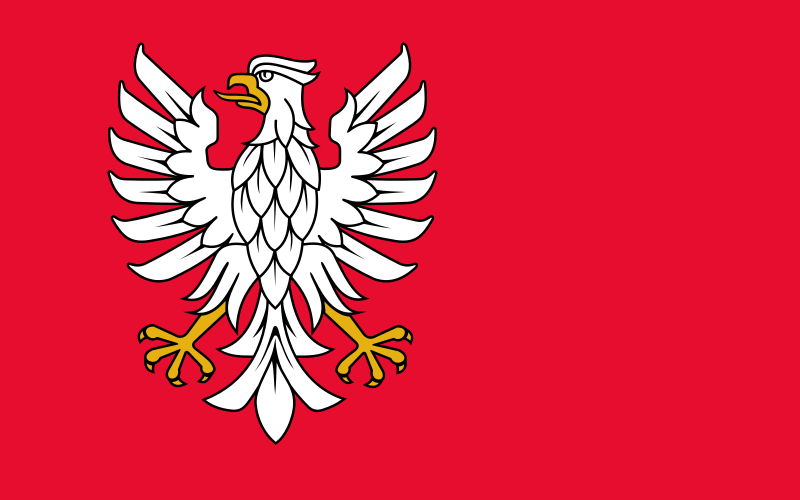 Mazovia
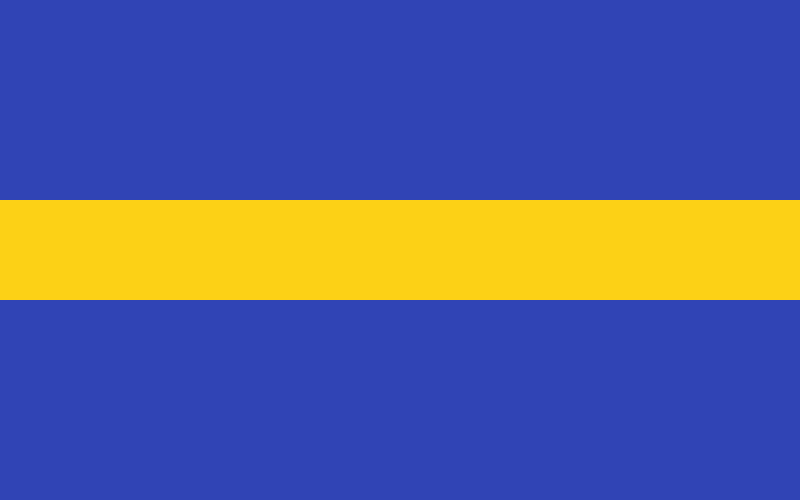 Silesia
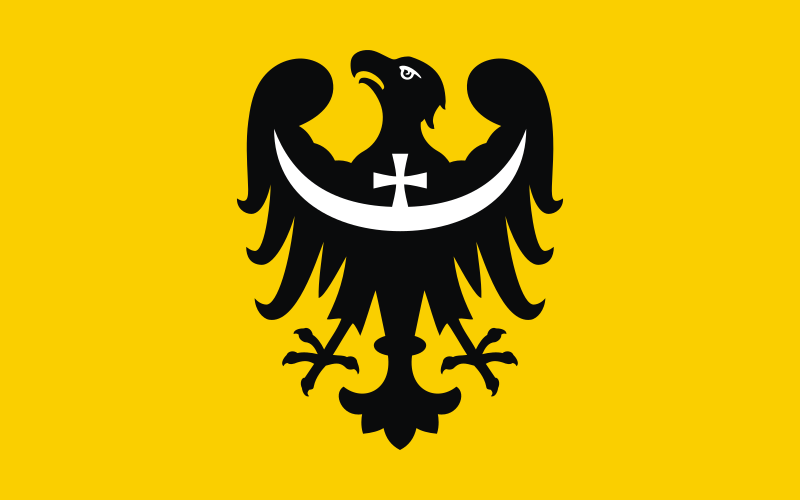 Lower Silesia
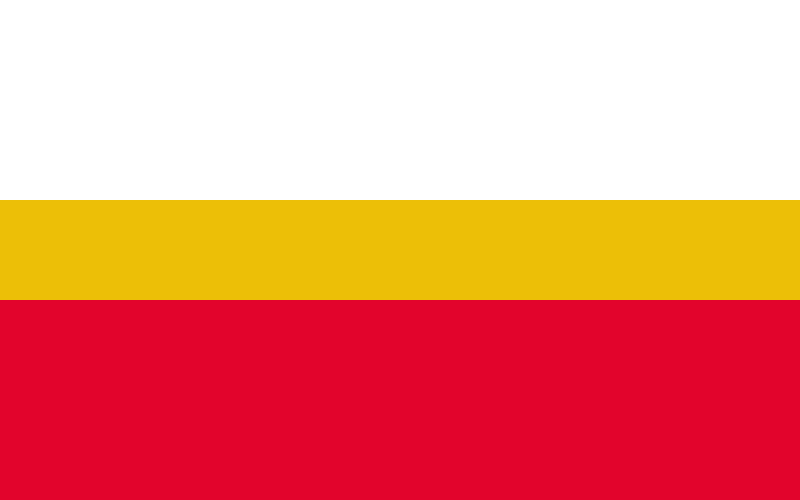 Lesser Poland
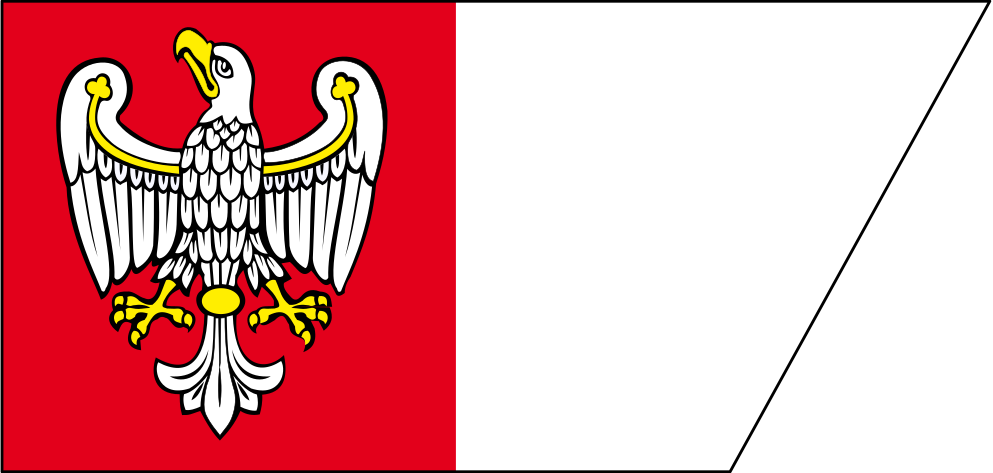 Greater Poland
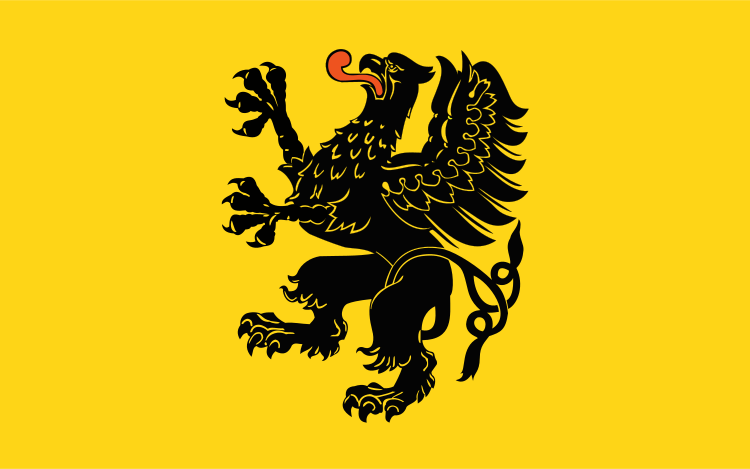 Pomerania
 Łódź Voivodeship
 Kujawsko-Pomorskie
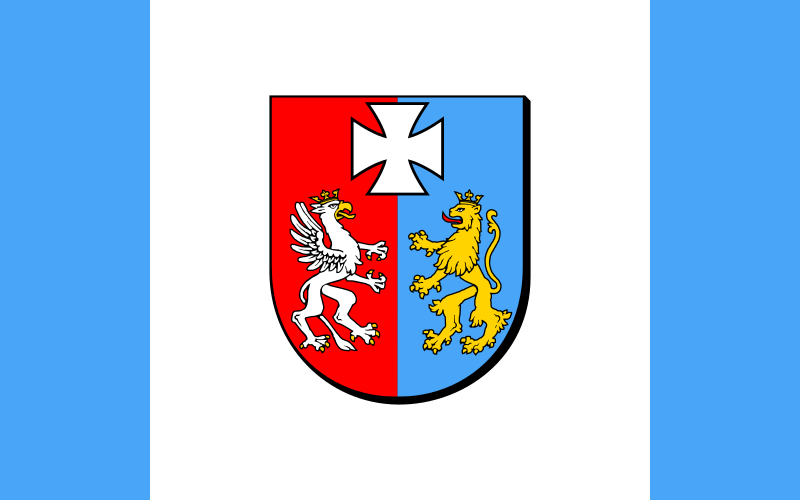 Subcarpathia
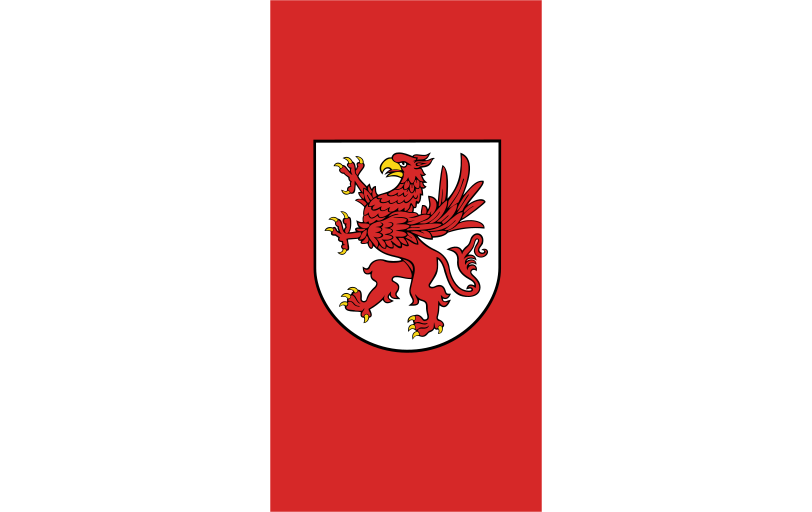 West Pomerania
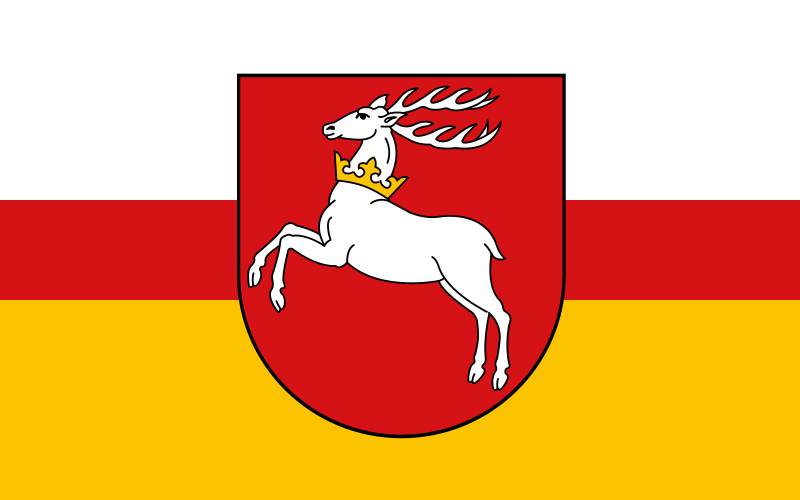 Lublin
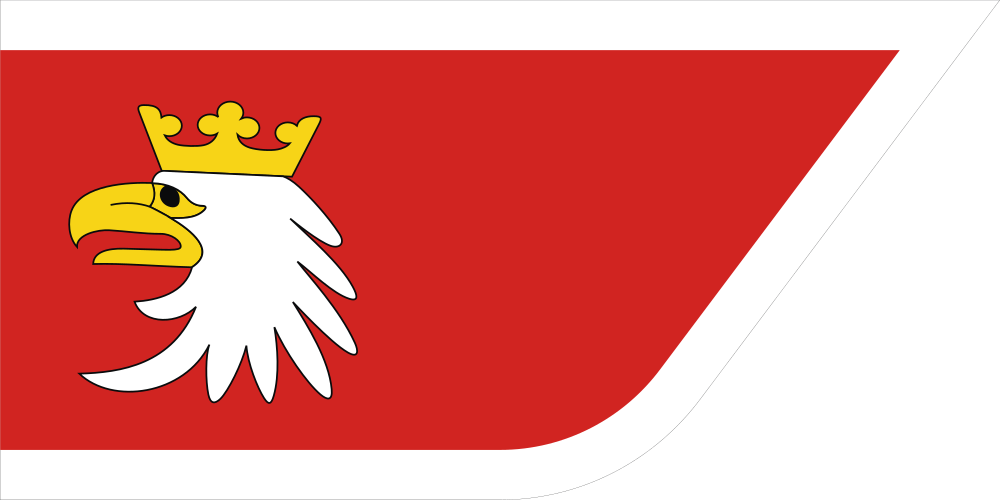 Warmia-Masuria
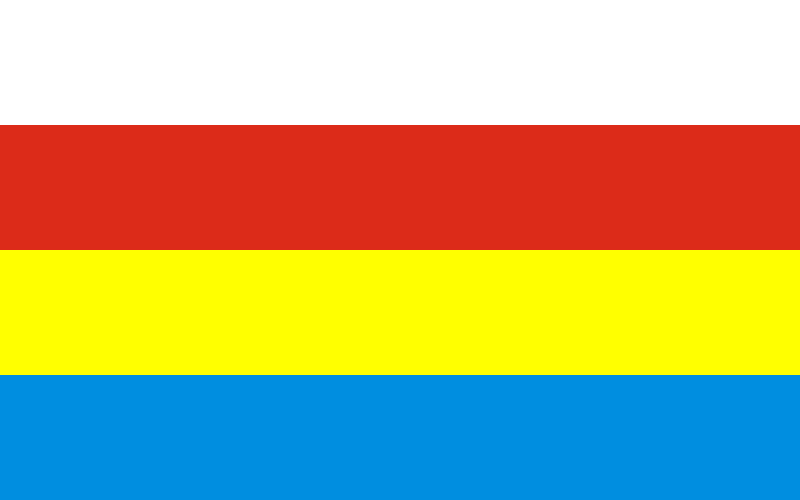 Podlasie
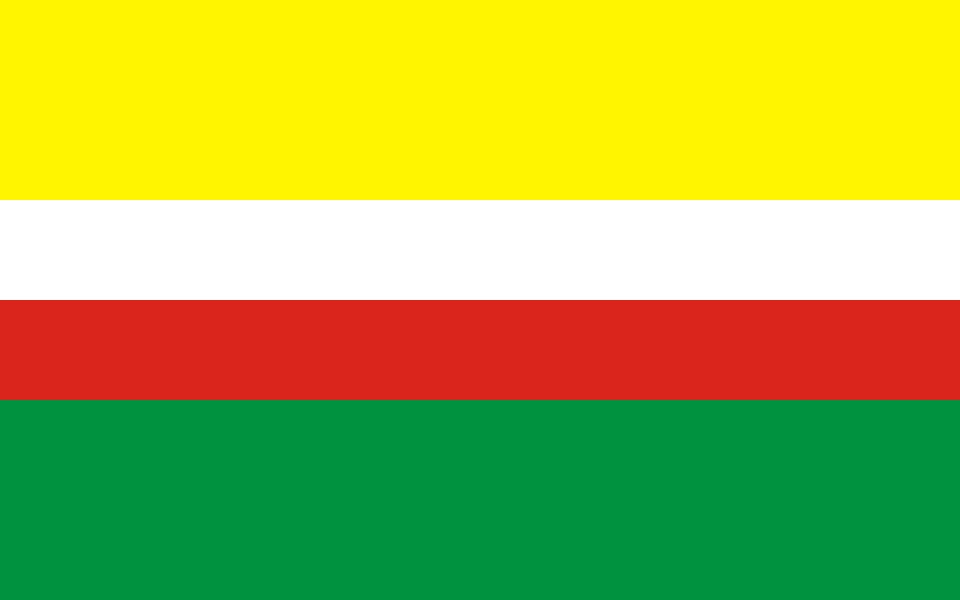 Lubusz
 Opole Voivodeship
 Świętokrzyskie
Biggest cities first
Working around Poland instead? Germany, Lithuania, Slovakia, Czechia, Belarus, Ukraine, Russia border it.
The 12 biggest listed cities marked.
Poland on the world map.
Not one of four networks
Poland is the most fragmented major internet market in Europe
In most countries a residential address means one of a handful of national operators. Germany runs through a short list. France runs through four. Poland does not work that way: the regulator's own 2025 report puts roughly a third of Polish fixed-internet users on operators that each hold under one percent of the market. Not small in aggregate, small individually, thousands of them.
The address registry says the same thing from another direction. Poland announces around 2,459 autonomous systems against about 20 million IPv4 addresses, which works out near 8,100 addresses per network. Germany sits closer to 39,000 and France closer to 44,000. Poland has many more networks, each holding much less. Even the country's largest peering point is not in Warsaw, it is in Katowice, run by a not-for-profit association of smaller ISPs.
For anyone buying a Polish exit, that changes what the word "Polish" is describing. There is no single dominant network whose behaviour stands in for the country, so an address here is genuinely one of many rather than one of four. Breadth of coverage is a real quality axis in this market in a way it simply is not in Spain or the Netherlands.
Mobile and IPv6
A Polish mobile address is an IPv4 address, and that is structural
Poland runs around nineteen percent IPv6 against Germany's seventy-two and France's eighty-four, and the national number hides the interesting part. The fixed networks are not the problem: Orange's fixed side runs in the forties, the old UPC cable network higher still. The mobile networks are the problem, and they are not a little behind, they are at a fraction of one percent.
So if you are buying Polish mobile, you are buying IPv4, and there is no version of that decision where you are not. It is worth knowing before you build anything that assumes a dual-stack exit. It also means Polish IPv4 is under real pressure, which is the usual road to carrier-grade NAT and shared addresses on the consumer side.
Reachability
Two national blocklists, and they do not overlap at all
Poland operates two separate DNS blocklists that every consumer ISP is required to honour: a gambling register run by the finance ministry, and a fraud and phishing list run by the national CERT. Together they cover roughly 195,000 domains. We pulled both and compared them, and the intersection is exactly zero. They are two entirely separate lists doing two entirely separate jobs.
The consequence is a reachability quirk worth stating plainly, because it is the sort of thing that produces a confusing test result at two in the morning. A Polish consumer-ISP path and a Polish datacenter path do not resolve the same internet. If a domain fails from one Polish exit and works from another, that is not necessarily your proxy misbehaving, and it is not necessarily geo-blocking either. It may simply be which resolver sat in front of it.
Why brands watch Polish prices
Poland enforces the thirty-day price rule harder than most of the EU
Across the EU a discount has to be shown against the lowest price of the previous thirty days. Plenty of countries have that rule on paper. Poland has been fining for it: the competition regulator issued penalties in the tens of millions of zloty against large marketplaces during 2026 over exactly this, reported as non-final and under appeal at the time of writing.
That turns price monitoring from a competitive nicety into a compliance artifact. If you sell into Poland, someone should be able to show what your Polish listing said thirty days ago, and reading a Polish storefront reliably means reading it from a Polish address. It is the same argument as the German one and the enforcement record behind it is heavier.
Trust
Who you are buying from
Same network, same team and same terms behind every page on this site, Poland included.
Rated by paying customers

114 reviews on Trustpilot, 92% of them five-star. The badge links to the live profile, judge for yourself.
Real people, around the clock
Live chat sits on every page, bottom right. Ask about Poland targeting before you pay and a person from the team that runs the network answers, whatever the hour.
Terms that do not trap you
Pay as you go, no subscription, and a balance that never expires. Not ready to spend? The free Poland list is public and measured around the clock.
FAQ
Polish proxy questions, answered
The number of networks. Poland announces roughly 2,459 autonomous systems against about 20 million IPv4 addresses, so each network holds far less than its German or French counterpart, and around a third of Polish users sit on operators holding under one percent of the market each. A Polish address is genuinely one of many rather than one of four.
Poland runs two mandatory DNS blocklists, a gambling register and a national CERT fraud list, covering around 195,000 domains between them with no overlap. Consumer ISP paths honour them and other paths may not, so two Polish exits can genuinely resolve different things. Check the resolver before assuming the proxy is broken.
Yes, and there is a compliance reason as well as a commercial one. Polish regulators have issued substantial fines over the EU rule requiring a discount to be shown against the lowest price of the preceding thirty days, so brands selling into Poland increasingly need a record of what their Polish listing actually showed. Reading a Polish storefront reliably means reading it from a Polish address.
In practice no. Polish fixed networks run meaningful IPv6, but the mobile networks sit at a fraction of one percent, so a Polish mobile exit should be treated as IPv4-only when you plan anything around it.
Warsaw, Krakow and the Silesian conurbation around Katowice are the usual anchors on residential plans, with whatever else is live in the area at the time. Katowice deserves more attention than its size implies: the country's largest peering point sits there rather than in the capital, so traffic patterns do not centre on Warsaw the way they centre on Paris or Madrid.
No, and the distinction matters more in Poland than most places. The free list is scavenged public proxies, a handful of addresses on a handful of networks, and it tells you nothing about a market of 2,459 autonomous systems. The dedicated addresses on this page come from the paid network and are unrelated to it. Use the free list for a quick geo check and nothing that has to keep working.