Residential Lite
Lowest priceStarting at
$0.44/ GB
- Rotates on every request
- Country targeting, 200+ countries
- Sticky holds the exit while you reuse the line
- HTTP and SOCKS5
- State, city and ISP targeting
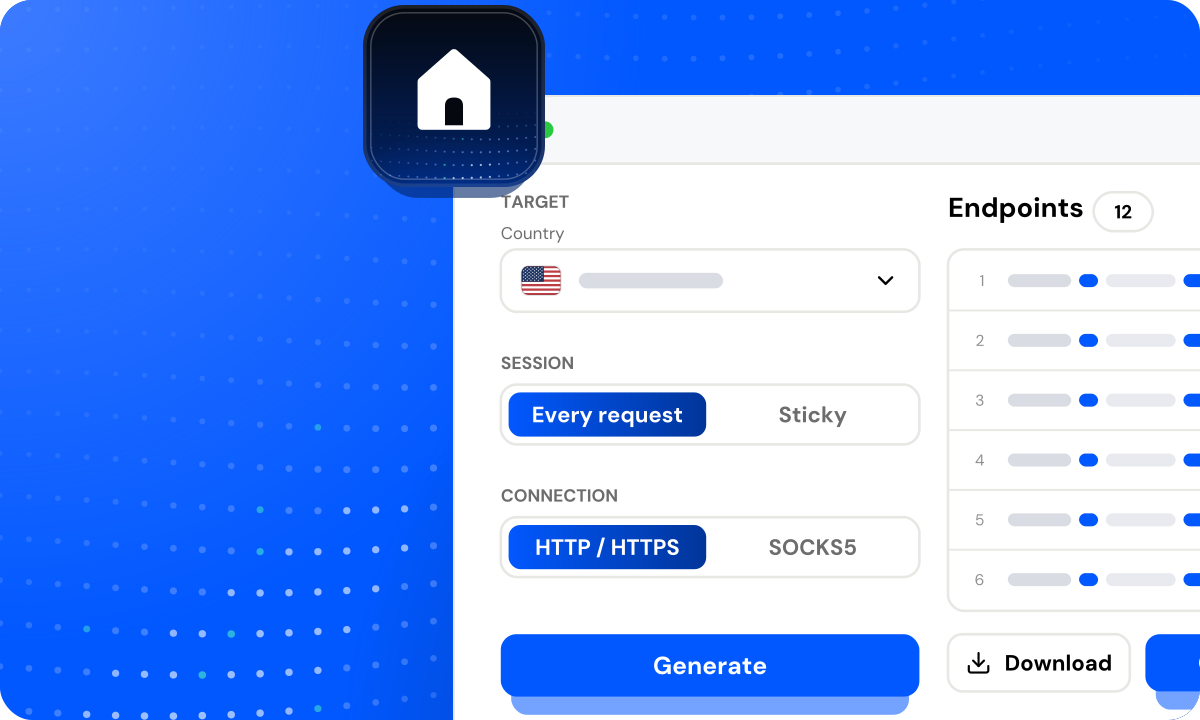
Every request through the line can exit from a different real-device IP in 200+ countries. Generate the line, pay for the bytes that pass through it, and nothing else.
Rotating residential proxies
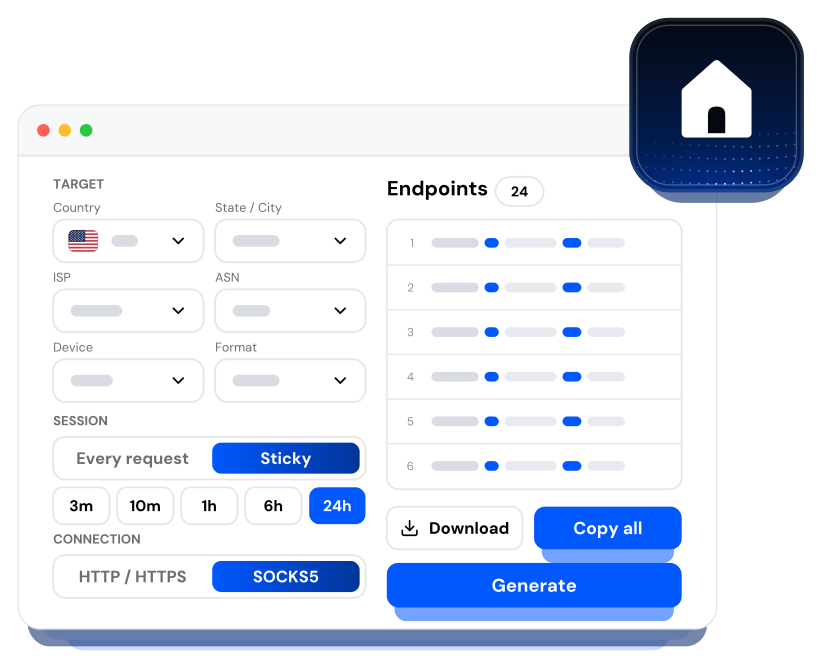
A rotating residential proxy is one proxy address that answers with a different real-device IP for each request. You connect to a single host and port. The gateway behind it picks an exit from a pool of home and mobile connections, and the next request gets another one.
On HProxy every residential line rotates by default. You turn rotation off by asking for a sticky session, and you pay by the gigabyte on either pool.
Starting at
Starting at
How it works
Your client sends every request to one host and port, res.hproxy.com:8080. The username carries the targeting: the country, and on Premium the state, the city or the network. The gateway picks an exit for that request, and the next request gets a new pick.
Generating a line is free, instant and repeatable. Ask for one line or for a thousand; they all draw from the same balance, and data is metered only by the bytes that pass through the proxy.
POST /api/v1/plans/{id}/generate
{"country": "US", "count": 10}          rotating
{"country": "US", "stickyMinutes": 30} sticky, one exit for 30 minutesRotating or sticky
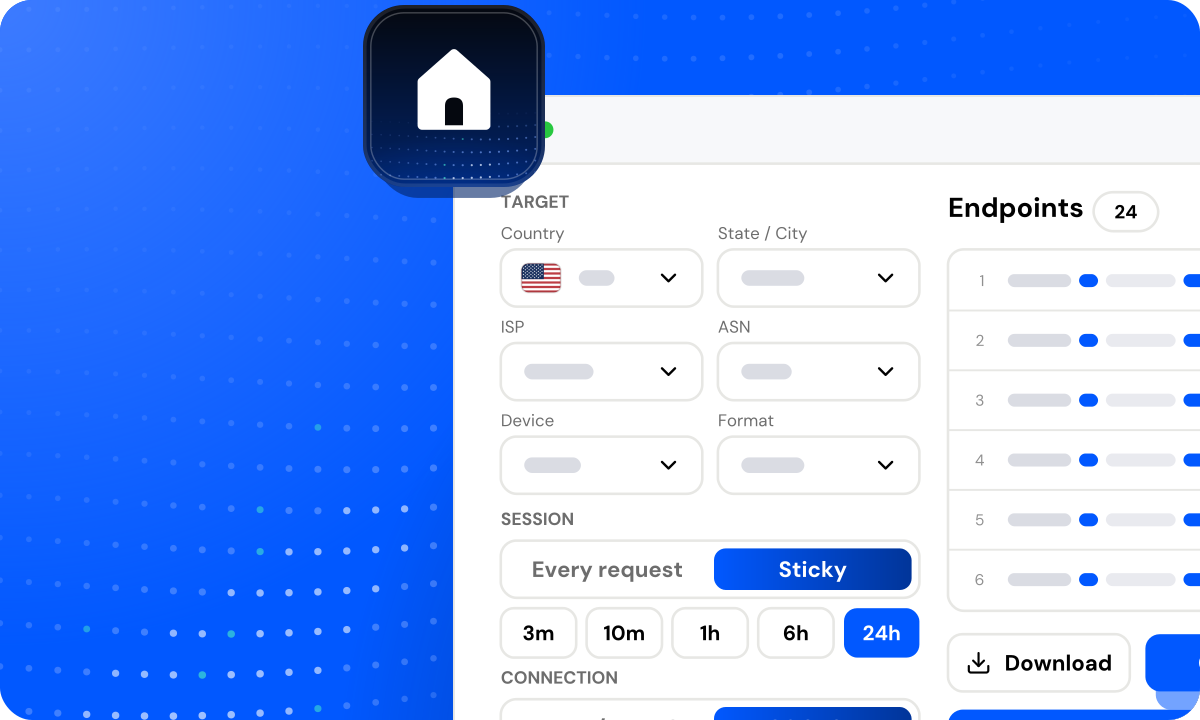
Sticky is the same line with one extra field. A sticky line opens its session on the first request and holds that exit for the length you asked for. On Premium a session can be released early, and the next request on that port draws a fresh IP.
| Rotating | Sticky | Static | |
|---|---|---|---|
| What changes | The exit IP, on every request | Nothing, for the session length | Nothing, for the rental period |
| How long one exit is held | One request | 3 minutes to 24 hours on Premium; on Lite for as long as you keep reusing the line | Weeks or months |
| Ports | One port for every line | A range of sticky ports shared by every line, with no limit on sessions on Premium | One address, one port |
| Best for | Scraping, checking, spreading load | Logins, carts, anything that needs one identity for a while | An address you whitelist somewhere else |
| Product | Residential Lite and Premium | Residential Lite and Premium | Static ISP, IPv4 and IPv6 per IP |
Session lengths and port counts from the HProxy plan documentation, September 2026. Static addresses are the static ISP and datacenter products.
What it answers
Most rate limits count requests per client address. Cloudflare's rate limiting documentation lists the IP address as the counting characteristic on its Free and Pro plans, with ASN, country, cookies, headers and the JA3 or JA4 TLS fingerprint only on Enterprise advanced rules.
A rotating line changes the address on every request, so an IP-keyed limit sees one request per address. It does not change your TLS fingerprint, your cookies or your headers. A target that keys on those needs a real browser profile behind the proxy, not a new address in front of it.
| What the defense counts | Who counts it | Does rotation change it |
|---|---|---|
| IP address | Every plan, Free and Pro included | Yes · on every request |
| IP with NAT support | Business and Enterprise | Yes · the address changes, and the NAT sees a new one |
| ASN, the network the address belongs to | Enterprise advanced rules | Partly · only through ISP targeting on Premium, which pins one network or excludes it |
| Country | Enterprise advanced rules | Partly · only through targeting; a US line stays in the US |
| Cookie, headers, path, body | Enterprise advanced rules | No · those are your client's |
| JA3 or JA4 TLS fingerprint | Enterprise advanced rules | No · the TLS handshake is your client's |
Tiers from Cloudflare, Rate limiting rules documentation, updated August 25, 2026.
Real-device IPs
A residential IP belongs to a home connection. The provider leases it through DHCP, and the lease expires and renews. Comcast's own support pages say an address is not permanent and can change after maintenance. A residential pool is therefore a moving set of addresses by nature.
Rotation uses that instead of fighting it. The pool is health-checked continuously, and the gateway hands you an exit that is online right now.
In the HTTP standard a proxy is "a message-forwarding agent that is chosen by the client". The rotating part is what the agent does with the exit, not the protocol: HTTP and SOCKS5 lines both rotate.
Every line answers HTTP, HTTPS and SOCKS5. SOCKS5 defines the commands CONNECT, BIND and UDP ASSOCIATE; on Premium a SOCKS5 line generated with udp: true opens the UDP relay for the tools that speak it.
Where
Country targeting is on every plan. A line generated with country US exits only from United States addresses, and the same holds for the United Kingdom, Germany, India, Brazil or any other country the pool covers. Premium narrows it to a state, a city or one network.
Backconnect is another name for the same thing. A backconnect proxy is one address that connects back to a pool on your behalf, which is exactly what a rotating residential line is.
Not residential? The per-gigabyte datacenter proxies rotate the same way at a lower price and lower trust, and mobile proxies rotate through 4G and 5G carrier exits.
The rules
OWASP classes the automated collection of site content as threat OAT-011, Scraping. That is how a site owner sees a crawler, whatever the crawler's intent. Whether a given use is allowed is decided by the target's terms and by the law where you and the target are, not by the proxy.
Keep to public data, read the target's terms, and keep to ours. We do not give legal advice, and this page does not claim that any particular use is lawful.
Works with your stack, and with your assistant.
A REST API for buying and generating, the whole documentation as markdown for Claude, Cursor and ChatGPT, and the free tools as a CLI and as an MCP server at mcp.hproxy.com/mcp.
If something goes wrong
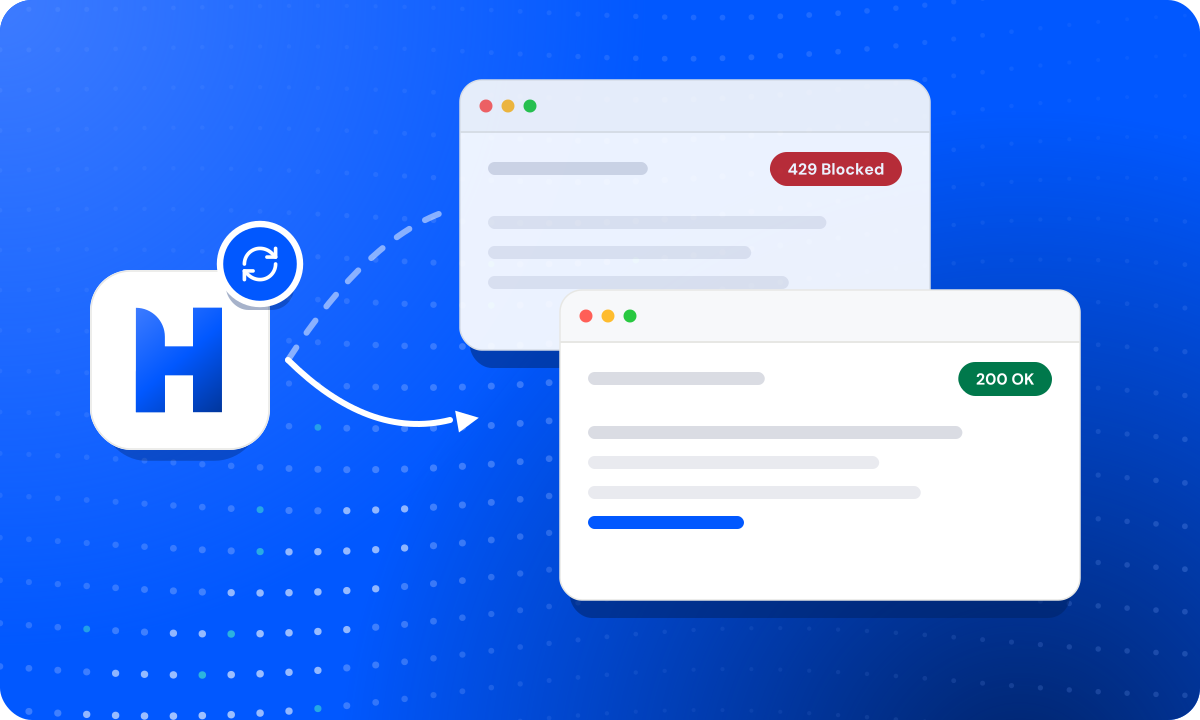
A bad exit is answered by the next request
Residential is bandwidth through a gateway, so a rotating session gets a new exit on the next request and a sticky one on the next session id.
Your balance does not expire
No subscription, no monthly reset: gigabytes you paid for stay on the account until you use them.
Fourteen days to change your mind
Ask within fourteen days and the balance you have not spent goes back to your payment method. No reason needed.
A person answers
Support is reachable at any hour through the site and by email, and a person from the team that runs the network answers.
Reviews
Founder-led
Our team in Denkendorf, Germany runs the whole network, backend to design. Some of us sign below. Write to support and one of us answers, usually the same day.
Billal Ainaoui
Founder

Richard Rivera
Head of Operations

Sammilan Vilvaranjan
Full Stack Developer

We accept





“I honestly love HProxy, especially their residential proxies. They're affordable and highly reliable, with no blocks, no detection, and they pass reCAPTCHA effectively. Great value for money.”
Crux Leban
Jul 2025
 Verified
“Hproxy has been great so far! The proxies are super fast and work without any detection issues, which is a big plus.”
Abdul Basit
Dec 2024
Verified“They just keep delivering. The proxies are fast, stable and easy to set up, and I never have to worry about downtime or speed drops. The dashboard is super clean and support is always quick to help.”
freshstylez
Oct 2025
Verified“Hproxy has great anonymity. Comparing HProxy to other providers, it definitely wins in terms of speed and price.”
Lenny
Feb 2024
VerifiedAll products
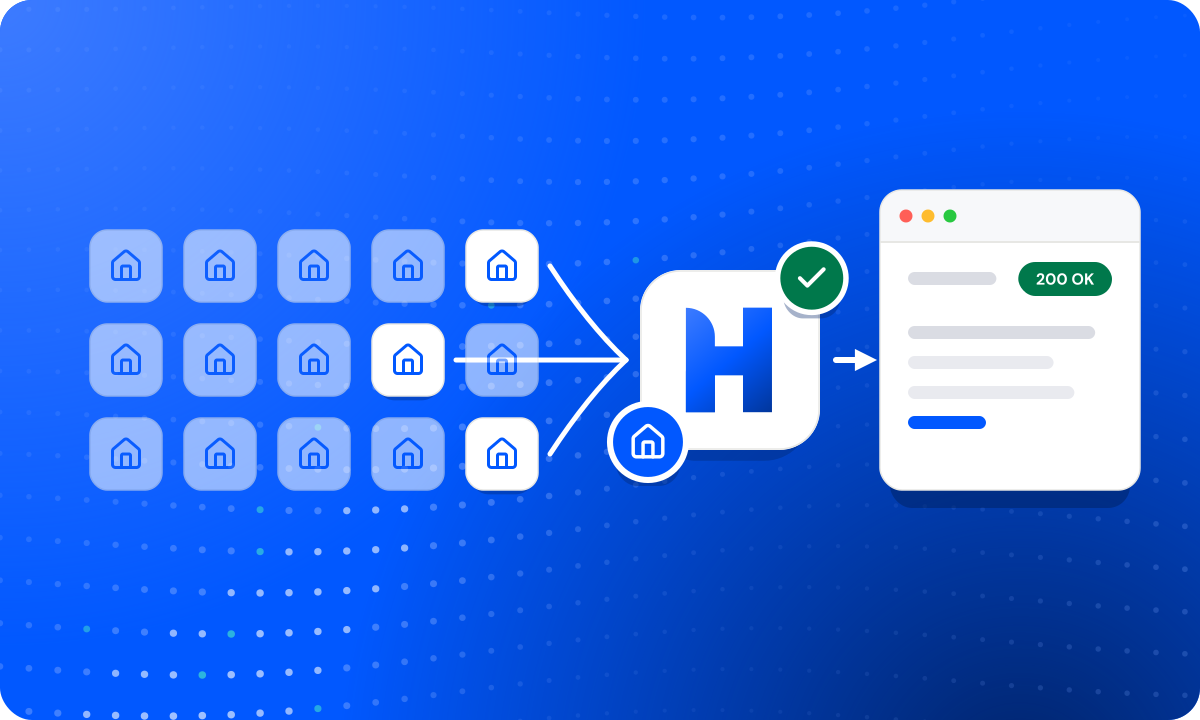
Real-device IPs
from$0.44/GB
Raw speed
from$0.10/IP
Static and trusted
from$0.65/GB
Carrier exits
from$1.50/GB
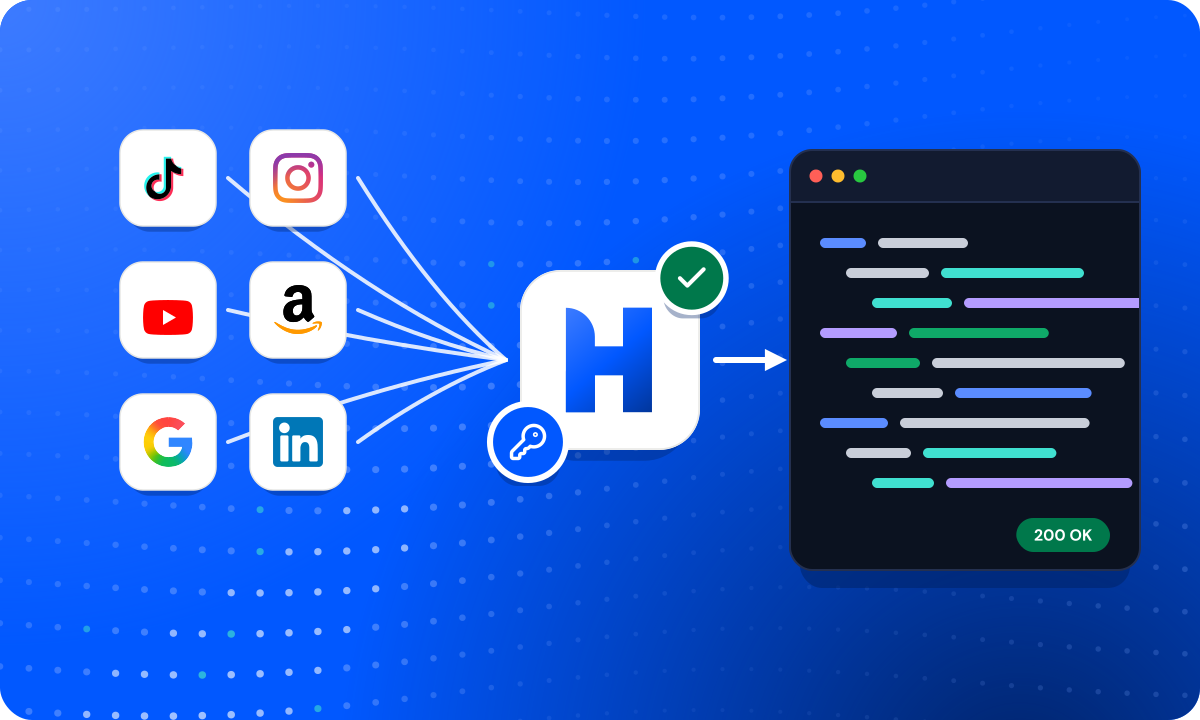
One request, structured data
from$1.49/1k
For companies
Contact us for a custom plan: high volume, your own pool, dedicated infrastructure, annual invoicing, or a price that does not fit the public tiers. Tell us the workload and a person answers.
FAQ
The questions people type before they buy, answered from the documentation and the standards, not from a sales deck.
Ask supportYou connect to one host and port. The gateway behind it picks a residential exit for that request and forwards it. The next request gets another exit. Nothing rotates on your side, and there is no list of addresses to refresh.
You do not write rotation code. Generate a line in the dashboard or through the API, then pass it to your HTTP client as the proxy, the way you would pass any proxy. Every request that goes through the line already exits from a different IP. Ask for count: 10 and you get ten interchangeable rotating lines for parallel workers.
Rotating when every request can stand alone: scraping, checking, price monitoring. Sticky when the target has to see one visitor for a while: a login, a cart, a session. On Premium a sticky line holds its exit for 3 minutes to 24 hours and can be released early; on Lite it holds the exit for as long as you keep reusing the line.
You pay per gigabyte that passes through the line, drawn from a balance that never expires. Generating lines is free and repeatable. The current entry price per pool is on this page and the full volume ladder is on the pricing page.
Using a proxy is legal. What you do through it is governed by the target site's terms and by the law where you and the target are. OWASP classes automated collection of site content as threat OAT-011, Scraping, which is how site owners see it. Read the target's terms, keep to public data, and keep to our terms. We do not give legal advice.
A proxy whose exit address does not change: a sticky session for its length, or a static address you rent per IP. Static ISP, IPv4 and IPv6 proxies are the non-rotating products; residential lines become non-rotating the moment you set stickyMinutes.
Nobody gives rotating residential traffic away. What circulates as free lists are single public addresses shared with strangers, and a list does not rotate anything; your client has to pick the next address itself, and most of them are dead by the time you try. A rotating line is one address that does that work for you.
Sources
The words this page turns on.
Rotating proxy
A proxy setup that assigns a different IP address to each request or on a timer, spreading traffic across a pool so no single address draws attention.
IP rotation
The practice of cycling through many IP addresses across a workload so no single one accumulates a suspicious request count.
Sticky session
A rotating-proxy feature that keeps you on the same exit IP for a set duration so a multi-step task can complete without the address changing underneath it.
Gateway proxy
A single entry point that routes your traffic into a whole pool of exit IPs, so you connect to one address and reach many.
Browse the full glossary for every term across proxies, networking and scraping.
Or talk to us at support@hproxy.com