Residential Lite
Lowest priceStarting at
$0.44/ GB
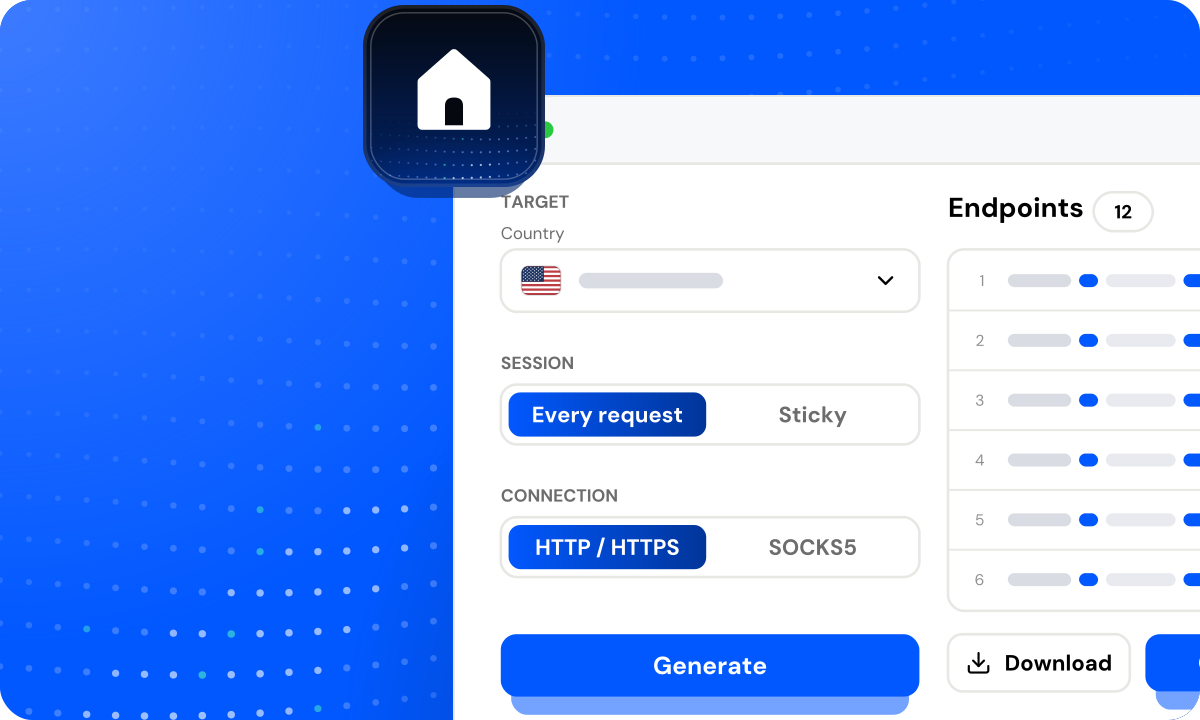
- SOCKS5 and HTTP on every line
- Rotating on every request, or sticky while reused
- Country targeting, 200+ countries
- No UDP relay
Every residential line answers SOCKS5 as well as HTTP and HTTPS, with the same credentials. Rotating or sticky, and UDP relays on Premium.
SOCKS5 residential proxies
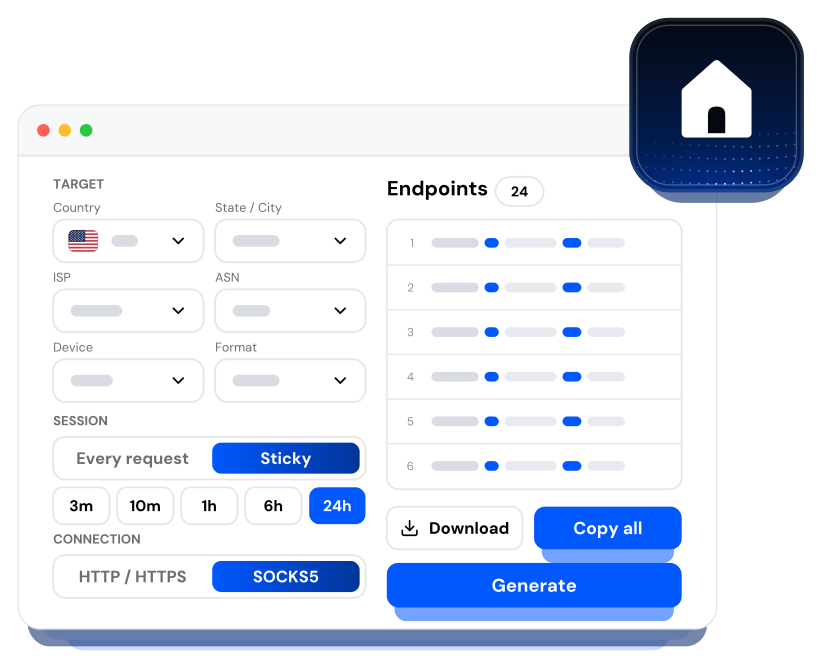
A SOCKS5 residential proxy carries any TCP connection, not only web requests. The client asks the proxy to connect to a host and port, and the proxy relays the bytes without reading them. RFC 1928 defines three commands, CONNECT, BIND and UDP ASSOCIATE; every HProxy residential line answers CONNECT, and Premium lines can also open a UDP relay.
The line is the same one you would use over HTTP: one host, your username with the targeting inside it, your password. Only the port and the protocol in your client change.
Starting at
Starting at
HTTP or SOCKS5
An HTTP proxy understands the request it forwards; a SOCKS5 proxy relays the connection as it is. Use SOCKS5 when the tool does not speak HTTP, when you need the TLS handshake to run end to end untouched, or when the client library simply expects a SOCKS5 endpoint. For ordinary web requests both ports reach the same exits.
Authentication is the same username and password on both. A whitelisted address connects to either port without a password and rotates through any country.
POST /api/v1/plans/{id}/generate
{"country": "DE", "protocol": "socks5"}                a rotating SOCKS5 line
{"country": "DE", "protocol": "socks5", "stickyMinutes": 30}  one exit, held

curl --socks5-hostname host:port -U user:pass https://example.com
Sticky over SOCKS5
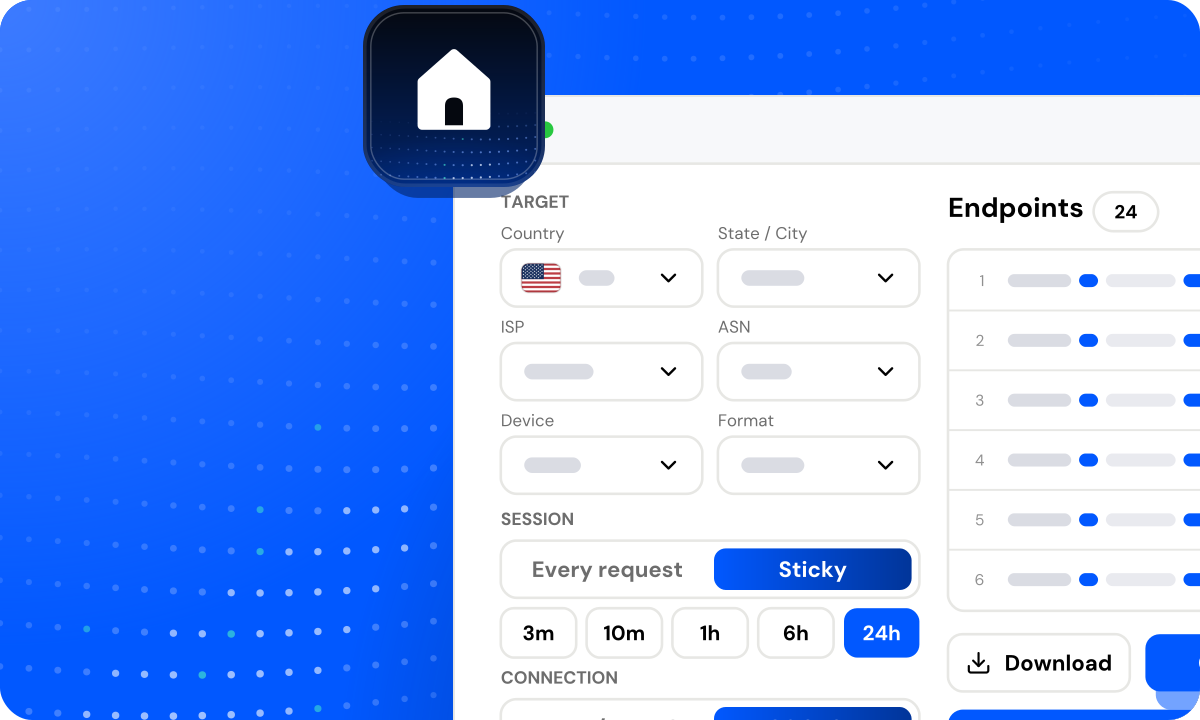
Sticky sessions work over SOCKS5 the same way as over HTTP: one extra field, one exit held for 3 to 1,440 minutes, and no limit on how many run at once.
UDP
Generate a SOCKS5 line with udp: true and it may open a UDP relay, RFC 1928's UDP ASSOCIATE, for the tools that speak it. The UDP page explains what that covers and what it does not.
POST /api/v1/plans/{id}/generate
{"country": "US", "protocol": "socks5", "udp": true}
The other modes
Field names, limits and lane widths from the plan documentation. Prices are read from the live catalog when this page renders.
Works with your stack, and with your assistant.
A REST API for buying and generating, the whole documentation as markdown for Claude, Cursor and ChatGPT, and the free tools as a CLI and as an MCP server at mcp.hproxy.com/mcp.
FAQ
Answered from the plan documentation and the standards, not from a sales deck.
Ask supportYes. Every residential line answers HTTP, HTTPS and SOCKS5 with the same credentials. The port and the protocol setting in your client decide which one you use.
Neither is faster by itself: both reach the same exits. SOCKS5 skips the request parsing an HTTP proxy does, and it carries protocols HTTP proxies cannot, which is why tools that are not browsers usually ask for it.
On Residential Premium a SOCKS5 line generated with udp: true can open a UDP relay. Lite lines and HTTP lines do not.
Anything that speaks SOCKS5 with username and password: cURL with --socks5-hostname, Python through requests with the socks extra, Node.js, Go, Scrapy, Selenium, Puppeteer and every common scraping or automation tool.
The words this page turns on.
SOCKS5 proxy
A proxy speaking the SOCKS5 protocol, which forwards any kind of TCP or UDP traffic without inspecting it, not just web requests.
SOCKS4 proxy
An older version of the SOCKS protocol that relays TCP traffic but lacks authentication, UDP support and remote DNS.
Residential proxy
A proxy that routes your traffic through an IP address assigned by an internet service provider to a home connection, so requests look like an ordinary person browsing.
Rotating proxy
A proxy setup that assigns a different IP address to each request or on a timer, spreading traffic across a pool so no single address draws attention.
Browse the full glossary for every term across proxies, networking and scraping.
Or talk to us at support@hproxy.com