Residential Lite
Lowest priceStarting at
$0.44/ GB
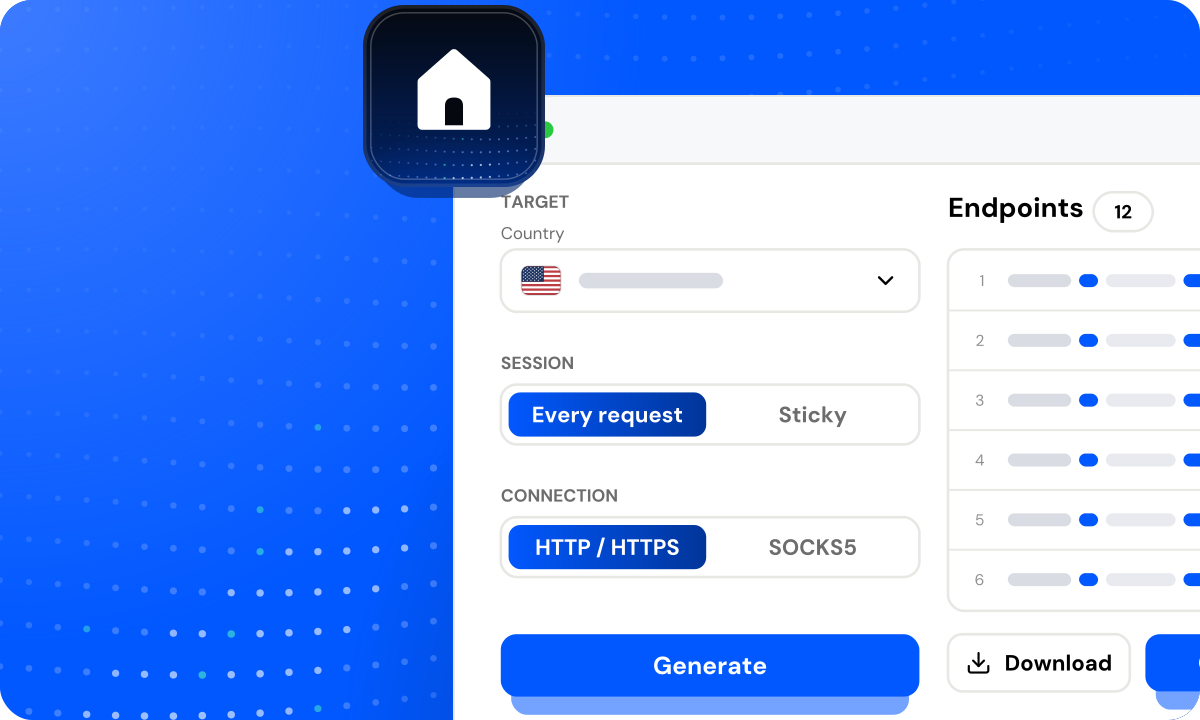
- One gateway address, a country-wide pool behind it
- Rotating on every request, or sticky while reused
- HTTP and SOCKS5
One host and port. Behind it, a pool of real-device addresses in 200+ countries that the gateway rotates for you, or holds for you. Billed per gigabyte, no subscription.
Backconnect residential proxies
A backconnect proxy is one address that connects back to a pool on your behalf: you send every request to a single host and port, and the gateway forwards each one through a different exit. That is exactly what a rotating residential line is. The word comes from the older proxy-list world, where you had to pick and rotate addresses yourself.
On HProxy the gateway is the address; the pool behind it is residential, and the exit is chosen per request or held for a sticky session.
Starting at
Starting at
Backconnect versus a list
With a proxy list your client holds hundreds of addresses, picks one per request, drops the dead ones and refreshes the file. With a backconnect line the client holds one address and the gateway does all of that: it hands each request an exit that is online now and retires the ones that are not.
Generation is free and repeatable, so a backconnect line is also cheap to hand out to every worker: ask for count: 50 and each worker gets its own line into the same pool.
POST /api/v1/plans/{id}/generate
{"country": "GB", "count": 50}            fifty rotating lines, one pool
{"country": "GB", "stickyMinutes": 30}    one line, one exit held
What is behind the gateway
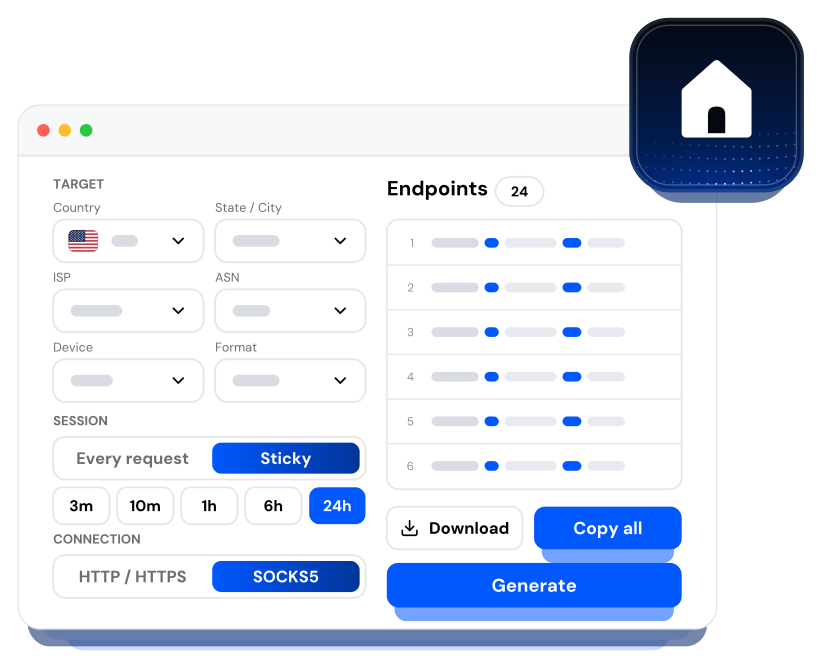
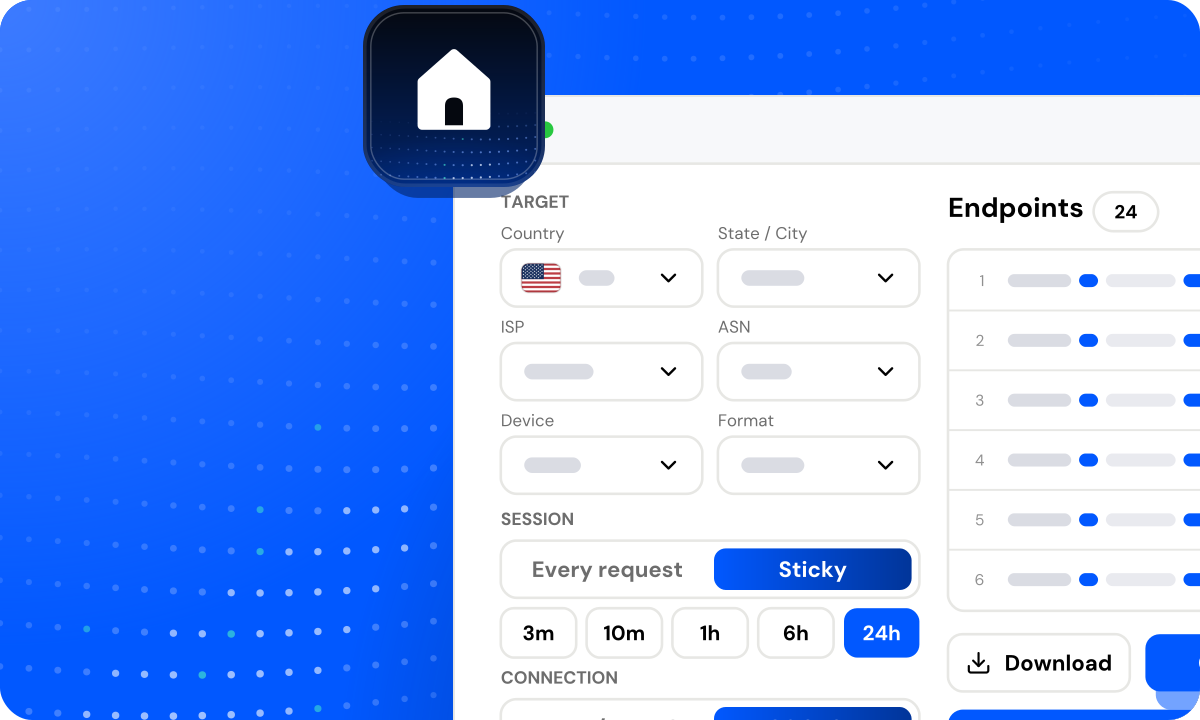
Every exit is a residential address. Country targeting is on every plan; Premium narrows a line to a state, a city or one network by its AS number, and can exclude networks and places instead. The carrier pages list the networks the gateway can pin.
The other modes
Field names, limits and lane widths from the plan documentation. Prices are read from the live catalog when this page renders.
Works with your stack, and with your assistant.
A REST API for buying and generating, the whole documentation as markdown for Claude, Cursor and ChatGPT, and the free tools as a CLI and as an MCP server at mcp.hproxy.com/mcp.
FAQ
Answered from the plan documentation and the standards, not from a sales deck.
Ask supportYes. Backconnect describes the shape, one address in front of a pool; rotating describes what that address does with each request. The rotating residential page is the same product described the other way round.
Yes. Add stickyMinutes and the line holds one exit for 3 to 1,440 minutes on Premium, or for as long as you keep using it on Lite.
Up to 5,000 per call on Premium and 1,000 on Lite, free and repeatable. They all draw from the same plan balance, and only bytes through the proxy are billed.
The gateway host is a DNS name that stays the same; the address behind it can move, which is why the lines carry the name and not a number.
The words this page turns on.
Gateway proxy
A single entry point that routes your traffic into a whole pool of exit IPs, so you connect to one address and reach many.
Rotating proxy
A proxy setup that assigns a different IP address to each request or on a timer, spreading traffic across a pool so no single address draws attention.
IP rotation
The practice of cycling through many IP addresses across a workload so no single one accumulates a suspicious request count.
Residential proxy
A proxy that routes your traffic through an IP address assigned by an internet service provider to a home connection, so requests look like an ordinary person browsing.
Browse the full glossary for every term across proxies, networking and scraping.
Or talk to us at support@hproxy.com