Proxies for The Finals meet a game defined lately by its anti-cheat escalation, and that is where the honest answer starts. The Finals launched with a serious cheating problem, and the studio's response has been to add layers of anti-cheat, Easy Anti-Cheat first, then Denuvo Anti-Cheat, and a move toward a kernel-level system, all of which read the machine rather than the network. That closes the door on any hope a proxy helps in a competitive sense, and it leaves a proxy the ordinary account and store work. The studio has also said it does not want to region-lock the game, so the region wish some players bring runs into a lock that is not really there.
The Finals is the studio's free-to-play physics shooter on Steam, Xbox, and PlayStation, and together they decide where a proxy fits. What follows covers the anti-cheat reality, the region stance, what a proxy touches, and which type fits.
What proxies are best for The Finals?
For keeping several accounts off a shared address and reaching a store or sign-in on a network that blocks it, residential proxies pinned to the account's country and held sticky, or an ISP proxy (static residential) for an account you play daily. Datacenter only for the blocked-network case. No proxy type beats the anti-cheat, lifts a ban, carries the UDP match, or changes a region the game does not lock. A proxy works on the account and web side.
The anti-cheat escalation reads the machine
The Finals' recent history is an anti-cheat story, and it is worth following because it settles the proxy question. When cheating spiked at launch, the studio identified a bug in Easy Anti-Cheat that stopped it banning cheaters effectively, then added Denuvo Anti-Cheat as a second layer, and has moved toward a kernel-level anti-cheat for deeper detection. Every one of those reads the machine, memory, drivers, and behavior, and the studio bans the account.
The fact that decides everything for proxies is that none of this reads your IP. A proxy does nothing for a banned account, does nothing to hide a cheat from an anti-cheat that inspects the machine, and should never be pointed at the game client in a way that looks like tampering, especially with a kernel anti-cheat in the mix. As a player, a proxy also does not stop you meeting cheaters, which is a matchmaking and detection problem, not an address one. The competitive edge a proxy is sometimes imagined to buy does not exist here, and the layered anti-cheat is why. The same conclusion, from a different anti-cheat, runs through proxies for Marvel Rivals.
EAC, then Denuvo, then kernel
layers that read the machine
Bans the account
not the IP
A proxy
changes the IP, touches none of it
Leave the client alone
no tampering, especially kernel
No region lock, and a UDP match
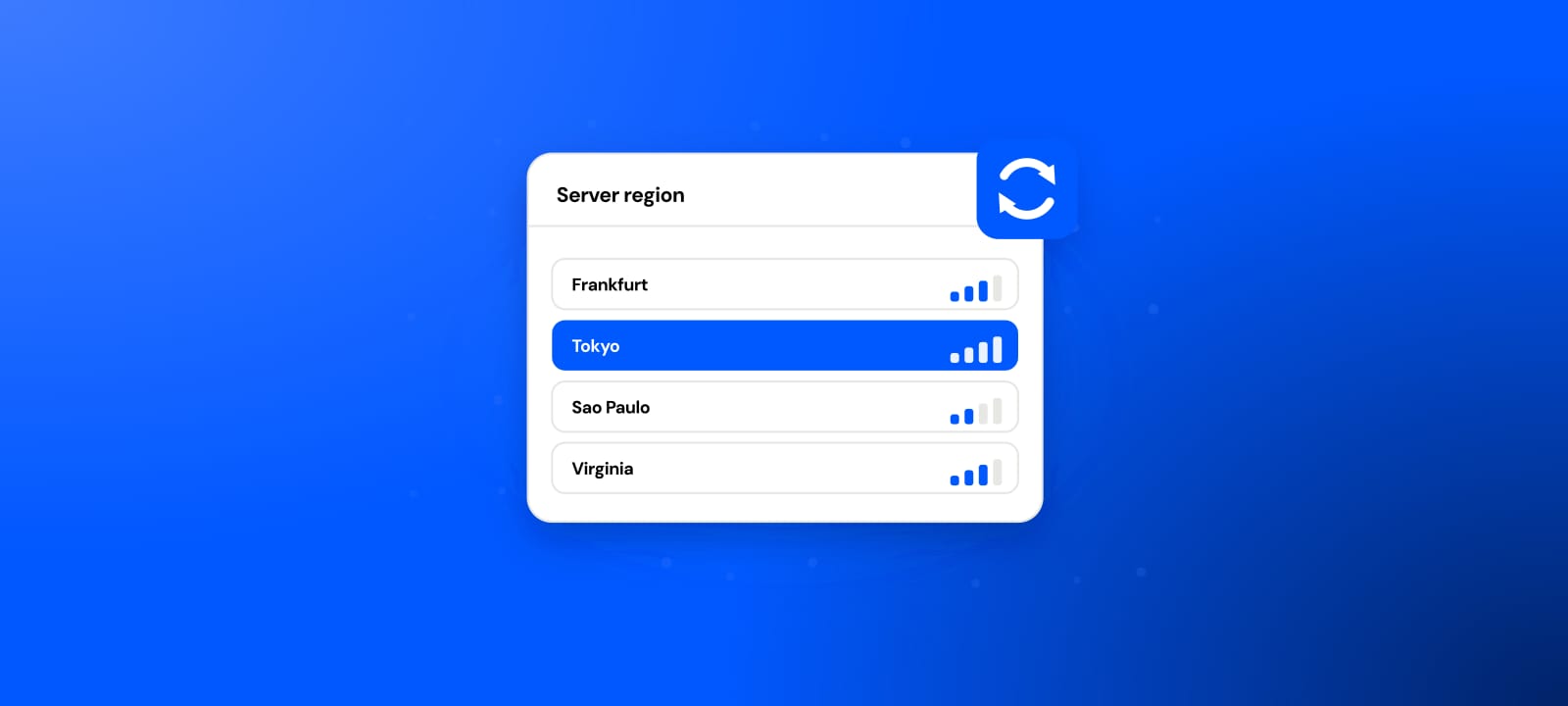
The other half of the question is region, and the answer is that there is little lock to change. The studio has said it does not want to region-lock The Finals, and that it is the studio's decision, so despite players asking for region locks to escape cheaters, the game is not built around one. And the live match traffic is UDP, which a proxy pulled from a list cannot carry, so a proxy does not change your matchmaking region or lower your ping in any case. A proxy set on your system routes the store and sign-in and leaves the match connecting direct. The region-hopping people sometimes want is neither offered by the game nor deliverable by a proxy.
What a proxy does help
The account and store side. Keeping more than one account off a single shared address, so a flag on one does not reach the rest, and reaching a store or sign-in on a school or office network that blocks it. Regional store research, seeing how cosmetics or bundles are priced elsewhere, is a browser behind a proxy, with payment platform-bound. The Steam sign-in side is in proxies for Steam. None of it touches the match or the anti-cheat.
Why people use proxies for The Finals
- Keeping accounts separate. More than one account off a shared address, on the web side.
- Reaching a store or sign-in on a blocked network. A dorm or office block, on the web side. A free proxy can do this one.
- Regional store research. How cosmetics are priced elsewhere, a browser behind a proxy, with payment platform-bound.
- Beating the anti-cheat, escaping cheaters, changing region, or lowering ping, none of which a proxy does. The anti-cheat reads the machine, the game is not region-locked, and the match is UDP.
Which proxy type fits The Finals
Residential proxies are addresses on real home connections, pinned to the account's country and held sticky, so a sign-in reads as an ordinary player. New to the category? What is a residential proxy covers the sourcing.
ISP proxies are static residential, one fixed address for an account you play daily.
Datacenter proxies sit on ranges a sign-in distrusts and fit the blocked-network case.
Mobile proxies are the carrier tier, seldom necessary when residential passes the same checks.
| The Finals job | Proxy type | Why |
|---|---|---|
| An account played daily | ISP (static residential) | One clean, consistent sign-in |
| Several accounts on one network | Residential or ISP, one IP each | Breaks address-based grouping |
| Regional store research | Residential, pinned to the region | Sees the local store (research only) |
| Reaching a store on a blocked network | Datacenter or free | Only the block matters |
| The match, ping, region, or the anti-cheat | None | UDP, no region lock, machine-based anti-cheat |
How to set it up
The account side is a browser job, and the game client is left alone, which matters doubly with a kernel anti-cheat. Set a sticky residential or ISP proxy in a browser for account work and sign-ins, one profile per account, matched to the account's country; our FoxyProxy guide covers the quick route and antidetect browser proxy setup covers several accounts. Verify any exit first with the proxy checker.
Account side (one sticky IP per account, in the account's country):
  main            ->  ISP, held
  second account  ->  residential sticky, held

Leave the game client alone; the anti-cheat reads the machine, not a proxy.
How many IPs, sticky versus rotating
One sticky address per account, in the account's country, held indefinitely; there is no throughput or rotation case, because the match never rides a proxy. The Finals' account traffic is small, so what you pay for is addresses, not data, and our pricing is pay-as-you-go with a balance that does not expire.
Free versus paid for The Finals
A free proxy can get a store or sign-in onto a network that blocks it, and a dead exit is a quick swap. The free proxy list re-checks itself every few minutes across 100+ countries, and the proxy checker confirms an entry first. Never sign into an account through a free proxy: it is a datacenter address that draws scrutiny, dies within minutes, and passes your login through an operator you do not know; the danger is detailed in are free proxies safe. Paid residential at $0.44/GB pay-as-you-go covers account work, and ISP addresses at $2.70/IP suit an account you keep.
Where a proxy stops and the studio starts
On The Finals a proxy works on the account and store side and nothing else. It does not carry the UDP match, change a region the game does not lock, or lower ping; and it is irrelevant to the layered anti-cheat, which reads the machine and bans the account, so it neither hides a cheat nor lifts a ban nor keeps cheaters out of your lobby. the studio's whole answer to cheating is anti-cheat, not IP measures, and a proxy sits entirely outside that. Keep it on the account side and the client untouched.
For reaching a store on a blocked network, start free with the free proxy list and the proxy checker. For the accounts you keep, one ISP address each, or clean residential at $0.44/GB pay-as-you-go held sticky, is what holds. Play the match on your own connection, keep each account on its own address, and leave the anti-cheat to the studio.
Sources
- BusinessWire, THE FINALS from Nexon's Stockholm studio is available now worldwide (free-to-play on Steam, Xbox Series X|S, and PS5): [businesswire.com](https://www.businesswire.com/news/home/20231207438476/en/THE-FINALS%C2%AE-From-Nexon%E2%80%99s-the studio-Studios-is-Available-Now-Worldwide)
- PC Guide, The Finals devs announce a new kernel-level anti-cheat (the move beyond Easy Anti-Cheat and Denuvo): pcguide.com
- AltChar, The Finals plagued with cheaters; players ask for region locks (the studio's position that it does not want to region-lock): altchar.com