A proxy provider comparison is only as good as its dates. Prices, pools and policies all move, so every number below carries the day it was read, and anything we could not read is marked as unverified rather than filled in.
What is on file for PromptCloud
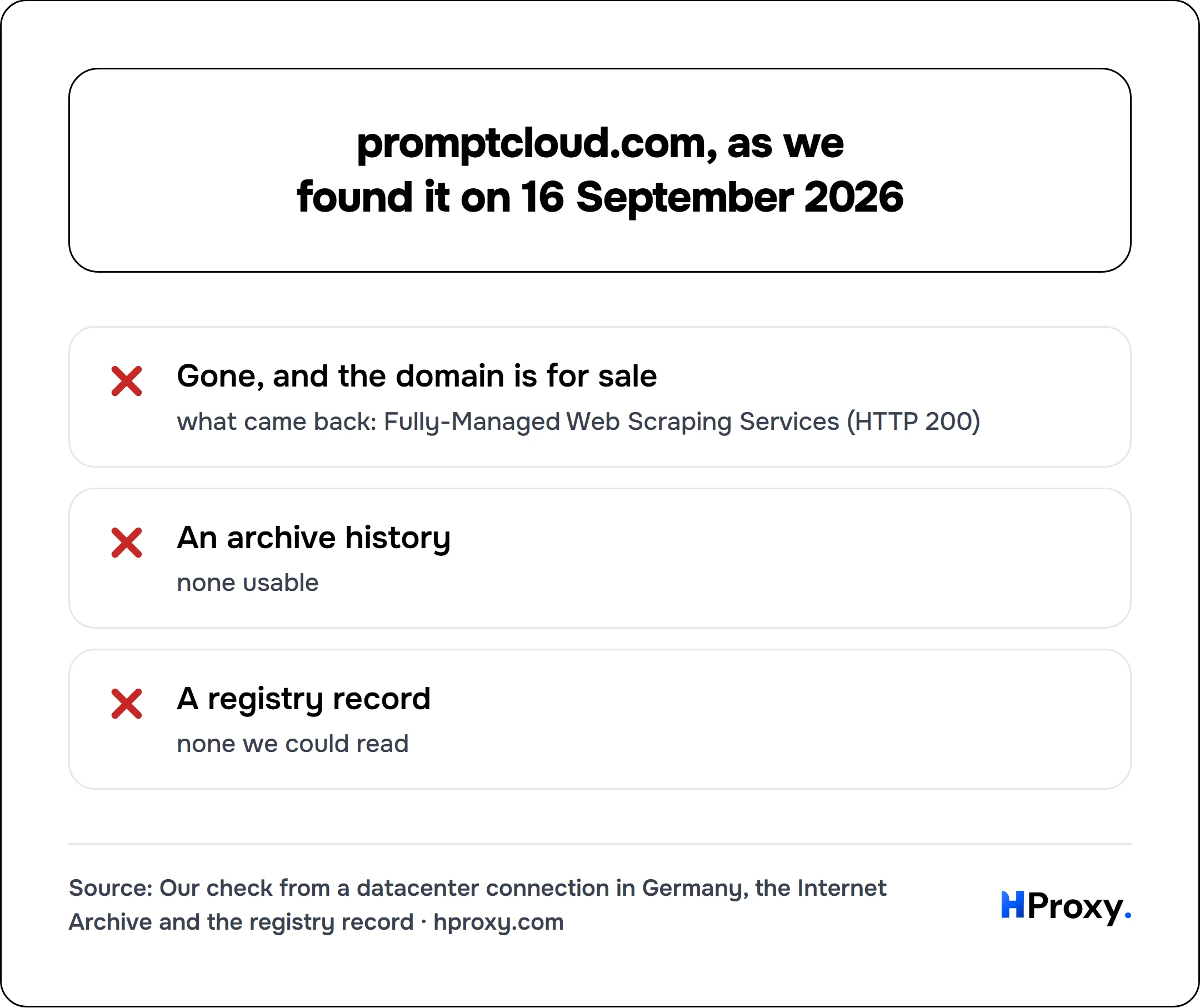
You will find them at promptcloud.com. Their site refused our automated request at the last check, which is common for providers behind a bot filter and is not by itself a sign of trouble.
There is no price in this comparison because we do not have one we can date and attribute. What follows instead is the set of questions that decide the cost once you do read their page.
Check the reachable rate, the minimum, the expiry terms and the failure billing, and date your note. A price without those four attached is not a price.
Their own description, read this week
The title tag on 9 September 2026 was "Fully-Managed Web Scraping Services, PromptCloud". The one-paragraph pitch on their own page: "PromptCloud provides SLA-backed, compliant web scraping services across industries - from eCommerce to AI training data. 14+ years of global expertise."
Also on the page, stated plainly:
The product lines named on that page are a scraping or SERP API. Their pricing page is titled "Web Scraping Pricing, PromptCloud Managed Data Pipelines".
None of that is verified performance. It is what the vendor chose to publish, recorded with a date so you can see whether it still says the same thing.
How far back the record goes
The domain was registered on 9 August 2010, through NameCheap, Inc, which makes it about 16 years old. We pulled that from the registry on 9 September 2026. The current registration term ends 9 August 2035.
This proves nothing about the product. It is a cheap check against the one failure mode that costs buyers real money in this market, which is paying a provider that will not exist in six months.
What PromptCloud publishes
A crawl of 2.254 pages returned 1.422 blog pages, 1 pricing page and 12 use-case pages.
The number is not a compliment or a criticism. It describes how much of their effort goes into being found, which is worth knowing when you are weighing a marketing claim against a measurement.
Whether anyone is still working on it
Our crawl of their site found 2,254 pages carrying a date, 1,422 of them articles. The oldest is from June 2022 and the newest from August 2026. 912 of them carry a date inside the last twelve months.
Read that as a liveness check rather than a review. It says the lights are on, and nothing about whether the proxies work on your target.
What a pricing page leaves out
Money you paid for and did not spend
Find out whether unspent traffic rolls over, expires, or expires only on some plans. The answer changes the effective rate by more than most of the price differences buyers spend their time arguing about.
Minimums, contracts and sales calls
The lowest published rate in this market usually sits behind a monthly commitment measured in thousands. Quoting it beside a pay as you go rate is not a comparison. Compare the rate you can reach today.
Match the units before anything else
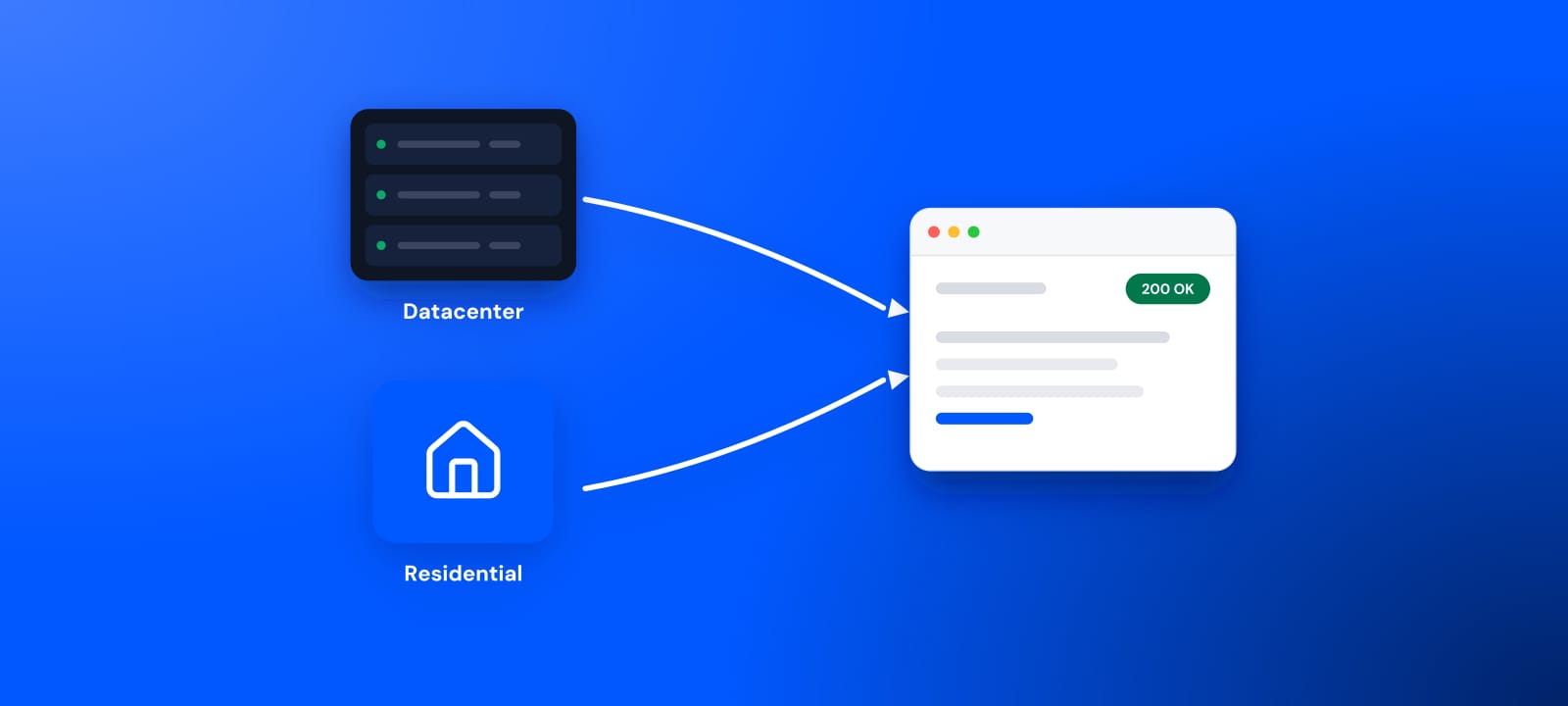
Residential is normally billed per gigabyte, datacenter and ISP per address, mobile per day or per port. Setting one against another produces a number that means nothing. Convert both sides into the unit your own workload consumes.
The rows that decide it
Six questions, both answers, and an honest blank where we do not hold a current figure:
| Question to ask | PromptCloud | HProxy |
|---|---|---|
| Entry price | Not verified by us, read their page | From $0.44/GB, pay as you go |
| Does unused balance expire? | Their terms page answers this | Never |
| Minimum commitment | On their own terms page | None |
| Identity checks | Not published clearly, ask before paying | Card orders are screened, and verification is sometimes requested |
| Targeting | On their own terms page | Country, city and ISP |
| Free way to evaluate | Not published clearly, ask before paying | Free proxy list and proxy checker |
Read the table as a list of questions rather than a scoreboard. The answers on their side move, and the row that decides the outcome, success rate on your target, is not printable by anyone.
What to do instead of reading more comparisons
The steps below take about ten minutes and settle the question properly.
- Fund both accounts with the least money each will accept, and note what that minimum was, because it is part of the comparison.
- Aim both at the page that matters to you rather than a test endpoint, and keep every other variable fixed.
- Write down two numbers per provider: the share of requests that succeeded, and the traffic it cost.
- Take a handful of the addresses you were given and verify their country and type against a checker you do not control.
- Keep the winner, and repeat the whole thing quarterly, because pools age.
Where else buyers look
If this one does not fit, these are the nearest comparable providers we have written up, each on the same terms as this page.
- Myproxies alternatives
- NaProxy alternatives
- Net-Vortex alternatives
- NewIPNow alternatives
- NewProxies alternatives
- Nexproxy alternatives
What we sell, stated plainly
Our position is narrow. Residential from $0.44 per GB, no subscription, no expiry on the balance, and a public record of what our free network actually does. A provider unwilling to be measured is telling you something, and so is one that asks to be.