
Australia Proxies
Buy Australian proxies. Ready in minutes.
- Just need a few free ones? Browse the live free Australian list.
Dedicated Australian IPs
Three ways to hold a real Australian address
Every price below is live. The dedicated IP products are checked against what is in stock for Australia before this page shows them, and residential is aimed at Australia when you generate your proxies, billed per GB.

Residential PremiumFlagship
Real Australian household IPs, aimed down to a state, a city or a single ISP. Sticky sessions up to 24 hours, SOCKS5 with UDP, and a block list for what you want to avoid.
- A state, a city or an ISP
- Sticky up to 24 hours
- SOCKS5 with UDP
From
$1.00/ GB
Residential LiteLowest price
The same Australian household network at the lowest per-GB rate, targeted by country rather than by city. Rotating or sticky, pay per GB, balance never expires.
- Targeted by country
- Rotating or sticky
- Balance never expires
From
$0.44/ GB

Datacenter
Dedicated Australian IPv4 and IPv6 addresses for volume work where raw speed matters more than a residential footprint.
- Private IPs, only yours
- Unlimited bandwidth
- IPv4 and IPv6
From
$0.10/ IP
Targeting in Australia
Australian proxies by city, region and network
Premium lists 78 cities in Australia across 8 regions. A line can exit in Sydney, Melbourne, Brisbane and Perth, or in any of the other 74.
Premium can also hold a line on one network, chosen by its AS number. The 68 networks it lists in Australia include Telstra, Aussie Fibre, SingTel Optus, TPG Telecom and Neighbourhood Cable.
Mobile proxies reach Australia too: 4G and 5G carrier addresses, sold per GB.
Counted on 9 October 2026 from the pool's own lists, the same lists the dashboard reads when it generates a line.
78
cities
8
regions
68
networks
How you use them
Rotating, sticky and SOCKS5 in Australia.
Rotating Australian proxies
A line generated with country AU exits from a different Australian address on every request. Ask for count: 10 and each worker gets its own line.
How it works →Sticky Australian proxies
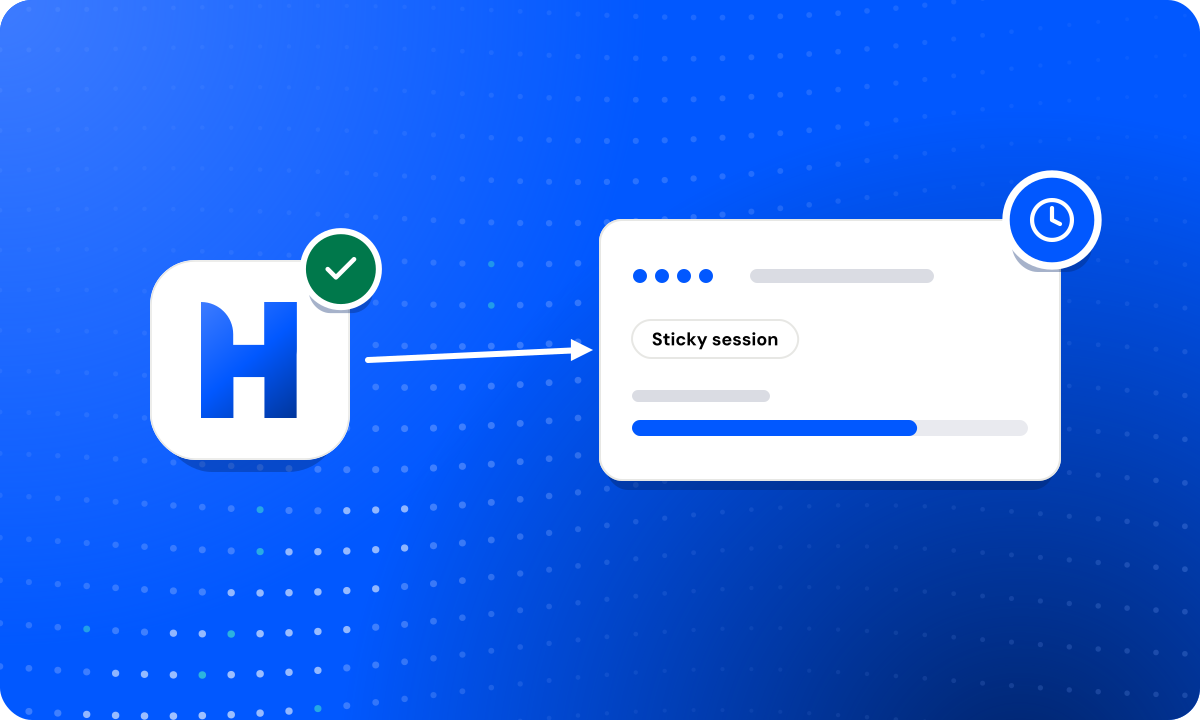
Add stickyMinutes and the line holds one Australian address for 3 to 1,440 minutes on Premium, or for as long as you keep using it on Lite.
How it works →SOCKS5 Australian proxies
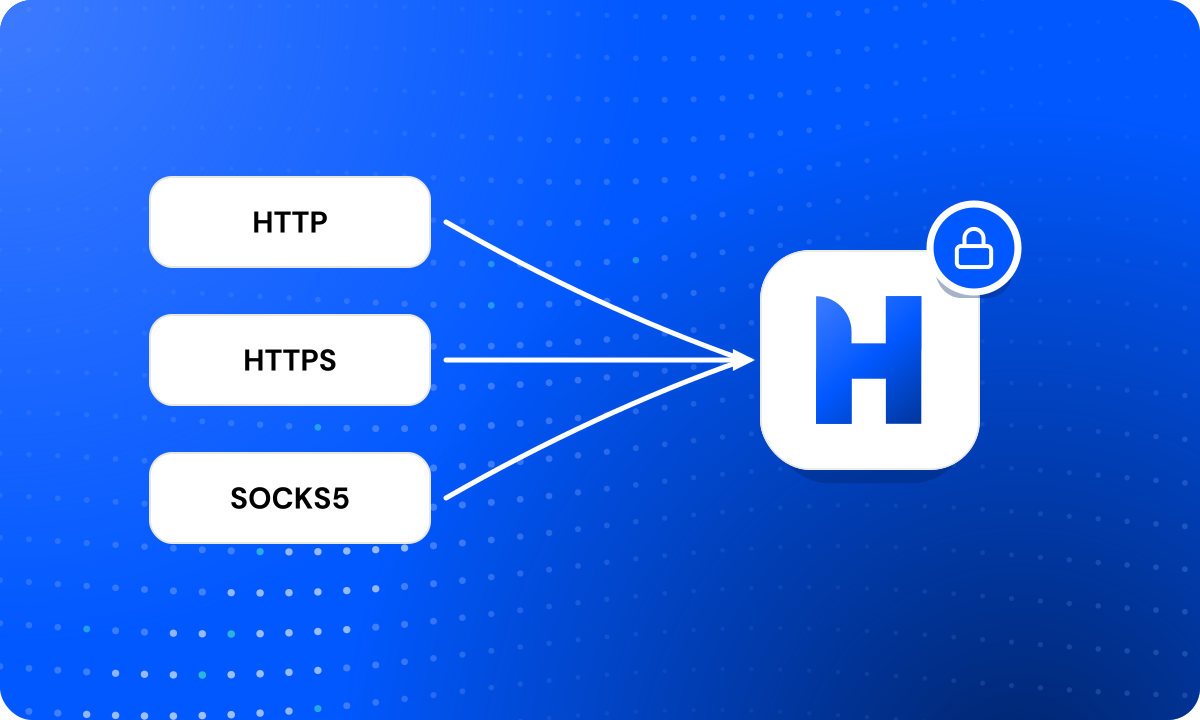
Every line answers SOCKS5 as well as HTTP, with the same credentials; Premium adds a UDP relay with udp: true.
How it works →Residential Premium
What Premium adds in Australia
Lite reaches Australia by country and rotates. Premium turns every one of these on, from the same balance.

ISP targeting
13,800+ networks
State or city
26,000+ cities
Sticky sessions to 24 hours
3 min to 24 h
Device OS
4 platforms
Exclusions
Country, state, city, network
IP whitelist
150 IPs per plan
SOCKS5 with UDP
HTTP, HTTPS, SOCKS5, UDP
Per-plan statistics
30-day window
Coverage
Target Australia down to the city
13,319 listed places, cities down to villages, in a country of 25 million people, 8 states, the capital is Canberra. Every one of them has its own page.
Australia by state
 New South Wales
 Victoria
 Queensland
 Western Australia
 South Australia
 TasmaniaAustralian Capital Territory
 Northern Territory
Biggest cities first
The 12 biggest listed cities marked.
Australia on the world map.
The isolation is the fact
Australia is genuinely far from everything, and that matters
Australia is the most geographically isolated market we cover, and it is not a small effect. A request from Europe to a server that genuinely sits in Sydney takes around three hundred milliseconds each way, and that is physics, not a slow proxy. It is also a trap we deliberately avoid: most Australian brand domains answer in forty to seventy milliseconds because they resolve to a content-delivery edge in Europe, never touching Australia, so timing them would produce a beautiful, meaningless number.
That is precisely why this page shows no single latency figure for Australia. Measured from our vantage it would describe the distance to Australia, not the quality of the pool. What an Australian IP actually buys you is genuine presence in an isolated market, and the live picture on our free list reports what that pool really is, in networks and cities, rather than a speed number that the ocean would only distort.
One wholesale network, owned by the state
Every retail brand sits on the same government network
Australian home internet has an unusual shape. A single wholesaler, NBN Co, owns the national access network, and every retail provider, Telstra, Optus, TPG, Aussie Broadband and the rest, has to buy access from it because there is no alternative fixed wholesaler. The UK has something similar in Openreach, but Openreach is a division of a listed company while NBN Co is owned outright by the government. So Australian residential addresses cluster by retail provider on top of one shared network, and which retailer an address belongs to is what actually distinguishes it.
Here is where measurement beats a label. Australia's second-largest source of residential address space is registered under a legacy shell-company name rather than the carrier that runs it, which is Optus, one in six Australian users. Anyone building a network map from raw registry names loses Optus entirely without noticing. Our per-network view reports the operator that is really there, which is the kind of thing you only get by measuring rather than trusting what a name lookup hands you.
The work, and a myth we checked
What Australian IPs are for
The staples apply: retail and marketplace price monitoring, search tracking where an Australian IP is what returns Australian results now that google.com.au redirects to google.com, and streaming and sport QA against a market with its own broadcast rules. One myth is worth retiring, though, because we measured it. The famous "Australia tax", the premium Australians supposedly pay for digital goods, has largely closed: current prices we checked are within a few percent either way, and some titles are actually cheaper in Australia once you account for the GST that Australian prices include. The 2013 parliamentary finding behind that reputation was real, and it is also thirteen years old, so we will not sell you a reason that expired. The automated version of the real work runs an Australian exit through our scraper APIs.
On the rules, Australia's Privacy Act governs personal information and has been tightening, including a new avenue to sue over serious invasions of privacy, and the country has also brought in a world-first minimum-age rule keeping younger teenagers off certain social platforms, overseen by the eSafety Commissioner. As with similar laws elsewhere, that is part of the legal landscape you operate within, not something this page helps anyone evade. We sell the Australian footprint for legitimate work; our terms ask you to respect Australian law and each site's rules, and anything personal is a lawyer's question.
Trust
Who you are buying from
Same network, same team and same terms behind every page on this site, Australia included.
Rated by paying customers

114 reviews on Trustpilot, 92% of them five-star. The badge links to the live profile, judge for yourself.
Real people, around the clock
Live chat sits on every page, bottom right. Ask about Australia targeting before you pay and a person from the team that runs the network answers, whatever the hour.
Terms that do not trap you
Pay as you go, no subscription, and a balance that never expires. Not ready to spend? The free Australia list is public and measured around the clock.
FAQ
Australian proxy questions, answered
Our live free list shows the live count from our verification engine, with the networks and cities behind it. It refreshes every few minutes, so it reflects the current pool rather than a fixed number.
Residential plans support city-level targeting inside Australia, so a session can exit in Sydney, Melbourne or wherever a task needs, subject to what is live in that area at the time.
Much less than the reputation suggests. We measured current digital-goods prices and the old premium has largely closed, with some titles actually cheaper in Australia once GST is accounted for. The 2013 parliamentary finding that made the Australia tax famous is real but thirteen years old, so treat it as history, not a current reason to monitor.
Because Australia is genuinely isolated. A round trip from Europe to a real Australian server is about three hundred milliseconds, which is physics rather than proxy quality, and most Australian brand domains answer far faster only because they resolve to European edges that never touch Australia. A latency number measured from our vantage would describe the ocean, not the pool, so we report composition and networks instead.
Two: rotating residential and datacenter, each confirmed against the live catalog before it shows here. We do not currently sell dedicated Australian ISP or mobile products, so those cards are absent rather than promised.
Australia's Privacy Act governs personal information and has been tightening, and collecting genuinely public data is a different matter from handling personal data or entering logged-in areas. This is context, not legal advice: anything personal or behind a login is a question for a lawyer.