Lufthansa did something in 2015 that reshaped how airline fares move: it put a price on being sold through a travel agency. The Distribution Cost Charge added a fee to every ticket booked through the old global distribution systems and left direct bookings untouched, which split the same fare into a cheaper channel and a dearer one. On top of that, Lufthansa Group prices by point of sale, so the fare also depends on the country a booking appears to come from. Proxies for Lufthansa are the tool for reading both splits, the channel gap and the market gap, the way a traveler in each country actually sees them.
We run a proxy network, and Lufthansa traffic reaches us from fare trackers, corporate travel teams and travel-data vendors across its group (Lufthansa, SWISS, Austrian, Brussels Airlines). This page covers what is specific to the group: the DCC and the channel gap, point-of-sale pricing, how the site blocks, which proxy type fits and how to size it. The sector background is in travel fare aggregation, the metasearch that carries these fares is Skyscanner, and the closest sibling with its own distribution story is proxies for British Airways.
What proxies are best for Lufthansa?
Rotating residential proxies driven by a real browser, pinned to the country of sale you want, with a static residential (ISP) exit for Miles & More account work. Lufthansa files fares by point of sale and defends its site with Akamai-class bot management, so a home connection in the right country is both the accuracy rule and the reputation rule. Mobile is the last resort, and most trackers never reach for it.
The Distribution Cost Charge, and the channel gap it creates
Lufthansa Group introduced its Distribution Cost Charge on September 1, 2015: a fee, originally 16 euros, added to every ticket booked through a global distribution system, and not levied on bookings made through the airlines' own sites or their NDC channel. The fee has grown and split by system. As of January 1, 2026, the DCC is 18 euros for Amadeus bookings, 22.50 euros for Sabre and 23 euros for Travelport, while the public NDC charge stays at 8 euros (Travel Weekly; Aviation.Direct). The airlines covered are Lufthansa, Austrian Airlines, Brussels Airlines, SWISS and Air Dolomiti.
For a data team this is a channel gap you can measure. The same Lufthansa fare is cheapest direct, a little more through NDC, and up to 23 euros more through an old-style GDS agency, which means a fare read from one channel is not the fare a traveler sees on another. A tracker that wants the true picture reads the airline's own site and the channels that carry its fares, and reports the gap rather than pretending there is a single number.
Point of sale is the second split
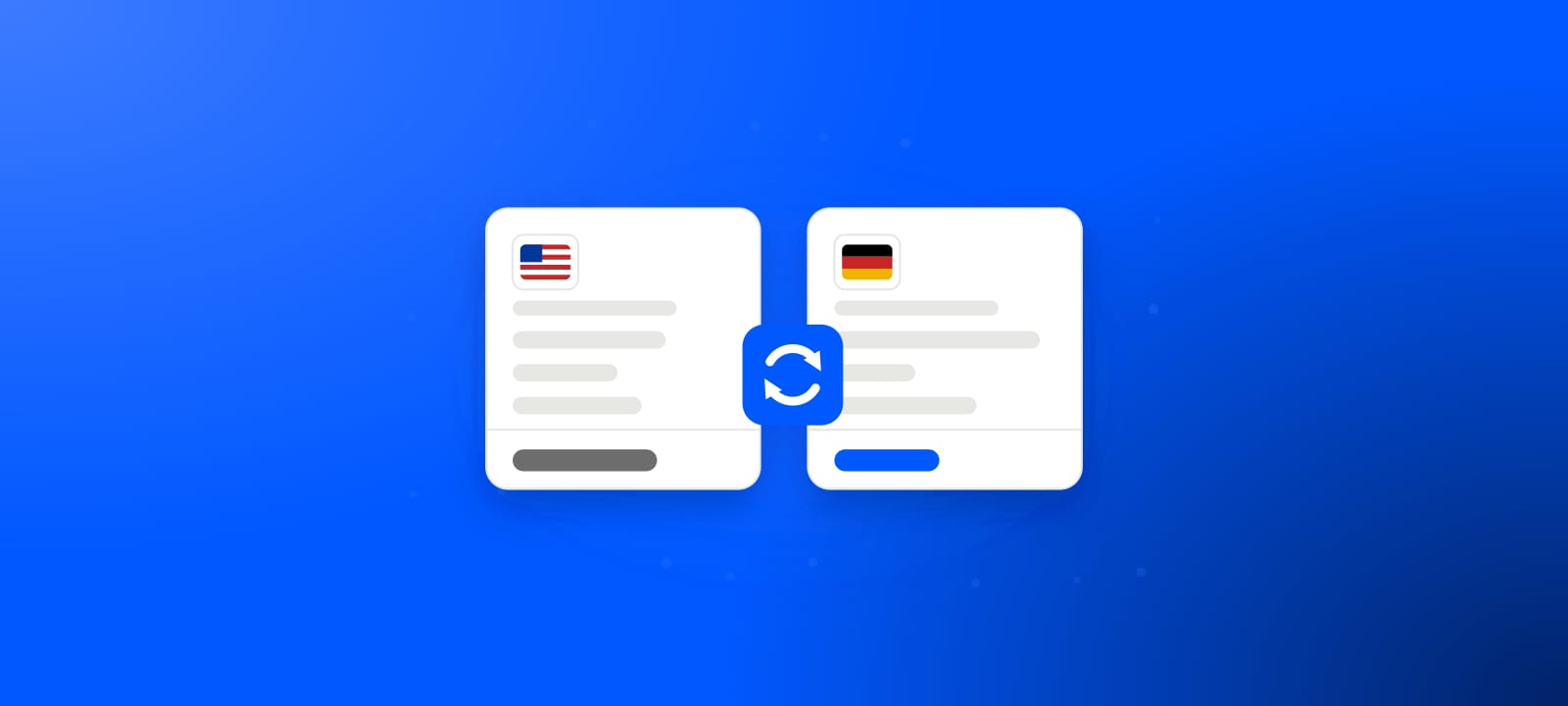
The channel gap sits on top of the ordinary European mechanic: fares filed by point of sale. Lufthansa Group runs country sites and quotes fares in the local market's currency, and airlines discount some routes in some markets, so the same seat can cost noticeably more or less depending on the country a booking appears to come from. This is the same point-of-sale effect we cover for the metasearch in Skyscanner, and on a European group carrier it is pronounced enough that reading one route across several markets is a routine part of the job.
To read the fare a traveler in a given country sees, the request has to exit from that country. A German price wants a German residential exit; a mismatched IP collects a number no local traveler is shown.
How Lufthansa blocks you
Lufthansa's site is guarded by Akamai-class bot management, the same defense reported on United, Delta and American. Akamai scores the TLS handshake (the JA3/JA4 fingerprint from the ClientHello), the JavaScript environment and behavioral signals, and challenges or blocks a client that looks automated before the fare engine answers. The fares load with JavaScript into a near-empty shell, so a plain fetch returns no prices. The rule is the shared one: a residential address with a decent trust score, and a real browser whose handshake matches a human.
Which proxy type fits: residential, datacenter, ISP, or mobile
Datacenter proxies fail the trust score first and misread the point of sale. They suit parser development on a saved page and nothing live.
Rotating residential proxies are home connections from a pool, one per search, rotated, pinned to the country of sale, and they carry the trust score that clears Akamai when paired with a real browser (background in what is a residential proxy).
ISP proxies are static residential addresses for Miles & More sessions.
Mobile proxies are carrier addresses many phones share, reserved for the most defended runs.
| Lufthansa job | Proxy type | Why |
|---|---|---|
| Fare tracking across markets | Rotating residential, country-of-sale pinned | Point of sale plus Akamai trust score |
| Measuring the channel gap | Read direct plus the GDS/NDC channels | The DCC makes the same fare differ by channel |
| Miles & More account actions | ISP (static residential) | Session and account on one address |
| Runs that keep getting challenged | Mobile | Carrier ranges carry high trust |
| Parser development | Datacenter or free list | Saved pages, nothing at stake |
Free versus paid for Lufthansa
A free proxy is a shared datacenter address, the profile Akamai rejects first, and it also reads the wrong point of sale. A free proxy will sometimes load one market's page, and our free proxy list and proxy checker are free for it. For a tracker across markets, paid residential behind a real browser is the floor; ours starts at $0.44/GB pay-as-you-go, with no identity checks for standard top-ups.
Setting it up
Drive a real browser behind a residential exit pinned to the country of sale (Playwright, Puppeteer), and let the country site choose its own currency. Read each route across the markets you care about, one exit per market, and where you are measuring the channel gap, read the direct fare and the GDS or NDC fare and store the difference. Rotate one IP per search for public fares and hold a sticky ISP exit for Miles & More work; the split is in rotating vs static residential proxies.
How many IPs, and how fast
Sizing (rotating residential, one refresh cycle):
  searches/cycle = routes x dates x markets
                 = 300 x 60 x 4 = 72,000 searches
  per search     = a browser render behind Akamai; block images and fonts
  per address    = a few searches, then rotate

Refresh near-term dates daily, far dates weekly. The pool spreads it.
Our pricing is per gigabyte with no expiry, so a multi-market tracker pays for the markets it actually reads.
Staying unblocked on Lufthansa
- Residential IP in the country of sale, plus a real browser. Accuracy and Akamai in one rule.
- Guard the handshake. The TLS fingerprint is the top vector.
- Read the channel gap deliberately. Direct against GDS against NDC; the DCC makes them differ.
- One search per address, then rotate.
- Back off on the first challenge. The checklist is in avoiding IP bans while scraping.
The limits worth knowing
Proxies put a Lufthansa read on the right point of sale on a trusted connection and spread a multi-market tracker so the site sees travelers. They do not clear Akamai alone, they do not collapse the channel gap the DCC creates, and they do not change Lufthansa's terms of service. Read the market and the channel as the two separate splits they are, and the fare picture is honest.
A throwaway look at one market is what our free proxy list and proxy checker are for. For a multi-market fare tracker, rotating residential at $0.44/GB pay-as-you-go behind a real browser, pinned to the country of sale, is what reads Lufthansa.
Sources
- Travel Weekly, Lufthansa to add surcharge for GDS bookings, on the original 16-euro DCC from September 1, 2015.
- Aviation.Direct, Lufthansa increases Distribution Cost Charge for Amadeus and Sabre, on the 2026 amounts and covered airlines.
- Akamai: Bot Manager, read September 9, 2026: Bot Manager will "assign a Bot Score for each request, and learn over time", "Behavior anomaly detection is configured automatically by injecting a simple script into each monitored page", and "Bot Manager has visibility into more than 40 billion bots a day".
- JA3 (Salesforce) and JA4 (FoxIO): the TLS ClientHello fingerprints a defended site compares against the browser your User-Agent claims to be.
- Airlines do not publish which bot-management vendor they use, and Akamai does not publish its customer list, so this page describes the class of defense rather than naming a vendor for this carrier. That the fare page arrives as a near-empty shell and fills in with JavaScript is observable from the page itself rather than documented by anyone.