
anonymousproxy.net still resolves, but there is no site behind it. On 16 September 2026 it answered with a placeholder rather than a proxy list.
What it was
AnonymousProxy publishes other people's proxy addresses as a list of IP and port pairs. It is run independently, not by a proxy seller.
What we checked, and how
We asked anonymousproxy.net ourselves on 16 September 2026, from a datacenter connection in Germany, following redirects by hand so the chain is on the record. What came back: parked (HTTP 200). We did not read the site from a home connection and we did not save its pages; the result above is the whole of what we took.
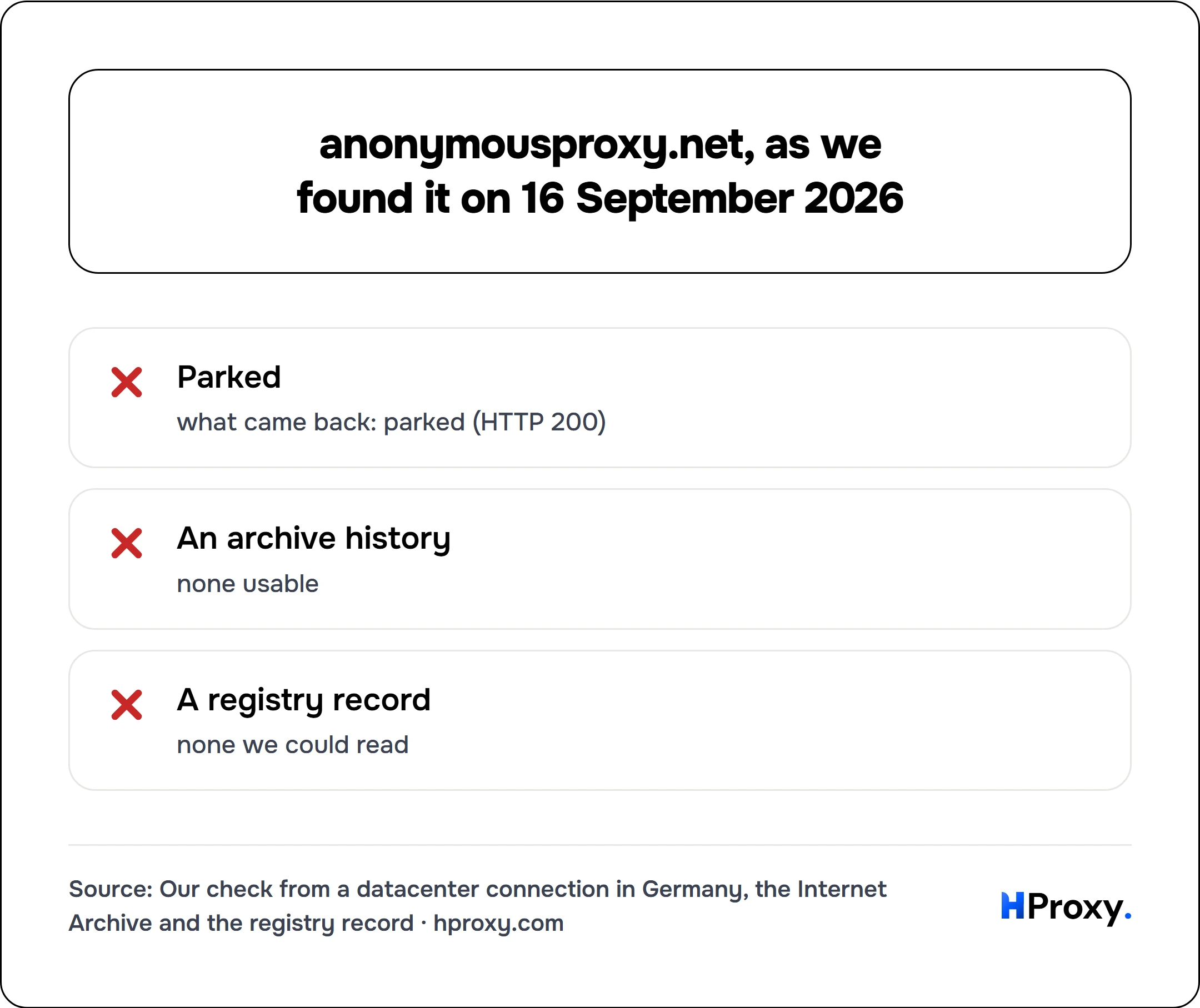
- Parkedwhat came back: parked (HTTP 200)
- An archive historynone usable
- A registry recordnone we could read
What to use instead
A free list is a list of other people's machines, and it behaves like one: the addresses that answer at breakfast are gone by lunch, the country label is often wrong, and anything you send through one is readable by whoever runs the exit. That is true of every name on this page, alive or gone.
If you are testing whether a target blocks proxies at all, a free list is fine and costs nothing. If the job has to finish, has to come from a country you chose, or carries a login, it needs addresses somebody is accountable for. What we sell starts at $0.44 per GB, pay as you go, with no plan to reach first.
Our own maintained lists are here, and the wider picture of which of these sites still work is in our census of free proxy sites.
The limits of this record
- We checked once, on one day, from one place.
- The Internet Archive returned no usable capture index for anonymousproxy.net when we read it, so this page carries no archive history for the site.
- We could not read a registry record for the name, so no registration or expiry date is printed here.
- We do not know who runs it, where the addresses come from, or whether anyone tests them before publishing. Nobody in this corner of the market publishes that.
This page is due for a re-check by 16 March 2027, or sooner if the status above changes.
Sources
- HProxy, our own status check of anonymousproxy.net, 16 September 2026, from a datacenter connection in Germany.