ISP Rotating
This page sellsStarting at
$0.65/ GB
- Provider-registered addresses, rotating per request
- Billed per gigabyte, lines free to generate
- Sticky sessions available
- HTTP and SOCKS5
- No address of your own to keep
The same provider-registered addresses as the static product, behind one gateway line that rotates them per request. Billed per gigabyte, not per IP.
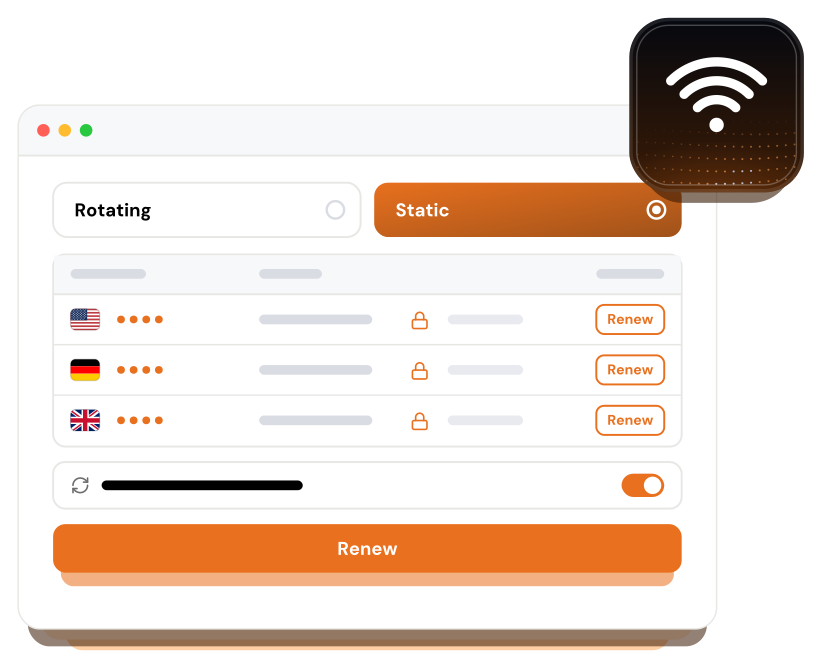
Rotating ISP proxies
A rotating ISP proxy is a gateway line, like a residential line, whose exits are addresses registered to internet providers and served from datacenter hardware. You generate the line, send every request to it, and the gateway picks an ISP address per request. Billing is per gigabyte, so a hundred lines cost the same as one until traffic flows.
Pick it when you want provider-registered addresses at datacenter uptime, but the job is many requests rather than one long identity.
Starting at
Starting at
How it works
The line comes from the same generator as the residential pools: a country, a count, and stickyMinutes if you want one address held. Every line draws from the plan's gigabytes, and generating is free.
POST /api/v1/plans/{id}/generate
{"country": "US", "count": 10}
{"country": "US", "stickyMinutes": 30}
Related
Countries, periods and the volume ladder come from the live catalogue on the price table; nothing on this page is typed by hand.
Works with your stack, and with your assistant.
A REST API for buying and generating, the whole documentation as markdown for Claude, Cursor and ChatGPT, and the free tools as a CLI and as an MCP server at mcp.hproxy.com/mcp.
Residential exits are real devices in homes; rotating ISP exits are provider-registered addresses on datacenter hardware, always on. Residential has the wider reach and the finer targeting; rotating ISP has the steadier uptime.
Yes. Add stickyMinutes to the generate call and the line holds one exit for the session.
The gigabytes that pass through the line, from the plan's balance. Generating lines is free.
The words this page turns on.
Rotating proxy
A proxy setup that assigns a different IP address to each request or on a timer, spreading traffic across a pool so no single address draws attention.
IP rotation
The practice of cycling through many IP addresses across a workload so no single one accumulates a suspicious request count.
Bandwidth
The volume of data a proxy can move, and the unit residential and mobile proxies are typically billed by.
Residential proxy
A proxy that routes your traffic through an IP address assigned by an internet service provider to a home connection, so requests look like an ordinary person browsing.
Browse the full glossary for every term across proxies, networking and scraping.
Or talk to us at support@hproxy.com