Static residential proxies, one ISP address that stays yours.

An address registered to an internet provider as residential, hosted where it is always on, rented per IP for the period you choose. The same address next week and next month.

Static residential (ISP) proxies

A residential address that does not rotate.

A static residential proxy is an IP address that an internet provider registered as residential, served from datacenter hardware so it is online around the clock. You rent the address itself, per IP and per period, and it stays yours for that period. Websites see a home-registered address; you see one that never changes underneath you.

The product has two names on the market. Static residential says what a website sees: an address on a consumer internet provider's network. Static ISP says where it comes from: a provider's address block, hosted in a datacenter. Here they are one product.

It is the non-rotating counterpart of the residential pools: pick it when a target has to see the same address for weeks, not for a session.
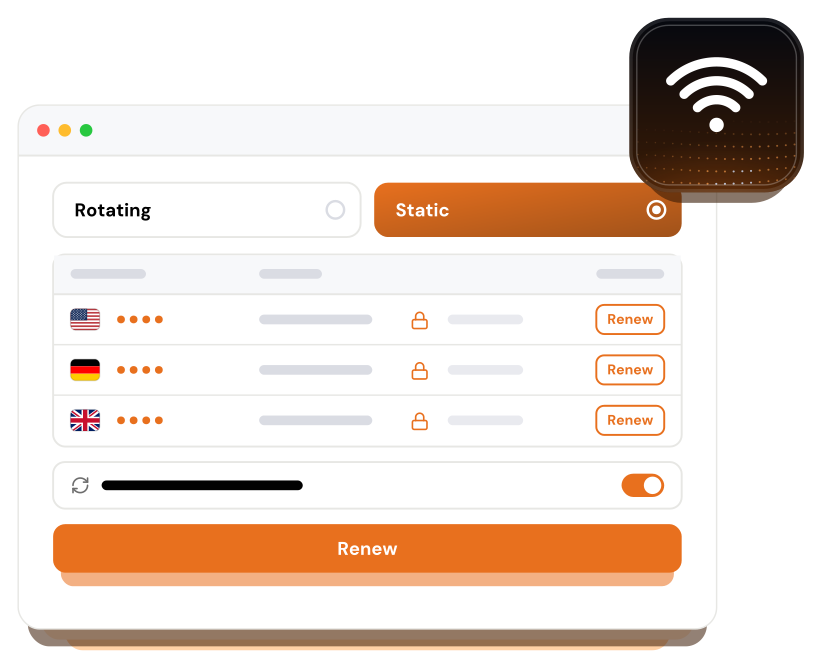
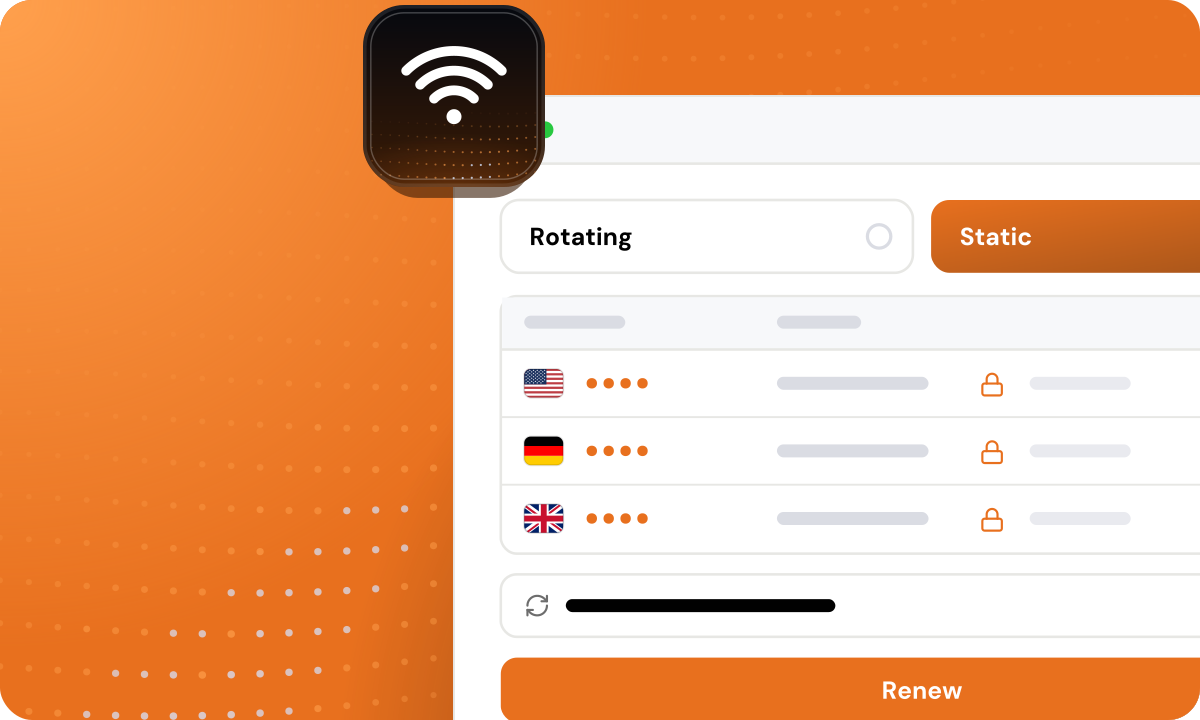
ISP Proxies

This page sells

Starting at

$2.50/ IP
  • One address, yours for the rental period
  • Registered as residential, hosted in a datacenter
  • Unlimited bandwidth through it
  • Countries and periods from the live catalog
  • HTTP and SOCKS5
  • No rotation and no per-request exit change

ISP proxies

The family

Starting at

$0.65/ GB
  • IPs registered to real ISPs
  • Rotating per GB, or static per IP
  • Unlimited bandwidth on static IPs
  • Datacenter speed
  • HTTP, HTTPS and SOCKS5

How it is sold

Per IP and per period, from the countries the catalog lists today.

The configurator reads the live catalog: the countries you can order and the periods available. A country that has run out is removed automatically, so what the page offers is always orderable. The addresses land in your dashboard and in the proxies endpoint of the API, with their expiry and a renewal that can run on its own.

GET /api/v1/products/isp/options        countries and periods, live
GET /api/v1/proxies                       your addresses, with expiry

What it is for

One address, for anything that remembers you.

Accounts. A platform that sees an account log in from the same residential address every day sees a regular user. Give each account its own static address and keep it there for as long as the account runs.

Allowlists. Some services only accept requests from addresses registered with them in advance. A static address can stay on such a list for months; a rotating line cannot be listed at all.

Browser profiles. An antidetect browser keeps one profile per identity, and each profile wants one address that does not change. Our setup guides show where the address goes in each browser.

Static or sticky

Weeks, or hours. That is the whole difference.

A sticky residential session holds one address for up to 24 hours and then moves on. A static residential address is yours for the period you rented, renewable. If the job is a login today, stick; if the job is the same address every day, rent.

Before you rely on it

See what a site sees, with two free tools.

The IP lookup shows the network an address belongs to, its country and city, and whether address databases list it as residential or datacenter: the same record a website reads. The proxy checker confirms the address answers through HTTP and SOCKS5 before you put an account behind it.

Related

The other pages on the same products.

Countries, periods and the volume ladder come from the live catalogue on the price table; nothing on this page is typed by hand.

Works with your stack, and with your assistant.

A REST API for buying and generating, the whole documentation as markdown for Claude, Cursor and ChatGPT, and the free tools as a CLI and as an MCP server at mcp.hproxy.com/mcp.

Read the API docs

FAQ

Static residential proxies
answered.

Ask support
Is a static residential proxy the same as a static ISP proxy?+

Yes. Both names describe an address registered to an internet provider and hosted in a datacenter. Some sellers say static residential, others say ISP; here it is one product, rented per IP.

Is it really residential?+

The address is registered to an internet provider as residential, which is what most sites check. It is served from a datacenter, which is why it is always on and why it does not rotate.

Does a static residential proxy rotate?+

No. The address stays the same for the whole rental period. For a new address per request, use rotating residential or rotating ISP.

What are static residential proxies used for?+

Jobs where a site should see the same address every time: running accounts, staying on an allowlist, one antidetect browser profile per address, and long logins.

How long can I keep an address?+

For the period you choose at checkout, from the periods the catalog lists, and it can renew on its own from your balance.

Which countries are available?+

The ones the live catalog lists at the moment you order; a country that has run out is removed automatically.

Static or rotating ISP?+

Static is one address per IP for a period. Rotating ISP is the same kind of address billed per gigabyte with a different exit per request. The rotating ISP page covers the second.

Terms on this page, explained

The words this page turns on.

Browse the full glossary for every term across proxies, networking and scraping.

HProxy.

Ready when you are. Your dashboard is ten seconds away.

Or talk to us at support@hproxy.com

HProxy