A proxy provider comparison is only as good as its dates. Prices, pools and policies all move, so every number below carries the day it was read, and anything we could not read is marked as unverified rather than filled in.
What we know about XenProxy, and what we do not
Their site is xenproxy.com.
There is no price in this comparison because we do not have one we can date and attribute. What follows instead is the set of questions that decide the cost once you do read their page.
Take down four numbers and a date: reachable rate, minimum purchase, commitment for the floor rate, and expiry period. Anything less and you cannot compare them to anyone.
How long XenProxy has been trading
The domain was registered on 25 April 2012, through GoDaddy.com, LLC, which makes it about 14 years old. We pulled that from the registry on 23 April 2026. The current registration term ends 25 April 2027.
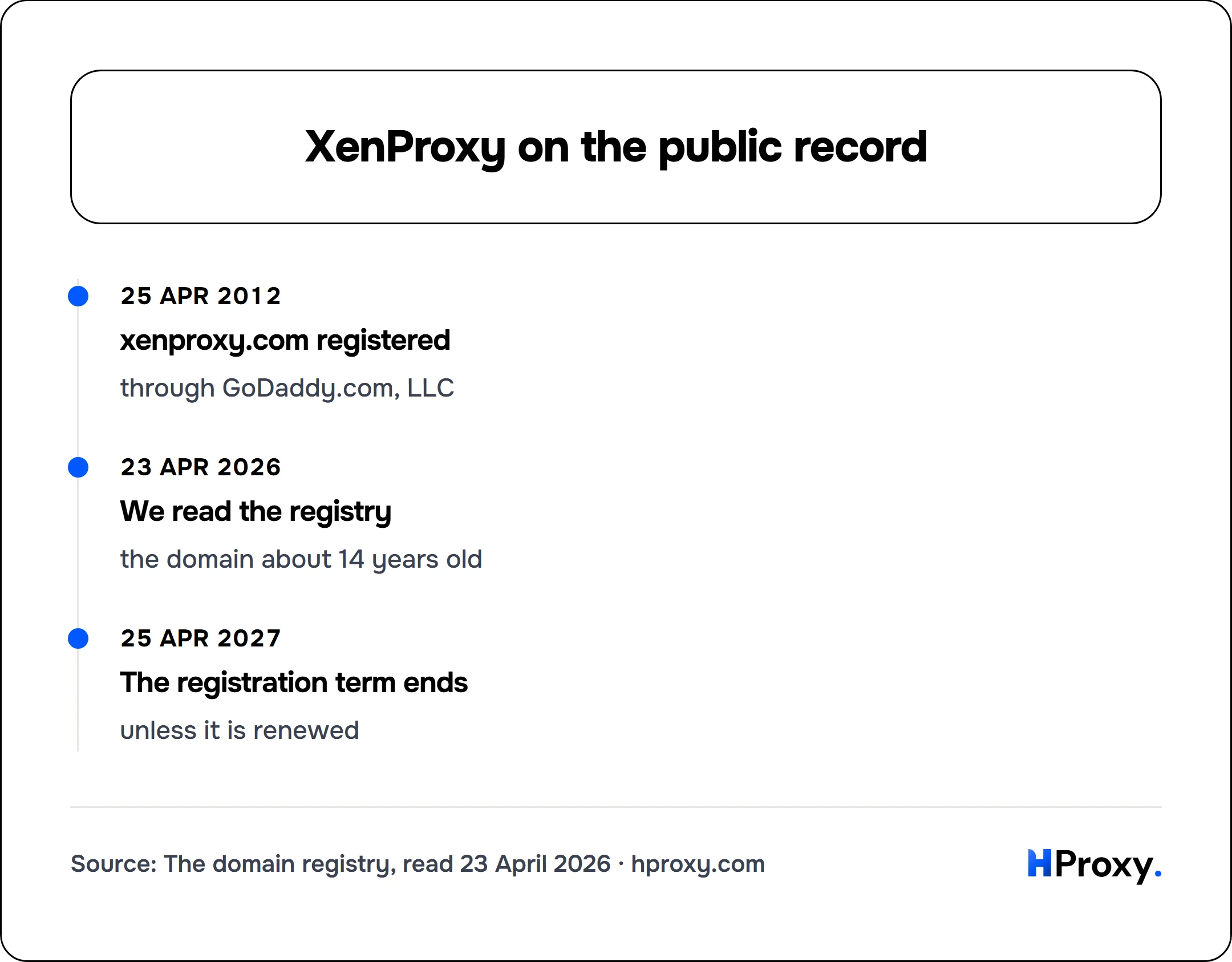
25 Apr 2012
xenproxy.com registered
through GoDaddy.com, LLC
23 Apr 2026
We read the registry
the domain about 14 years old
25 Apr 2027
The registration term ends
unless it is renewed
This proves nothing about the product. It is a cheap check against the one failure mode that costs buyers real money in this market, which is paying a provider that will not exist in six months.
What a pricing page leaves out
Why a cheap address is often a used one
Ask how many accounts can sit on one address at once. Where the answer is unlimited or unspecified, price the plan as shared regardless of what the product is called.
What a blocked response costs you
Some vendors bill every request, some bill only successful ones, and the difference is the whole comparison once a target starts blocking. A cheap rate with a fifty percent success rate is twice its advertised price.
Concurrency limits decide throughput
Bandwidth is rarely the constraint on a real workload. Concurrent connections, requests per second and per-session caps are, and they are frequently buried in the documentation rather than the pricing page.
The rows that decide it
Six questions, both answers, and an honest blank where we do not hold a current figure:
| Question to ask | XenProxy | HProxy |
|---|---|---|
| Entry price | Not verified by us, read their page | From $0.44/GB, pay as you go |
| Does unused balance expire? | Their terms page answers this | Never |
| Minimum commitment | On their own terms page | None |
| Identity checks | Not published clearly, ask before paying | Card orders are screened, and verification is sometimes requested |
| Targeting | Worth confirming in writing before you commit | Country, city and ISP |
| Free way to evaluate | Read their current terms | Free proxy list and proxy checker |
Read the table as a list of questions rather than a scoreboard. The answers on their side move, and the row that decides the outcome, success rate on your target, is not printable by anyone.
The test that beats this page
It is a small amount of money for an answer that is actually about your target.
- Put a few dollars on each account. Trials are fine for a first look, but paid traffic is what you will actually be buying.
- Run them against the site you actually care about, using the code you actually run, within the same hour.
- Record the success rate and the data consumed for the identical batch on each side.
- Check some of the addresses yourself for country, ASN and type before you trust the label on the plan.
- Keep the winner, and repeat the whole thing quarterly, because pools age.
Where else buyers look
If this one does not fit, these are the nearest comparable providers we have written up, each on the same terms as this page.
What we sell, stated plainly
Our position is narrow. Residential from $0.44 per GB, no subscription, no expiry on the balance, and a public record of what our free network actually does. A provider unwilling to be measured is telling you something, and so is one that asks to be.