GoLogin (gologin.com) is an antidetect browser: each browser profile gets its own fingerprint, so many accounts can run from one computer. On 12 October 2026 it cost $9 a month for 10 profiles and $39 for 100, with 3 profiles free. Of nine alternatives read the same day, AdsPower asked the least for 100 profiles among the prices we could read. Multilogin and Dolphin Anty gave 5 profiles free, and Camoufox costs nothing for people who write code. The comparison sets out each one's price, free plan, systems and company.
What GoLogin is, and what it costs
A website can recognise a returning browser by dozens of details: screen size, fonts, graphics card, time zone and more. An antidetect browser keeps a separate set of those details for every profile, along with its own cookies. Each profile also needs its own internet address, and GoLogin's FAQ is plain about it: "Most use cases absolutely require proxies."
GoLogin sells profiles by the plan. Its price page on 12 October 2026, billed monthly or yearly:
GoLogin plans, 12 October 2026
| Plan, profiles | Monthly | Yearly, a month |
|---|---|---|
| Forever Free, 3 | $0 | $0 |
| Professional 10 | $9 | $4.50 |
| Professional 25 | $19 | $9.50 |
| Professional 50 | $29 | $14.50 |
| Professional 100 | $39 | $19.50 |
| Business 300 | $99 | $49.50 |
| Business 500 | $139 | $69.50 |
| Enterprise, 1,000 | $179 | $89.50 |
| Custom, 2,000 to 100,000 | from $279 | from $139.50 |
gologin.com/pricing, read from our server on 12 October 2026
The free plan leaves out a good deal. GoLogin's help centre lists profile sharing, cookie export, bulk creation, team members, cloud launches, the API and restoring deleted profiles among what it lacks. Every paid plan starts with a 7-day trial. From the 25-profile plan up, the price page adds 2 GB of residential proxy data a month. Team members start with the Business plans, where one is included.
GoLogin takes cards, PayPal, crypto and a few regional methods, by its FAQ. An account that stops paying is paused, and its profiles stay on GoLogin's servers for 180 days.
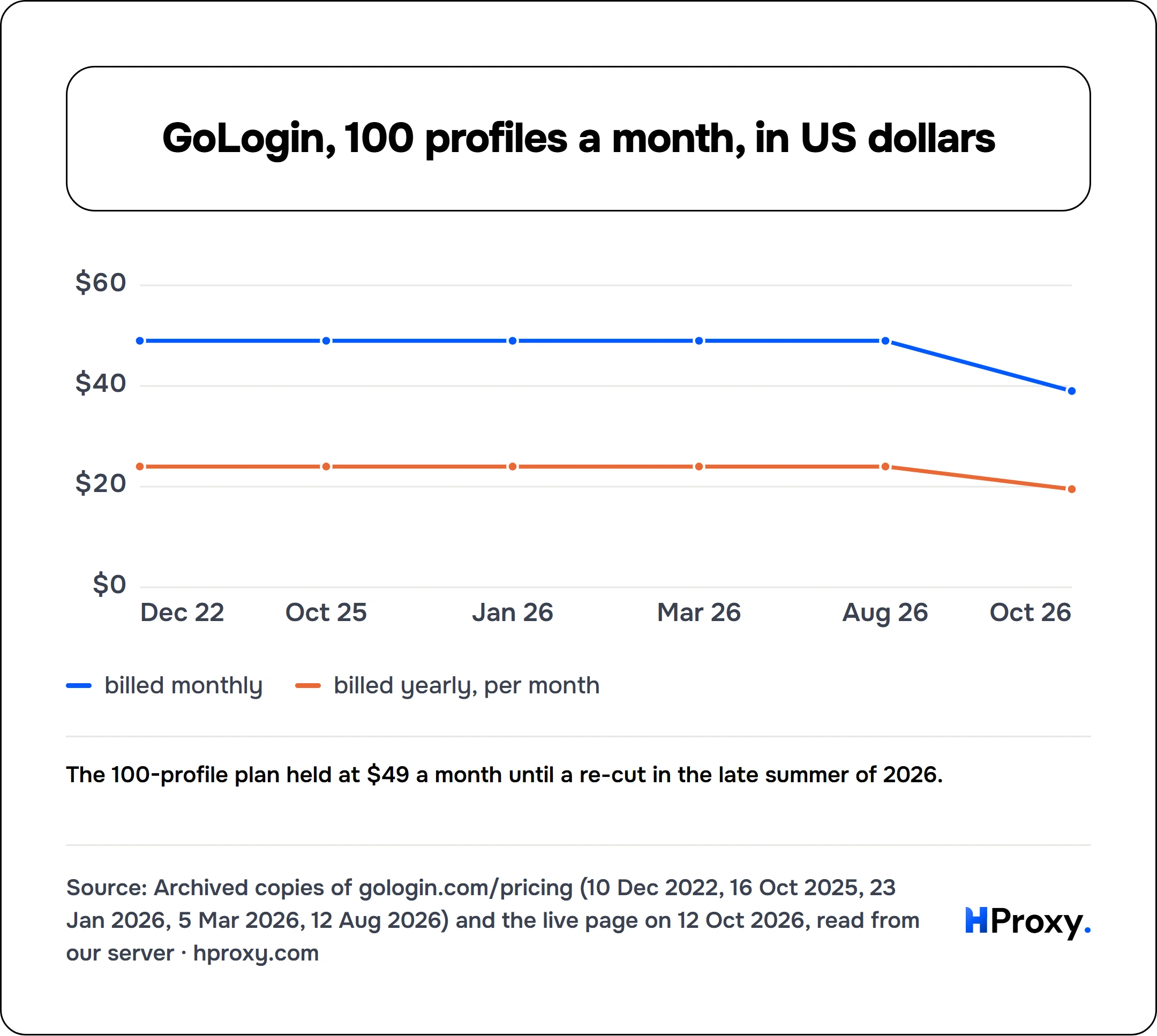
The price of 100 profiles, 2022 to 2026
- billed monthly
- billed yearly, per month
Every archived price page we could read, from December 2022 to 12 August 2026, priced the 100-profile Professional plan at $49 a month, or $24 billed yearly. The captures of 2023 and 2024 load their prices by script and show none. By the capture of 16 September 2026, Professional showed $9 a month, Enterprise $179 instead of $199, and the 2,000-profile plan $279 instead of $299. On 12 October, $9 bought 10 profiles and 100 profiles cost $39.
GoLogin's own help centre tells a different story. Its pricing article, dated 10 August 2026, lists Business from $119 a month, Enterprise at $299 and Custom from $449, "for accounts registered from January 2026". Older accounts keep their old prices unless they ask support to move. The price page shows $99, $179 and $279 for the same plans. From outside, we could not tell which list a new account is charged.
Four answers about a refund
The refund window has moved too. The archived price cards promised "14 days free returns" up to the capture of 5 March 2026, and "7 days free returns" from the capture of 15 April 2026. The price page of 12 October carries no returns line at all. What each of GoLogin's pages said that day:
GoLogin on refunds, 12 October 2026
| Page | What it says |
|---|---|
| FAQ, gologin.com/faq | a 14-day money-back guarantee, for every payment method except crypto |
| Help centre, FAQ: Subscription | a 7-day money-back guarantee for new subscriptions |
| Terms of Service, dated 15 July 2026 | 14 days in the EU and the US, 7 days elsewhere; no refund for a recurring payment; crypto refunds may be declined |
| Price page | no refund line; its cards said 7 days from April to September 2026 |
gologin.com/faq, gologin.com/pricing and support.gologin.com, read from our server on 12 October 2026
The terms also renew a plan by itself unless notice reaches GoLogin at least 15 days before the period ends. Whoever relies on a refund should keep a copy of the terms, since those are what bind GoLogin.
Who runs GoLogin
GoLogin's terms name two companies as the provider: GOLESS S.à r.l., 10 rue de Penthièvre, Paris, and Gologin LLC, 30 N. Gould St., Sheridan, Wyoming. The contract runs under Texas law, with disputes heard in Grayson County, Texas. In the French register, GOLESS carries the number 912842515, was created on 12 April 2022 and gives computer programming as its trade.
Two more names appear elsewhere. The pages of gologin.com we read end with "© 2026 SCALEHAT LLC". The download page says the Windows installer "is signed by Scalehat Technologies Limited, the company behind Gologin". The same name sells its iPhone app on the App Store. The privacy policy of 5 June 2025 names Gologin LLC as the main data controller. GoLogin's own story begins in 2019, and it claims more than 200,000 users.
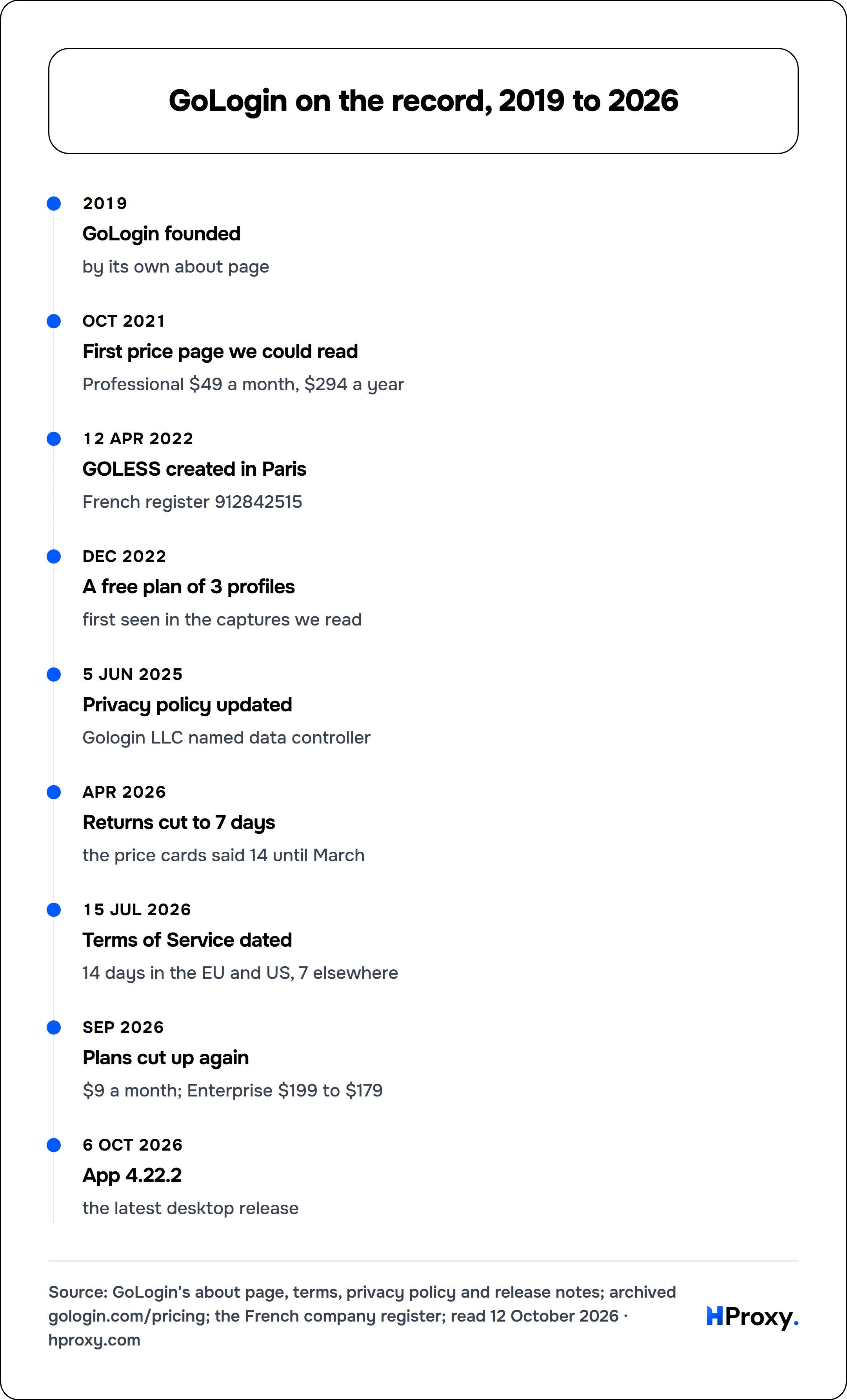
2019
GoLogin founded
by its own about page
Oct 2021
First price page we could read
Professional $49 a month, $294 a year
12 Apr 2022
GOLESS created in Paris
French register 912842515
Dec 2022
A free plan of 3 profiles
first seen in the captures we read
5 Jun 2025
Privacy policy updated
Gologin LLC named data controller
Apr 2026
Returns cut to 7 days
the price cards said 14 until March
15 Jul 2026
Terms of Service dated
14 days in the EU and US, 7 elsewhere
Sep 2026
Plans cut up again
$9 a month; Enterprise $199 to $179
6 Oct 2026
App 4.22.2
the latest desktop release
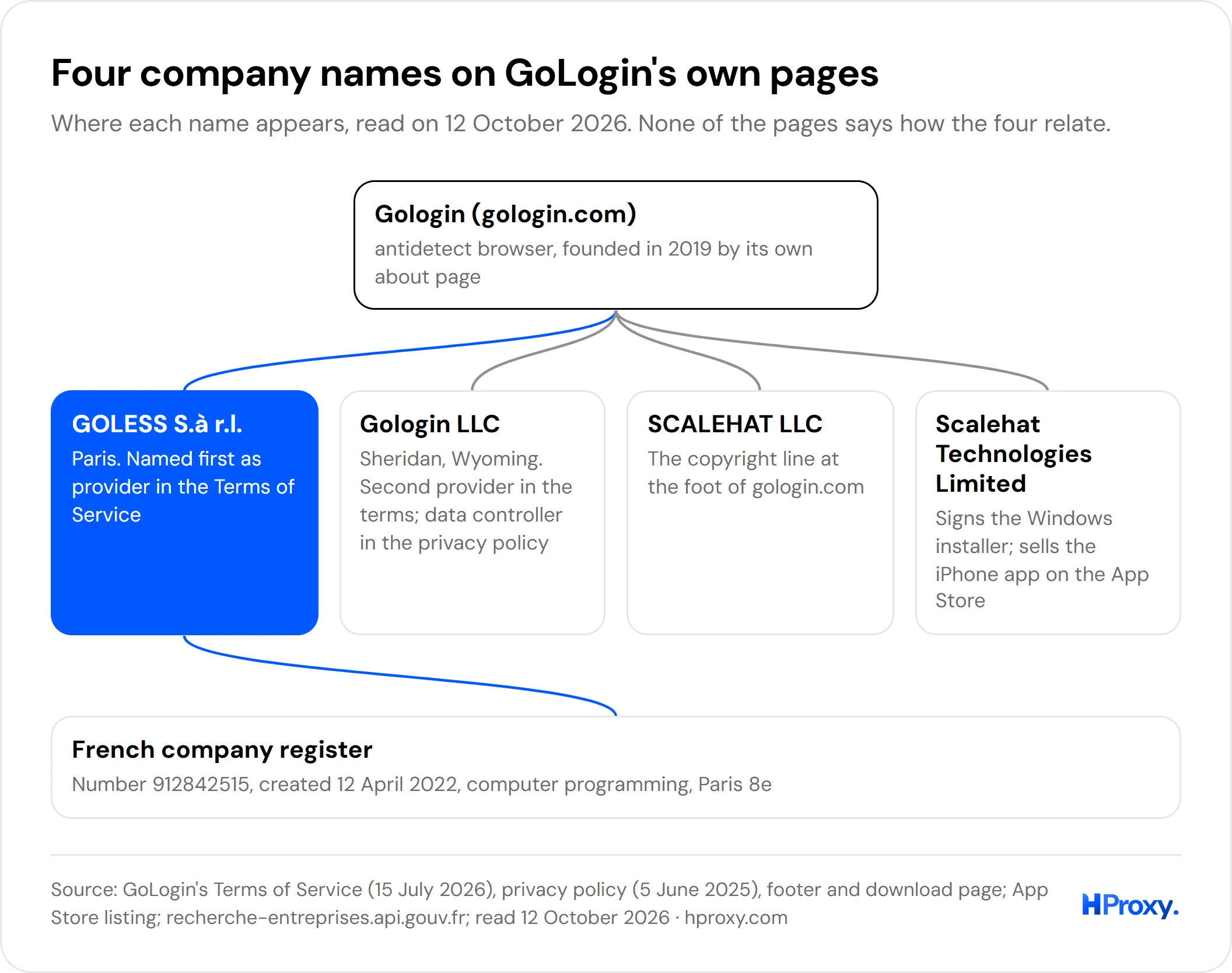
None of the pages we read says how the four relate to one another.
Why people look for an alternative
The searches say what they want. On 12 October 2026 Google suggested "gologin free alternative reddit", "gologin open source alternative", "gologin alternative for android" and "for iphone". It offered comparisons with Multilogin, AdsPower, MoreLogin, Dolphin Anty, Incogniton and Octo Browser. It also suggested "why is gologin so slow" and "why is gologin not working", which we cannot judge without testing.
GoLogin's own pages give four more reasons. Its free plan holds 3 profiles with no sharing and no API. Team members start at $99 a month. The window for a refund has shrunk from 14 days to 7 on its price cards. And two of its own pages quote different prices for the same plans.
The alternatives side by side
We read each tool's price page, terms and download page from our server on 12 October 2026. We installed none of them, so nothing here tests how well a fingerprint holds up against a website.
GoLogin and nine alternatives, 12 October 2026
| Tool | Free | Cheapest paid plan |
|---|---|---|
| GoLogin | 3 profiles | $9 for 10 profiles |
| Multilogin | 5 profiles | $11 for 10 profiles |
| AdsPower | 2 profiles | $9 for 10 profiles |
| Dolphin Anty | 5 profiles | $10 for 20 profiles |
| Octo Browser | none on a computer | €10 for 3 profiles |
| Incogniton | 3 profiles, 10 for the first 2 months | $19.99 for 10 profiles |
| MoreLogin | 2 profiles | $9 for 10 profiles |
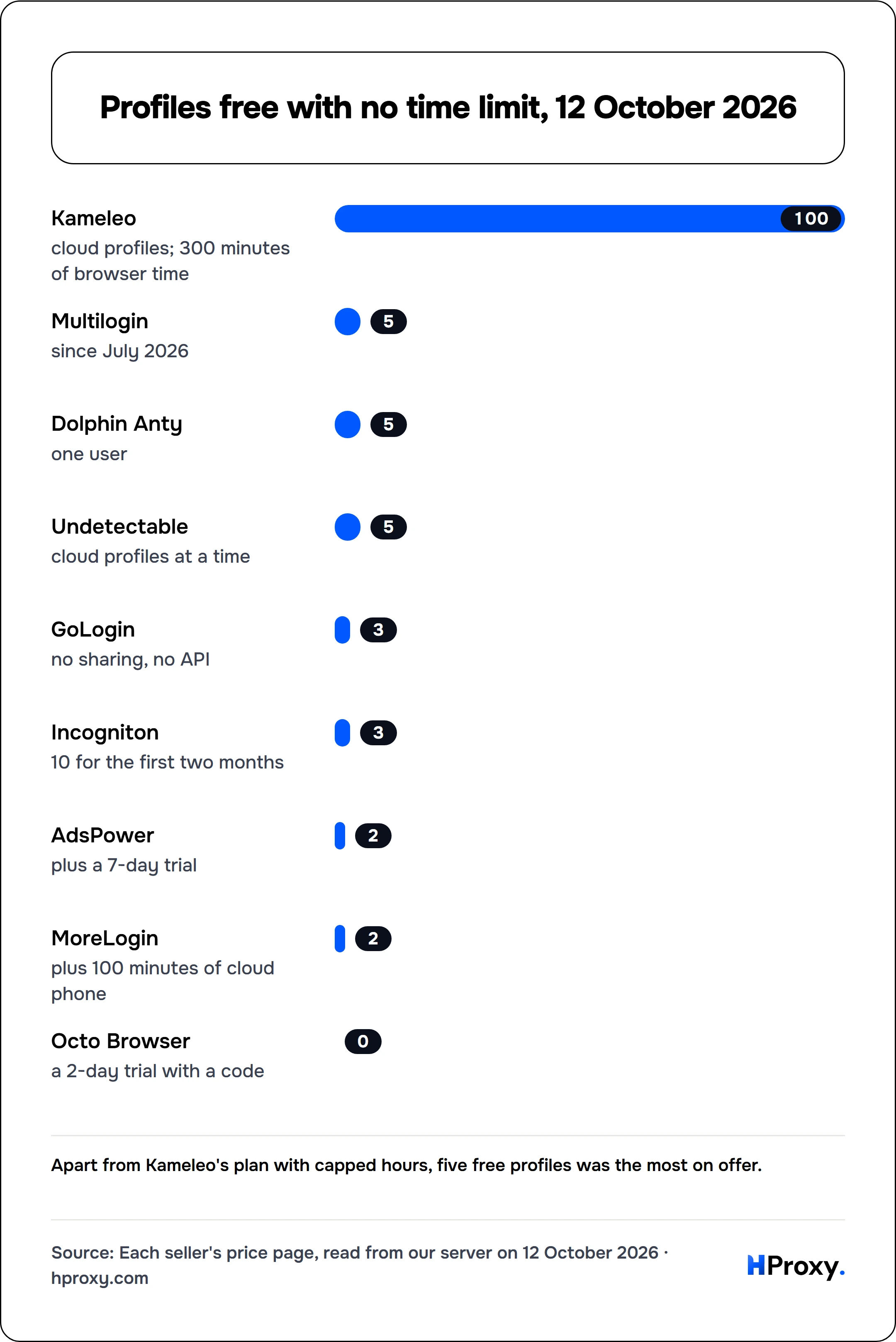
| Kameleo | 100 cloud profiles, 300 minutes of browser time | €59 for 10 browsers at once |
| Undetectable | 5 cloud profiles | $49 for 50 cloud profiles |
| Camoufox | free and open source | free |
Each tool's price, terms and download pages, and Camoufox's GitHub records, read from our server on 12 October 2026
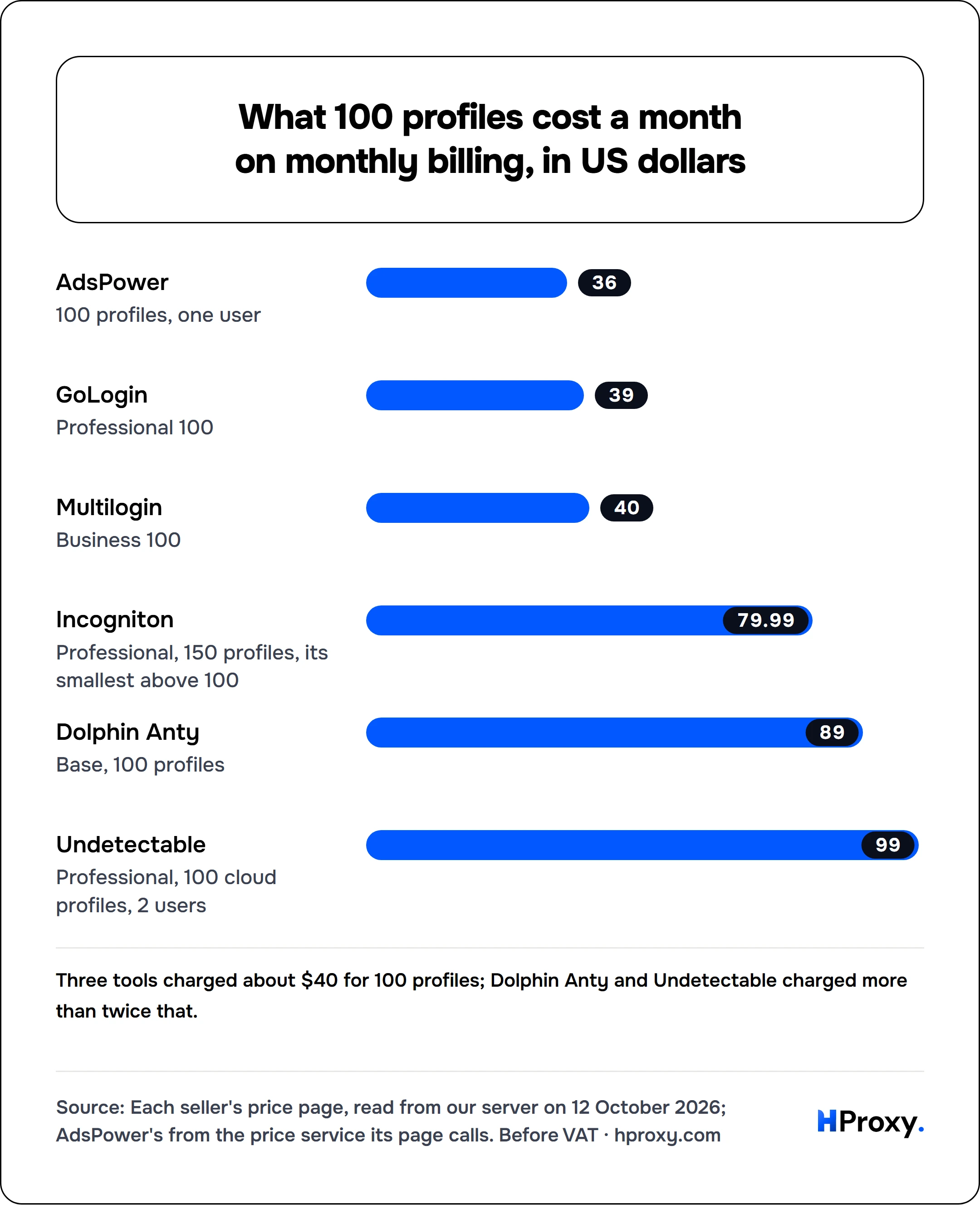
Two more priced in euros. Octo Browser's Base plan cost €79 a month for 100 profiles. Kameleo charges by browsers running at once rather than by profiles, so its prices do not fit the chart. MoreLogin's price above 10 profiles comes from a calculator on its page that we could not read.
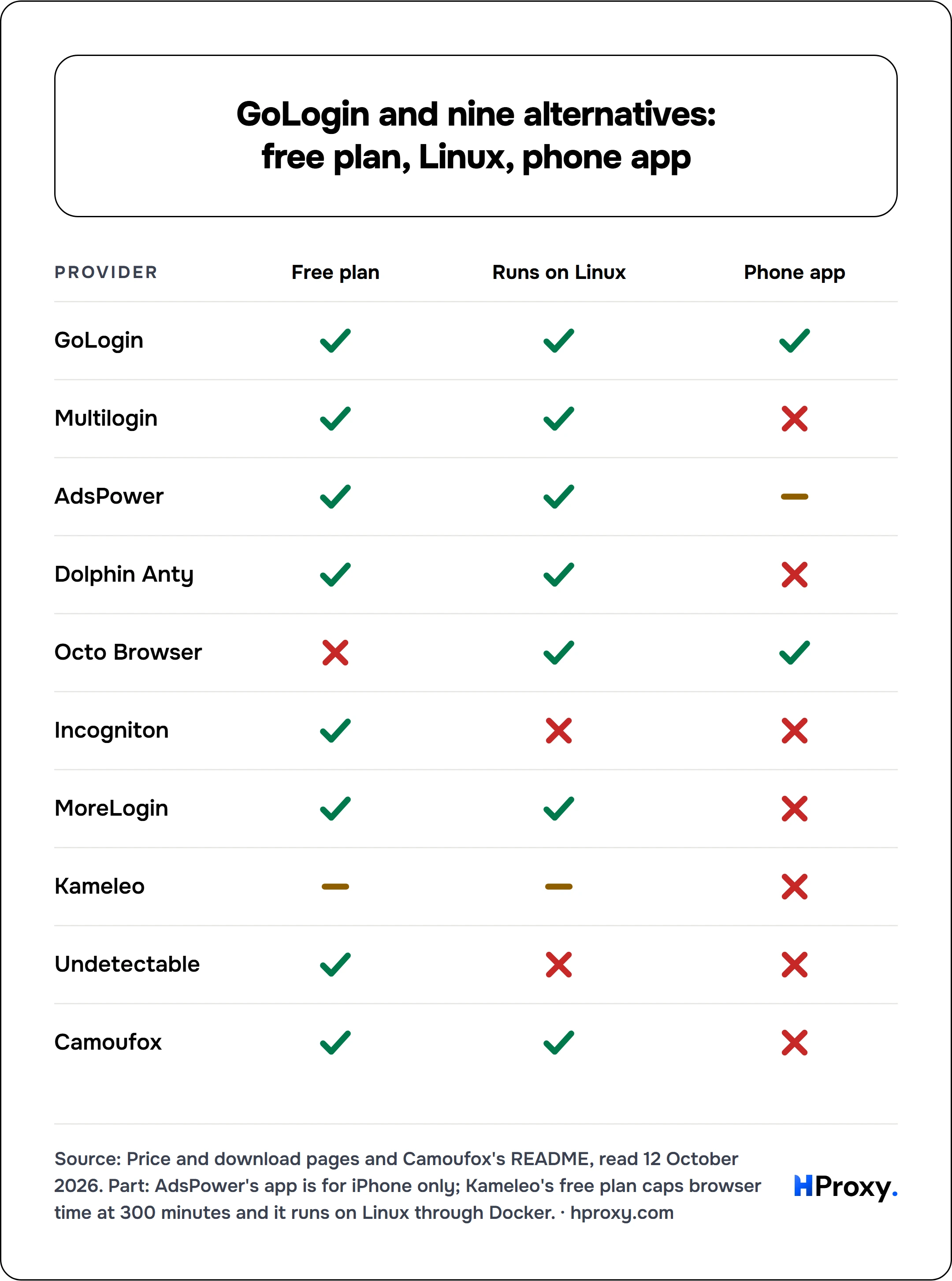
| Provider | Free plan | Runs on Linux | Phone app |
|---|---|---|---|
| GoLogin | yes | yes | yes |
| Multilogin | yes | yes | no |
| AdsPower | yes | yes | partly |
| Dolphin Anty | yes | yes | no |
| Octo Browser | no | yes | yes |
| Incogniton | yes | no | no |
| MoreLogin | yes | yes | no |
| Kameleo | partly | partly | no |
| Undetectable | yes | no | no |
| Camoufox | yes | yes | no |
Multilogin
Multilogin is run by Eyes of Wonder Software LLC, by its terms, which also point to the laws of the United Arab Emirates. Since July 2026 it has a free plan of 5 profiles, with 200 MB of proxy traffic and 30 cloud-phone minutes once. Pro costs $11 a month for 10 profiles, $19 for 20 and $29 for 50. Business starts at $40 for 100 profiles and climbs to $900 for 10,000, and yearly billing takes 35% off. Each paid plan includes proxy traffic every month, from 1 GB on the smallest to 10 GB on the larger Business plans. By its terms, a buyer gives up the EU's 14-day right of withdrawal when the plan starts. A cancelled plan earns a refund for the unused time, on request and worked out in proportion, and a crypto payment comes back in USDT. It runs on Windows 10, macOS 14 Sonoma and Ubuntu 22 or later.
AdsPower
AdsPower is sold by Sunflower Tech Pte. Ltd. under the laws of Singapore. It gives 2 profiles free for good, plus a 7-day trial of every feature. Its price page fetches each price from AdsPower's own server, and that service quoted $9 a month for 10 profiles, $21 for 50, $36 for 100, $86 for 300 and $197 for 1,000. Each extra team member adds $5 a month, and yearly billing takes 40% off. Its download page lists two browser cores, Chrome 153 and Firefox 153. Its refund policy is the strictest here: "no refunds can be made once you have confirmed the purchase of paid packages or customized services". Its download buttons ask for Windows 10, macOS 11 or Ubuntu 22.04 or later, and it has an iPhone app.
Dolphin Anty
Dolphin Anty's footer names Zhitnyakov Software Solutions Ltd of Limassol, Cyprus. Its free plan holds 5 profiles for one user. Starter costs $10 a month for 20 profiles, Base $89 for 100, Team $159 for 300 and Enterprise $299 from 1,000. Base and Team are fixed: "Additional profiles cannot be purchased." Paying 12 months ahead takes 40% off. The download page puts it plainly: "Dolphin{anty} only supports Windows, macOS and Linux."
Octo Browser
Octo Browser's footer names Blackbird Secure Browsing Ltd, 41 Devonshire Street, London. Its prices are in euros: €10 a month for 3 profiles, Starter €29 for 10, Base €79 for 100, Team €169 for 350 profiles and 3 members, and Advanced €329 for 1,200 profiles. Paid 12 months ahead, they fall to €7, €21, €56, €119 and €231 a month. There is no free desktop plan, only a 2-day trial with a code, while its phone apps for iOS and Android give new users 100 profiles free. It describes itself as built on the latest Chromium, and runs on Windows 10, macOS 13 and several Linux systems, including Ubuntu 22.04.
Incogniton
Incogniton's footer names WorkingGreen BV, and it says it is based in Amsterdam. New accounts get 10 profiles free for two months, then 3. Starter Plus costs $19.99 a month for 10 profiles, Entrepreneur $29.99 for 50, Professional $79.99 for 150 with 3 team seats, and Custom from $149.99 for 500 or more. Six months ahead takes 30% off, a year 40%. Every plan includes "FREE built-in proxies", and it takes Stripe, PayPal and crypto. It runs on Windows 10 and 11 and on macOS, and says it has no mobile version.
MoreLogin
MoreLogin's pages we read name no company, only "Copyright by MoreLogin". It gives 2 profiles free for good, plus 100 minutes of cloud phone at sign-up. Pro costs $9 a month for 10 profiles, or $5.40 billed yearly; larger counts come from a calculator. It offers Chrome and Firefox cores. Its cloud phones are Android 12 to 15 devices billed at $0.006 a minute, capped at $1.50 a day. It runs on Windows, macOS and Linux, and lists an Android app as coming soon.
Kameleo
Kameleo's terms name Outis Nemo Ltd of Budapest, registration 01 09 377749, under Hungarian law. It prices by browsers open at the same time. Free holds 100 cloud profiles with 300 minutes of browser time and 3 team members. Startup costs €59 a month for 10 browsers at once, Business €299 for 100 and Enterprise €1,499 for 1,000, with about a quarter off on yearly billing. Its pages lean towards scraping and automation, and it builds its own browsers alongside Chrome and Firefox releases, the latest on Chromium 153. It runs on Windows 10, Windows Server 2016, macOS 12 and in Docker.
Undetectable
Undetectable's footer names Mobico Services Ltd of Nicosia, Cyprus. Its free plan holds up to 5 cloud profiles at a time, 50 new profiles a month and one session. On monthly billing, 50 cloud profiles cost $49 on Base, 100 cost $99 on Professional with 2 users, and 200 cost $199 on Custom, which scales to 10,200. The price page opens on yearly billing, 30% lower, so its first figures read $34, $69 and $139. Local profiles, kept on your own computer, are unlimited on any paid plan. It takes cards, e-wallets and crypto, and runs on Windows 10 and macOS 13 or later.
Camoufox, the open-source one
Camoufox calls itself "an open source anti-detect browser built for webscraping & AI agents". It is a Firefox build under the MPL-2.0 licence, its repository opened on 26 July 2024, with 12,475 stars on GitHub on 12 October 2026. Every release still carries "beta" in its name; the latest not marked as a preview was v156.0.1-beta.36 of 6 October 2026. There is no window for managing profiles: your Python or TypeScript code starts it through Playwright, and each launch draws a new device. Its README warns that it presents Firefox identities only. The builds are made on Linux, with Windows and macOS versions built from there.
On a phone: Android and iPhone
GoLogin's Android app had more than 1 million downloads on Google Play, a rating of 3.7 from 1,650 reviews, and an update of 24 September 2026. Its iPhone app, version 1.2.0, is sold by Scalehat Technologies Limited and held 3 stars from 4 ratings. Among the alternatives, AdsPower has an iPhone app only, and Octo Browser has apps for iOS and Android. Multilogin and MoreLogin rent Android phones running in their own cloud, billed by the minute. Incogniton has no mobile version.
Where HProxy fits
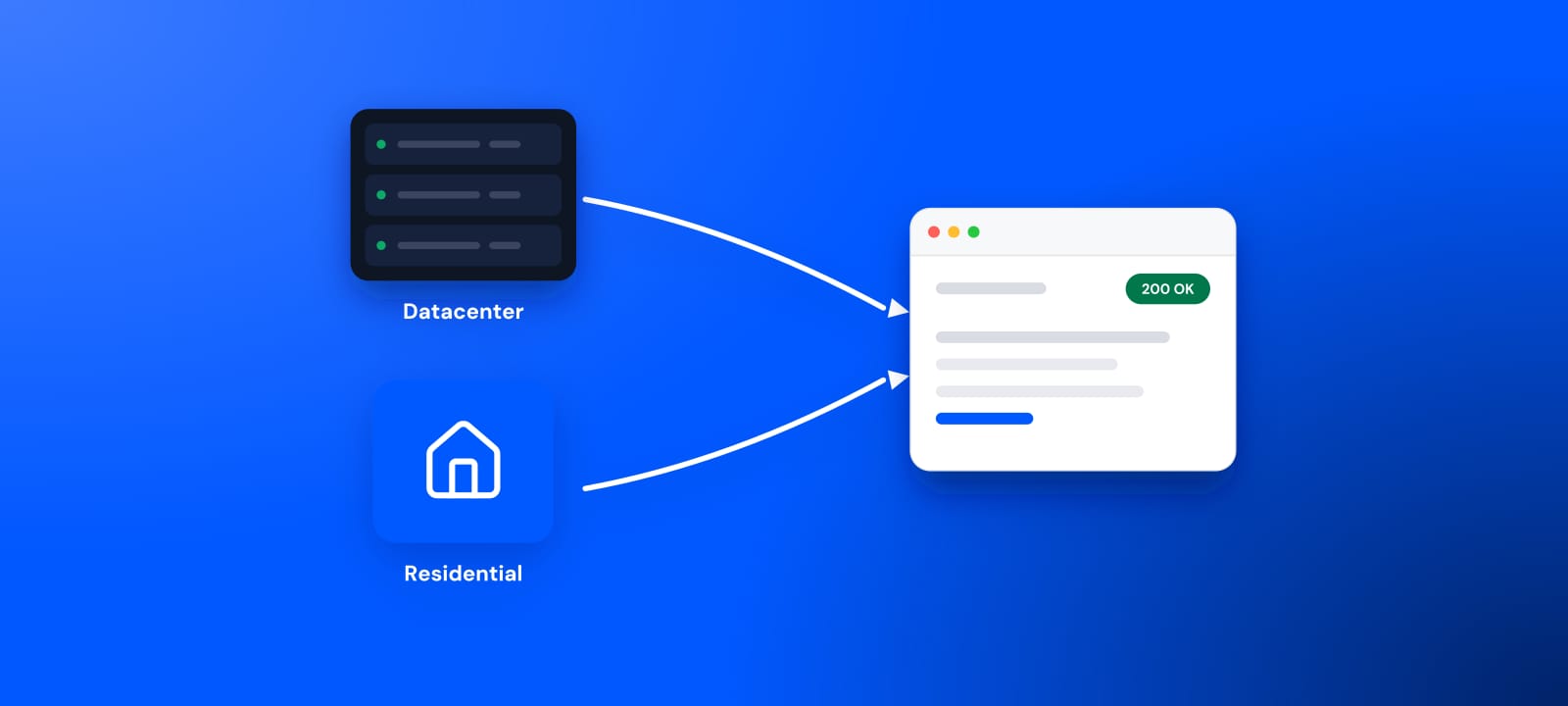
Each of these browsers needs one internet address per profile, and the data they bundle is small: 2 GB a month on GoLogin's paid plans. Our guide to proxies for antidetect browsers explains why an address should stay with its profile for as long as the profile lives. A dedicated ISP address from us costs $2.70/IP for a month and stays yours while you renew it. For residential addresses, Residential Premium holds the same IP for up to 24 hours with state, city and ISP targeting, from $1.49 for a gigabyte. Neither has a subscription, and a balance never expires.
GoLogin's proxy settings take HTTP and SOCKS5 with a username and password, as our guide to proxies for GoLogin shows step by step. The antidetect setup guide covers AdsPower, Dolphin Anty and Multilogin as well. Before you attach an address to a profile, our free proxy checker shows where it sits and whether it answers.
Which one to pick
- Stay with GoLogin if 10 profiles for $9 a month are enough, or you need Linux and phone apps in one product.
- For 100 profiles at the lowest price: AdsPower at $36, GoLogin at $39 or Multilogin at $40 a month.
- For a free plan: Multilogin or Dolphin Anty, with 5 profiles each; Kameleo if 300 minutes of browser time will do.
- For a small team: Octo Browser's Team plan or Incogniton's Professional, each with 3 members included; AdsPower adds members at $5 each.
- For Firefox profiles: AdsPower, MoreLogin or Kameleo, and Camoufox from code.
- For scraping from code: Camoufox for free, or Kameleo, which prices by browsers at once.
- For refunds, read the contract first: AdsPower refunds nothing once a package is bought, and GoLogin's pages give four answers.
- The weakest fit at 100 profiles is Dolphin Anty's Base plan: the dearest of the six priced in dollars, with no way to add a profile.
What we could not find out
We did not install or run any of these browsers, so nothing here measures detection, speed or stability. Trustpilot refused our server, so this page carries no review scores. We could not read MoreLogin's prices above 10 profiles, or how GoLogin's four company names relate, and the UK register shows no company called Scalehat. We could not tell which of GoLogin's two price lists, or which of its refund rules, a new buyer gets. Prices, plans and versions change often; this page is due for a check by 12 January 2027.
Sources
- GoLogin: price page, FAQ, download page, release notes, about page and Terms of Service (dated 15 July 2026); help centre articles on pricing (10 August 2026), payment methods and subscriptions; privacy policy (5 June 2025). Read 12 October 2026.
- Internet Archive: gologin.com/pricing, captures of 2 March 2021, 16 October 2021, 20 May 2022, 10 December 2022, 23 April 2025, 16 October 2025, 23 January 2026, 5 March 2026, 15 April 2026, 12 May 2026, 17 June 2026, 12 August 2026 and 16 September 2026. Read 12 October 2026.
- French company register (recherche-entreprises.api.gouv.fr), GOLESS, number 912842515. UK Companies House search for Scalehat. Read 12 October 2026.
- Google Play listing com.gologin.gologin_mobile and App Store listing Gologin Browser. Read 12 October 2026.
- Multilogin, AdsPower, Dolphin Anty, Octo Browser, Incogniton, MoreLogin, Kameleo and Undetectable: price pages, terms or footers, and download pages; Multilogin's system requirements (20 August 2026); AdsPower's refund policy and its price service. Read 12 October 2026.
- GitHub: daijro/camoufox, repository record, releases and README. Read 12 October 2026.
- Google: the search suggestions our server received, and Keyword Planner volumes for the whole world. Read 12 October 2026.
- HProxy: our product pages and guides. Read 12 October 2026.