Brazil ·  São Paulo · Instituto de Biociências
Buy Instituto de Biociências proxies. Ready in minutes.
- Just need a few free ones? Browse the live free Brazil list.
The place
Instituto de Biociências is part of Osasco
Instituto de Biociências is not a separate city: it is a district of Osasco, on the southeast side of the city, counted at about 1,551 people on its own. See Osasco proxies.
We list it because people search for it and because per-IP geolocation sometimes resolves to the district rather than the city. For every practical purpose an address here is a Osasco address, and the Osasco page carries the fuller picture.
Instituto de Biociências marked on Brazil, Osasco shown for scale.
When an exit in Instituto de Biociências is worth asking for
An exit in Instituto de Biociências answers a narrower question than an exit anywhere in Brazil. Most sites decide what to show you at the country level, and for them any Brazil address is the whole answer, whether it sits here or in Osasco.
The city earns its keep when the check itself is local: what is in stock near Instituto de Biociências, what delivery gets promised, what the local results page actually shows. That is the work worth pinning to a city, and the only work that should accept city-level supply as a constraint.
City-level residential supply moves week to week everywhere, ours included. If nothing is live in Instituto de Biociências the moment you ask, the reliable fallback is the Brazil country exit, and the free Brazil list shows the public pool measured live.
Get started
Pick your Instituto de Biociências proxy
Residential is the product with Instituto de Biociências city targeting, on its Premium pool. ISP and mobile are sold per country where we have them, on a static or carrier IP; the Brazil proxies page shows which ones it has.
ResidentialRecommended for Instituto de Biociências
Real-device IPs in 200+ countries
- Rotating or sticky sessions
- State, city and ISP targeting on Premium
- Pay per GB, balance never expires
- HTTP and SOCKS5
From
$0.44/ GB

ISP
IPs registered to real ISPs
- Rotating per GB, or static per IP
- Unlimited bandwidth on static IPs
- Datacenter speed
- HTTP, HTTPS and SOCKS5
From
$0.65/ GB

Mobile
Real 4G and 5G carrier IPs
- Rotating, or sticky up to 7 days
- Country targeting
- Billed per GB, no subscription
- HTTP, HTTPS and SOCKS5
From
$1.50/ GB
Residential Premium
What Premium adds in Instituto de Biociências
Lite reaches the country and rotates, so anything finer than that, Instituto de Biociências included, is Premium's targeting.
ISP targeting
13,800+ networks
State or city
26,000+ cities
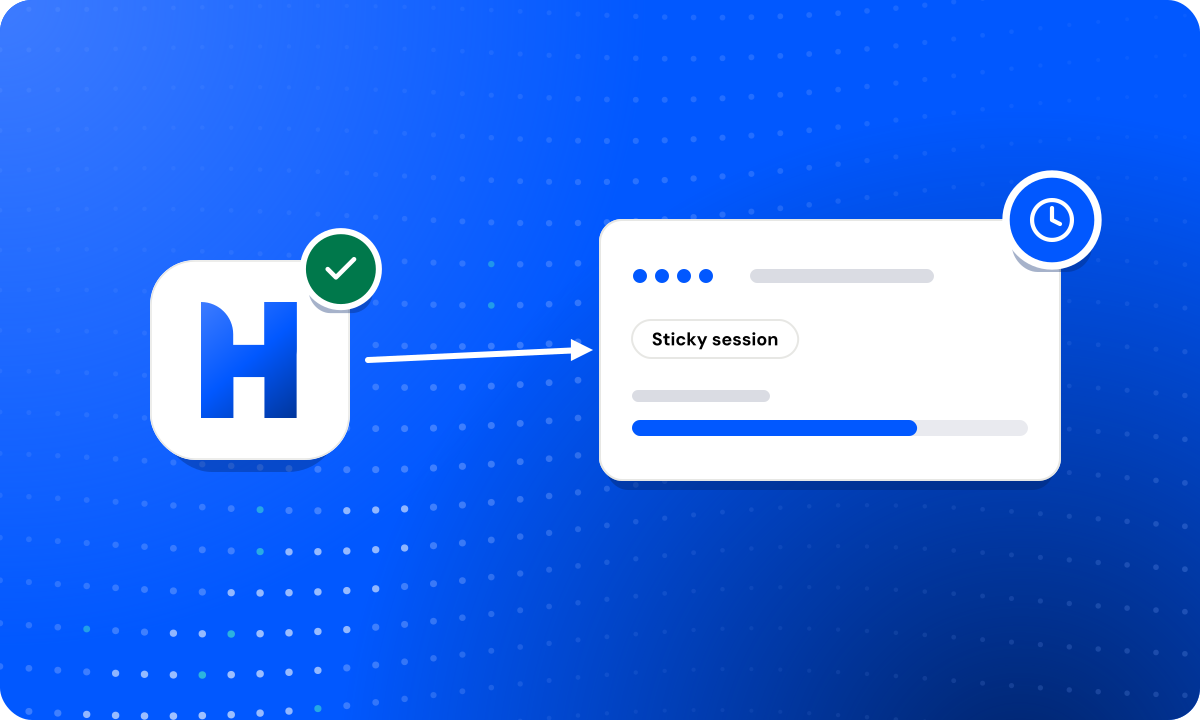
Sticky sessions to 24 hours
3 min to 24 h
Device OS
4 platforms
Exclusions
Country, state, city, network
IP whitelist
150 IPs per plan
SOCKS5 with UDP
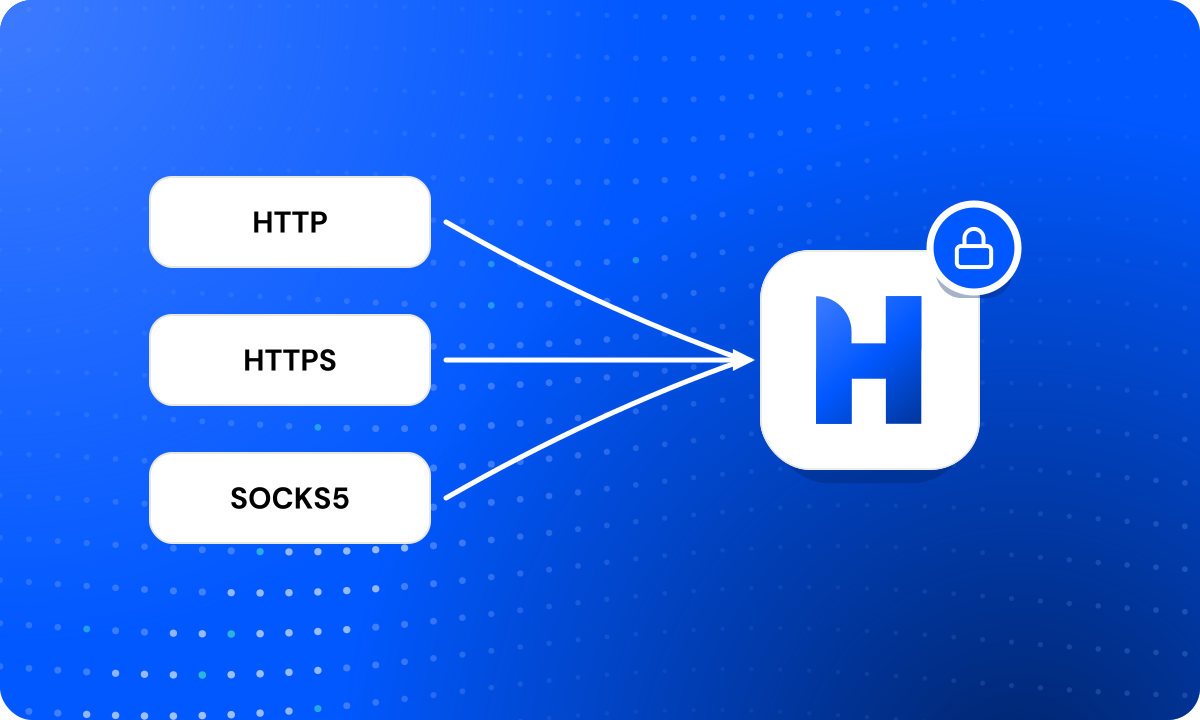
HTTP, HTTPS, SOCKS5, UDP
Per-plan statistics
30-day window
Trust
Who you are buying from
Same network, same team and same terms behind every page on this site, Instituto de Biociências included.
Rated by paying customers

114 reviews on Trustpilot, 92% of them five-star. The badge links to the live profile, judge for yourself.
Real people, around the clock
Live chat sits on every page, bottom right. Ask about Instituto de Biociências targeting before you pay and a person from the team that runs the network answers, whatever the hour.
Terms that do not trap you
Pay as you go, no subscription, and a balance that never expires. Not ready to spend? The free Brazil list is public and measured around the clock.
Nearby
The closest cities to Instituto de Biociências
The closest places we also cover are Osasco (7.3 km), Rua Verbo Divino (8.1 km), Vila Guedes (8.2 km). In all, 66 listed places sit within 20 km. Each has its own page and its own city-level targeting.
Need the whole São Paulo picture? São Paulo proxies.
FAQ
Instituto de Biociências proxy questions, answered
Residential plans support city-level targeting, so you can request Instituto de Biociências specifically, or widen the same request to São Paulo without changing plans. What is live in any one city moves constantly, for every provider; the Brazil country exit is the request that never depends on one place.
To a site that reads only the country: no. Instituto de Biociências and Osasco look identical there. To anything local, map results, stock, delivery estimates, the city is exactly the difference, and that is the one case worth paying the supply constraint for.
No. Instituto de Biociências is a district of Osasco. To any site you visit, an IP here is a Osasco address; the split only exists in geolocation databases. If you are choosing a target, Osasco is the meaningful unit.
Then take São Paulo as a whole, or the Brazil country exit. Single-city supply is fluid in this whole industry, and we would rather hand you the wider fallback in one click than promise a specific street and miss.
Place data: GeoNames (CC BY 4.0). Map outline: Natural Earth. Population figures are the dataset's listed values, not proxy counts.