Recommended for Google Maps
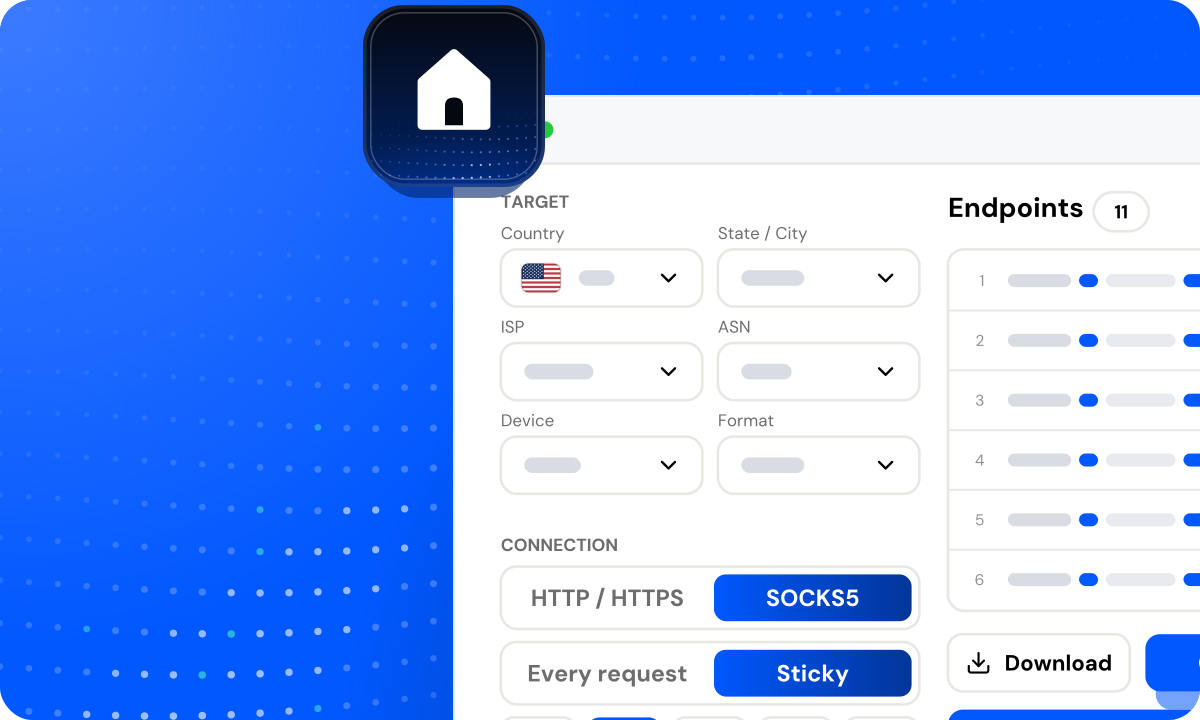
Residential
Starting at
$0.44/ GB
- Real-device IPs in 200+ countries
- Rotating or sticky sessions
- State, city and ISP targeting on Premium
- Pay per GB, balance never expires
- HTTP and SOCKS5
Data · Google Maps
Google's unusual-traffic reCAPTCHA is the thing standing between you and a Maps dataset, and it is triggered by address reputation long before it is triggered by your request rate.
From $0.44/GB · pay as you go · balance never expires
What works on Google Maps
Recommended for Google Maps
Starting at
Starting at
It reads like a rate-limit message, which sends people off to tune their delays. That is usually the wrong lever. Google flags datacenter ranges across its properties on reputation, so patience on a flagged address buys you nothing while a brisk crawler from a clean one sails past.
Slowing down helps at the margin. Changing the exit type is what actually moves the outcome.
Maps results are shaped by where the request appears to come from, which means the exit country and even the region is part of your query whether you meant it to be or not. A dataset gathered from mixed exits is a dataset with an uncontrolled variable in it.
Pick the geography deliberately and hold it for the run. That single decision does more for data quality than any amount of parsing care afterwards.
Going deeper
FAQ
Rotating residential. They pass the reputation checks that block datacenter ranges across Google properties, which is what triggers the unusual-traffic page.
It is usually a verdict on your address rather than your speed. Datacenter ranges are flagged on Google properties regardless of how carefully you pace requests.
Yes. Results are shaped by where the request appears to come from, so mixed exits put an uncontrolled variable into your dataset.
The terms that decide how Google Maps treats your traffic.
Web scraping
The automated collection of data from websites, the single most common reason people use proxies at scale.
Rotating proxy
A proxy setup that assigns a different IP address to each request or on a timer, spreading traffic across a pool so no single address draws attention.
Anti-bot system
A layered defence, network, fingerprint and behaviour checks combined, that sites use to separate automation from real users.
Success rate
The share of requests that come back with the data you wanted, the metric that actually measures a proxy's worth.
Browse the full glossary for every term across proxies, networking and scraping.
Residential from $0.44 per GB, pay as you go, and the balance never expires.