Free proxies work in AdsPower for one job: a throwaway test profile that proves your proxy settings work. For a profile that holds an account, they are the wrong tool, and AdsPower says why itself. It ships no proxies of its own. In its comparison of the static proxies on offer in its app, it rates the detection risk of datacenter proxies as high. We counted the working free proxies in our own pool on September 29, 2026: 1,386 of the 5,111 on ordinary addresses were labeled datacenter, and 81 percent counting every entry.
This page covers what AdsPower says, what our pool showed, how to add a free proxy to a test profile, and how to check it.
What AdsPower says about proxies
AdsPower also lets you buy proxies inside its app, from partner providers, so we quote its help center and blog without linking them.
- No proxies inside. "AdsPower Browser neither provides proxies nor has any proxies built in." You bring your own.
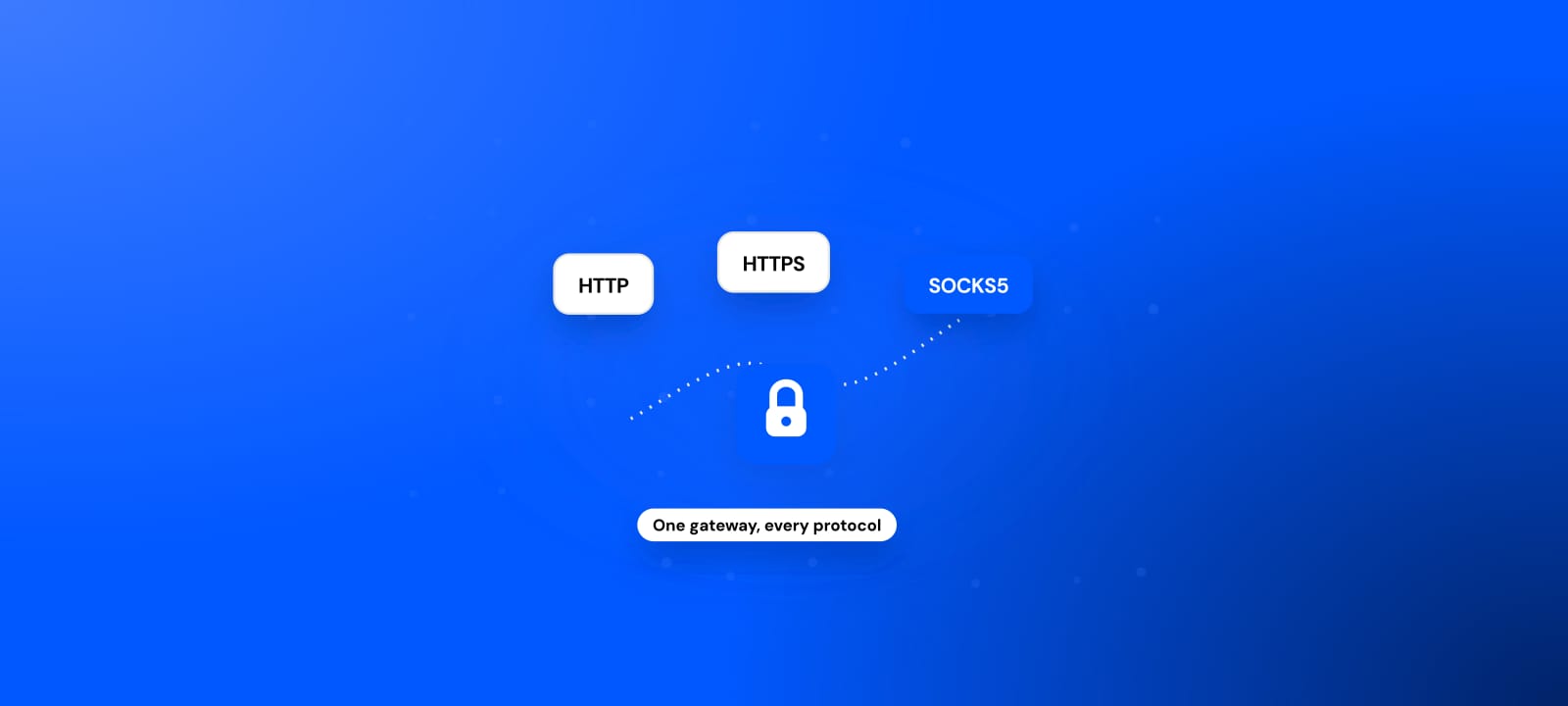
- Protocols. AdsPower takes HTTP, HTTPS, SOCKS5 and SSH: "AdsPower Browser supports all popular proxy protocols, such as HTTP/HTTPS, socks5, or ssh." SOCKS4 is not on the list.
- Detection risk. In its table of static proxies, AdsPower rates the detection risk of datacenter proxies as high and that of residential ISP proxies as low.
- Free servers. The AdsPower blog lists the limits of proxy servers. On free ones, it says that "Free proxy servers can be unreliable, with limited server locations, unpredictable performance, and a higher risk of data breaches due to weak security".
- The check. When you click Check Proxy, a passed test "means that AdsPower was able to connect to the proxy successfully". A failed test means it could not.
- Browser leaks. WebRTC can give your IP address away: "when leaked, this will make your real IP visible even if you use a proxy". The default mode, Disabled, "Completely turns off the WebRTC".
What our pool showed
On September 29, 2026, at 00:30 UTC, we counted the working entries of our free proxy list against what AdsPower accepts, on addresses that held fewer than 20 of them and over every entry. The query read counts only, from our server.
10% lost from Working entries
38% lost from Spoke HTTP, HTTPS or SOCKS5, which AdsPower accepts
30% lost from Opened an HTTPS tunnel or spoke SOCKS5
- Protocols. 4,613 of the 5,111 working entries on ordinary addresses spoke HTTP, HTTPS or SOCKS5. 498 spoke only SOCKS4, which AdsPower does not list.
- HTTPS sites. Through an HTTP proxy, a browser reaches an HTTPS site with the CONNECT method, which RFC 9110 describes as a tunnel with "blind forwarding of data". 2,852 working entries on ordinary addresses opened such a tunnel or spoke SOCKS5, which can carry any TCP connection.
- Networks. 1,386 of the 5,111 were labeled datacenter, the network type AdsPower rates high for detection risk. Counting every entry, 16,148 of 19,941 were, 81 percent. Of the 2,852, 1,993 were not. The label is the public network type of each address.
- Downloads. In two runs against our own website on September 28, 104 and 116 of 200 working free proxies on ordinary addresses sent no data within 30 seconds. Only 65 and 49 delivered the same 3.3 MB file, whole or still arriving.
- Lifespan. Those that worked and then stopped lasted a median 10 days, counting only addresses with fewer than 20 of them, without Amazon's networks or one June evening when our checker failed (measured 2026-09-28).
WebRTC and free proxies
WebRTC is the browser feature behind video calls and chats, and the AdsPower help center calls UDP "the transport protocol WebRTC relies on". AdsPower offers a Proxy UDP option that turns off UDP in WebRTC, meant among other cases for when "Your proxy does not support UDP". With a free proxy, that is the normal case. An HTTP proxy tunnel carries TCP only: RFC 9298 added a separate way to proxy UDP, "similar to how the HTTP CONNECT method allows proxying TCP in HTTP". SOCKS5 has a mode for UDP, which RFC 1928 calls UDP ASSOCIATE, yet in our census of September 28, 2026, 22 of the 425 working free SOCKS5 proxies on ordinary addresses carried a UDP packet, about 1 in 20. Counting every entry, random samples the day before found 2 of 200. On a test profile, leave WebRTC on the default.
Add a free proxy to a test profile
- Pick a fresh entry. Take one from our HTTPS or SOCKS5 list, since a browser needs one of the two for HTTPS sites. An entry is an address and a port, with no login.
- Open the proxy section. In AdsPower, "Click +New Profile and go to the Proxy section."
- Fill in the entry. Choose HTTP as the proxy type for an entry from the HTTPS list, since it is an HTTP proxy that opens tunnels, or Socks 5 for a SOCKS5 entry. Fill in Host:Port and leave the username and password empty.
- Click Check Proxy. A passed test means AdsPower reached the proxy. A failed one means it did not, so take another entry.
- Open the profile and read the address. It should be the proxy, not you. If it shows your own, the AdsPower help center points to "a VPN or proxy extension in the profile".
Never log in to anything on this profile. Many platforms forbid extra accounts in their terms, whatever the browser, and this page gives no steps for running several accounts.
When AdsPower says the proxy failed
AdsPower says a proxy failure "means the proxy connection in the profile is failed". Its steps check the details you typed, whether "your proxy may have expired", and whether a VPN on your own device gets in the way. If the proxy also fails on another network, "that means the problem is with the proxy itself". With free proxies this happens often: more than half of those in our download tests sent no data within 30 seconds. Take the next entry, and check it before AdsPower does.
If you drive AdsPower from code
AdsPower grants its Local API to paid plans, at http://local.adspower.net:50325/ by default. A profile takes its proxy in the user_proxy_config object, whose proxy_type "supports settings to use http, https, and socks5". For an entry from a free list, the login fields stay out:
{"proxy_soft": "other", "proxy_type": "socks5", "proxy_host": "203.0.113.7", "proxy_port": "1080"}
A script opens profiles with nobody watching. Make its first step a check of the exit address, and stop if it is not the proxy.
Your accounts are worth protecting
A proxy is a server run by a stranger, in the middle of your traffic, and it adds no encryption of its own. On a clean HTTPS connection your password is encrypted in transit. A hostile proxy can still present a fake certificate and hope you click past the warning. In our test on September 28, 2026, 161 of the 268 free SOCKS5 proxies on ordinary addresses that finished a TLS handshake with our own site handed back a certificate that was not ours. A 2018 study of more than 107,000 listed open proxies found TLS man-in-the-middle attacks. Our guide to whether free proxies are safe covers the rest.
Where a free proxy fits in AdsPower, and where it does not
| What you want to do | Free proxy? | Why |
|---|---|---|
| Test your proxy settings on a throwaway profile | Sometimes | AdsPower checks the connection first, and over half the free proxies in our tests sent no data. |
| Hold an account in a profile | No | AdsPower rates datacenter proxies high for detection risk, and most free ones are datacenter. |
| Run several accounts | No | This page gives no steps. Many platforms forbid extra accounts. |
| Video calls and other WebRTC traffic | No | About 1 in 20 free SOCKS5 proxies carried UDP. |
| Log in or pay | No | A hostile proxy can try to read your login. |
Test any proxy before a profile uses it
A free proxy that worked ten minutes ago may already be gone. Paste any candidate into our free proxy checker, with no signup. It makes a real connection through the proxy and reports the exit address, country, latency and anonymity grade. From the command line, the same check is one request to our free checker API.
# Tests one proxy from our server: alive or dead, protocols, anonymity, latency, country
curl "https://hproxy.com/api/proxy-check?proxy=203.0.113.7:1080"
The anonymity grade matters for plain HTTP pages, since a transparent proxy passes your own address on there. The full method is in how to check if a proxy is working.
When free is not enough
For web tasks that have to keep running, such as checking your own site from another country, a residential proxy is the better tool. Its address belongs to a home connection, and it stays up while you work. Ours start at $0.44/GB, pay as you go, and purchased traffic has no scheduled expiry date. No proxy of any kind makes extra accounts allowed where a platform forbids them.
The plain answer
Free proxies in AdsPower are for a throwaway test profile only. AdsPower ships no proxies, rates datacenter proxies high for detection risk, and warns about free proxy servers on its own blog. In our pool on September 29, 2026, 1,993 of the 5,111 working free proxies on ordinary addresses opened an HTTPS tunnel or spoke SOCKS5 on a network not labeled datacenter. Counting every entry, 81 percent were labeled datacenter. Never sign in through one. For web tasks that can fail, start with our free proxy list.
How we measured
We ran one read-only query of our free proxy pool from our server in the United States on September 29, 2026, at 00:30 UTC. It counted the entries that passed their latest check and read what that check found: plain HTTP, an HTTPS tunnel through CONNECT, SOCKS4 and SOCKS5, and the datacenter label, the public network type of each address. It counted addresses that held fewer than 20 of those entries, and every entry beside them. The UDP figure comes from our census of every working SOCKS5 entry on an ordinary address at 16:04 UTC on September. 28 Its figure over every entry comes from two random samples of 100 from the whole list, between 18:00 and 18:09 UTC on September. 27 The download test asked 200 working free proxies from such addresses for the same 3.3 MB file from our own website, twice. All had passed our HTTPS check, each had 30 seconds, and the runs finished at 22:29 and 23:17 UTC on September. 28 The certificate test made one TLS handshake with our own site through every free SOCKS5 proxy on such an address, from 18:28 to 18:35 UTC. We read the AdsPower help center, API documentation and blog from our server on September 28, 2026, in English. We sent no free proxy to AdsPower. We store no proxy addresses from these tests, and every time is in UTC.
Sources
- AdsPower Help Center: "Proxy Types" (last modified August 26, 2025), "Proxies: Add, Buy, Renew, Check, Filter" (May 29, 2026), "Proxy failure" (September 9, 2025), "Why is my local IP address displayed instead of proxy IP?" (August 27, 2025) and "How to choose WebRTC mode" (May 12, 2026). AdsPower Local API documentation: "API Overview" (November 19, 2025) and "user_proxy_config" (January 29, 2026). AdsPower blog: "What is a Proxy Server: Everything You Need to Know" (September 4, 2024, updated July 29, 2025). All read on September 28, 2026. Not linked, since AdsPower also lets you buy proxies in its app.
- IETF, RFC 9110: HTTP Semantics, June 2022, section 9.3.6 on CONNECT.
- IETF, RFC 9298: Proxying UDP in HTTP, August 2022.
- IETF, RFC 1928: SOCKS Protocol Version 5, March 1996.
- Akshaya Mani, Tavish Vaidya, David Dworken and Micah Sherr, An Extensive Evaluation of the Internet's Open Proxies, arXiv 1806.10258, June 27, 2018.
- HProxy documentation: the proxy checker API, read September 28, 2026.