If you are comparing My-Proxy against anything else, the first thing to fix is units. A per-gigabyte rate against a per-address rate is not a comparison, and half the free proxy list market prices in a different unit to the other half.
What is on file for My-Proxy
Their site is my-proxy.com. Category, as we track it: free proxy list.
There is no price in this comparison because we do not have one we can date and attribute. What follows instead is the set of questions that decide the cost once you do read their page.
When you do read it, note four things: the rate you actually qualify for today, the minimum purchase, whether unused balance expires, and whether failed requests are billed. Those four decide the real cost more than the headline does.
The site, as it reads today
The title tag on 9 September 2026 was "Multi-IP Free Web Proxy, Free Proxy List - My-Proxy". Written for search engines, their description says: "Use our multi-ip free web proxy to change IP as well as open any blocked sites (ex. Facebook, Youtube). We also have fresh proxy lists and proxy software."
What else that page states, without interpretation:
They advertise 34 countries or locations. Payment methods mentioned: PayPal, crypto, Alipay and cards. The page offers some form of free trial. A refund or money-back term is mentioned. Their pricing page is titled "Buy My IP Hide Service (1 month), Didsoft".
Treat all of it as advertising, because it is. Its value is that it is dated and quotable, which is more than most comparison pages offer.
Age, and why it matters here
The domain was registered on 10 April 2005, through Cloudflare, Inc, which makes it about 21 years old. Checked against the registry on 23 April 2026. The Internet Archive holds 20 snapshots of the site, the earliest from October 2005. The registration currently runs to 10 April 2027.
None of it predicts success rate. It is here because domain age and archive depth are free to check, and a provider whose public record starts last quarter deserves a smaller first order.
Who actually runs My-Proxy
We checked this one by hand on 6 September 2026. It is a list, and we record the operator as independent.
No proxy seller behind it that we could find. Independent lists tend to live on ad revenue, so expect the page to be busier than the data warrants.
The Internet Archive has it from 13 October 2005 to 24 January 2026, about 22 years of coverage. The domain was registered 10 April 2005 through Cloudflare, Inc.
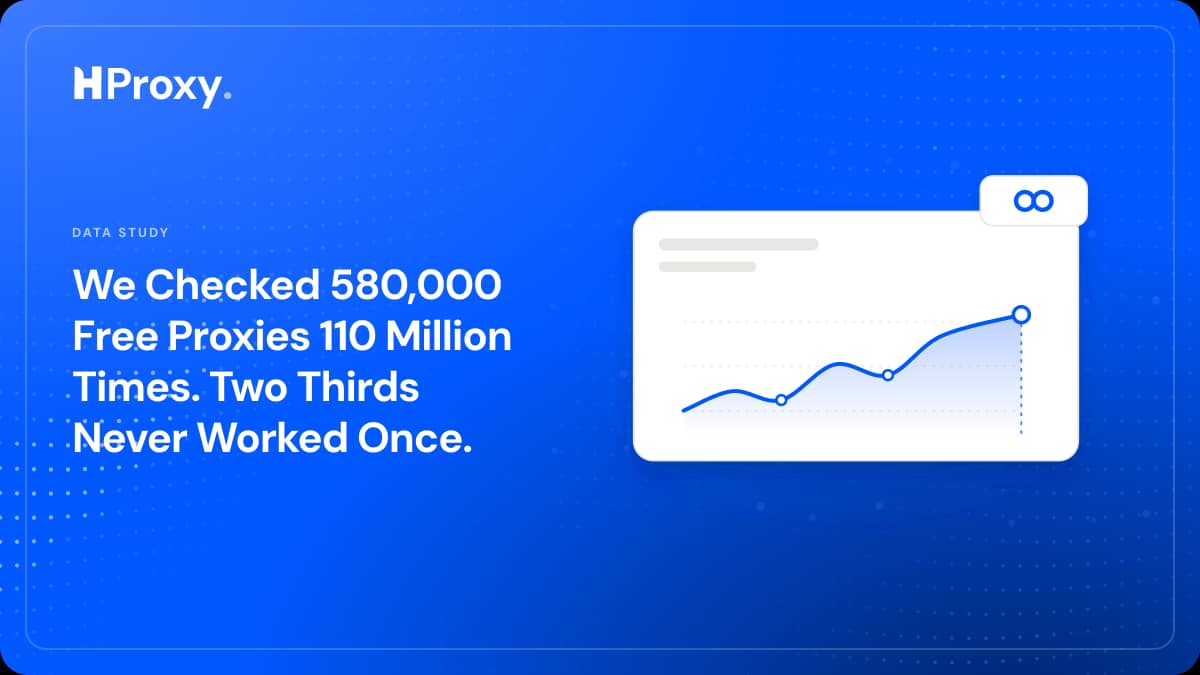
Every list in this category has the same underlying problem, which is decay. We measure it on our own network and publish it: 4023 alive right now out of 589918 ever discovered, median lifespan 145 hours. A list is only as good as its last check.
The questions behind the numbers
Networks age, so re-test quarterly
Every review of this market, this one included, is a photograph of a moving thing. Read the date on any comparison you find, and discount it heavily once it is more than a few months old.
Ten million addresses, and none of them yours
The number that matters is how many usable exits you can reach in the one country your job needs, this week. A pool total averages that away, which is why two providers with similar totals produce opposite results on the same site.
Why a cheap address is often a used one
An address you share carries the reputation of everyone else on it. That is acceptable for some work and fatal for anything involving a login. The price difference between shared and dedicated usually reflects exactly this.
The comparison, honestly framed
Here are the comparisons that survive contact with a real workload:
| Question to ask | My-Proxy | HProxy |
|---|---|---|
| Entry price | Not verified by us, read their page | From $0.44/GB, pay as you go |
| Does unused balance expire? | Their terms page answers this | Never |
| Minimum commitment | Worth confirming in writing before you commit | None |
| Identity checks | Read their current terms | Card orders are screened, and verification is sometimes requested |
| Targeting | Worth confirming in writing before you commit | Country, city and ISP |
| Free way to evaluate | Read their current terms | Free proxy list and proxy checker |
A table like this can rank the things that are written down. It cannot rank the thing that matters most, which is how the network behaves against the site you care about.
The test that beats this page
It is a small amount of money for an answer that is actually about your target.
- Take the smallest paid unit each provider will sell you. A free trial works for a first pass, though trials sometimes ride better pools than paid plans do.
- Fire the same batch through both on one afternoon. Different days are different conditions, and that ruins the comparison.
- Write down two numbers per provider: the share of requests that succeeded, and the traffic it cost.
- Take a handful of the addresses you were given and verify their country and type against a checker you do not control.
- Go with whichever performed, then measure again next quarter. Networks change underneath you.
Where else buyers look
If this one does not fit, these are the nearest comparable providers we have written up, each on the same terms as this page.
- Geonode (old list host) alternatives
- hideip.me alternatives
- Hideoxy alternatives
- iplocate/free-proxy-list alternatives
- Live Socks alternatives
- monosans proxy-list (GitHub) alternatives
What we sell, stated plainly
If you want our side of it: $0.44 per GB for residential, pay as you go, nothing expires, and the free tools stay free. We would rather you measured than believed us, which is why the test comes before this paragraph rather than after it.