A free proxy for school unblocks a site by routing your traffic through an outside server, so the network filter sees a connection to that server instead of a direct request to YouTube, Discord, or Instagram. It works when the filter blocks by destination, and it fails the moment the filter recognizes the proxy itself, which is why a free proxy for school or work so often stops working within days.
We run a proxy network and verify free proxies all day, so we can be straight about what actually happens here instead of selling you a miracle. This is how the unblocking works, why the block keeps coming back, which free options are worth trying, and the risks that most "top free proxy" lists never mention.
Can a free proxy actually unblock sites at school or work?
Sometimes, and it depends on two things: how the filter works, and how locked down your device is. Most school and office filters block by destination. They keep a list of domains and IP addresses (youtube.com, discord.com, instagram.com) and drop any request headed there. A proxy changes the destination the filter sees, so a request to a blocked site becomes a request to the proxy, and the filter waves it through.
That is the whole trick, and it has a ceiling. If the network also blocks known proxy and VPN addresses (many do), or if your laptop is a managed, school-owned device with monitoring software installed, a proxy may not help and can flag you to whoever runs the network. Before anything else: this is about how the technology works. Check your school or employer's acceptable use policy, because getting around a filter is a rules question on their network, not something a blog can green-light for you.
With that said, here is the machinery.
How a proxy unblocks a blocked site
A filter sits between you and the internet. Every request your browser makes passes through it, and it decides what to allow. Block by destination is the common setup: the filter reads where you are going and checks it against a blocklist.
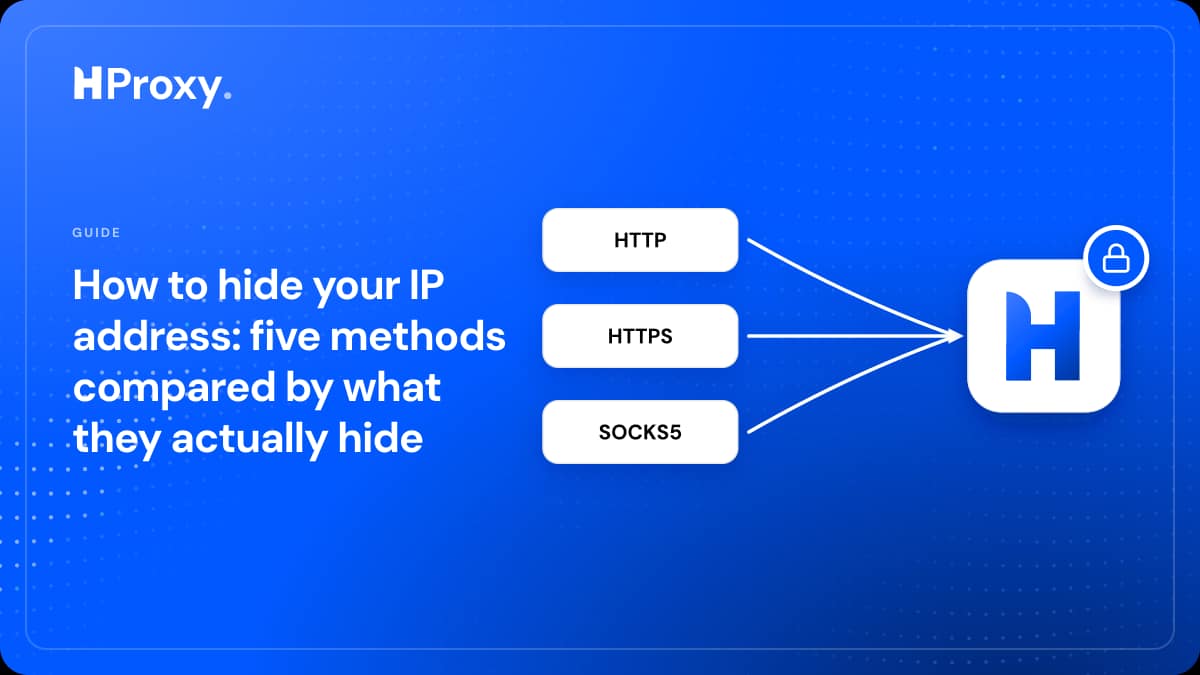
A proxy breaks that check by adding a hop. Instead of your browser talking to YouTube, it talks to the proxy, and the proxy talks to YouTube on your behalf. The filter sees only the first hop, the connection to the proxy, so the blocklist entry for youtube.com never gets a chance to match. The page comes back through the proxy to you.
Your browser
on the school network
School filter
sees a proxy, not youtube.com
Proxy
allowed destination
YouTube
loads through the proxy
Two details decide whether this actually works in practice:
- The proxy's own address must not be on the filter's blocklist. This is where most free proxies fall down, because the popular ones get discovered and blocked fast.
- The connection should be HTTPS. On an
https://site the page content is encrypted, so the filter (and the proxy operator) can see which host you reached but not the actual page. The reason it still sees the host is the TLS Server Name Indication extension (RFC 6066): your browser announces the hostname in the ClientHello before encryption starts, which is exactly what lets a destination filter match on it even over HTTPS. On a plainhttp://site, everything is readable, which matters a lot for safety, and we get to it below.
Two free ways to do it: a web proxy or a proxy list
There are two shapes of free proxy, and for unblocking at school they behave very differently. We wrote a full breakdown in free web proxy vs free proxy list, but here is the short version aimed at this exact job.
A web proxy is a website you open and browse through. You go to its page, paste the URL you want, and it loads that page for you through its own server. Nothing to install, nothing to configure, which is why it is the go-to on a locked-down school network where you cannot change any settings. It handles video and social sites better than most free options. The catch: it only covers the one tab you have open inside it, it usually shows ads, and its own domain gets added to school blocklists quickly, so the web proxy that worked last month is often blocked itself now.
A proxy list is a set of ip:port addresses you configure yourself in a browser or app. It gives you control (one entry can serve every tab, you can pick a country, you can point a tool at it), but it needs settings access, which a managed school device may not give you. Our free proxy list publishes verified entries that we re-check and refresh every few minutes, spanning 100+ countries across HTTP, HTTPS, SOCKS4, and SOCKS5, each row tagged with its country, speed, and anonymity grade.
The realistic options for unblocking a site at school or work, side by side:
| Option | Setup | Good at video and social | Survives the filter | Safe to log in through | Cost |
|---|---|---|---|---|---|
| Free web proxy | None, open a page | Often | Briefly, its domain gets blocked too | No | Free (ads) |
| Free proxy list entry | You configure it | Depends on the app | Minutes to hours | No | Free |
| Paid residential proxy | You configure it | Yes | Usually, it looks like a home IP | Safer, but not on a monitored device | From $0.44/GB |
Read it top to bottom and the trade-off is clear: free is fine for a quick look, and nothing free stays reliable for long.
Why the block keeps coming back
The frustrating pattern (a proxy works, then dies a few days later) comes from how the two sides of this fight are built.
Filters do not just block sites, they block proxies. Network filtering products ship with blocklists of known proxy and VPN IP addresses and refresh them constantly. The moment a free proxy or a popular web-proxy domain gets popular enough to be useful, it gets discovered, added to those lists, and blocked. Free proxies are also easy to spot because of what they are: most of them are datacenter IPs, addresses that belong to hosting companies rather than homes. A request to Instagram from an Amazon data center is an obvious tell, and filters and the sites themselves treat those addresses with suspicion. We took apart exactly how that detection works in how websites detect proxies.
The second reason is simpler: free proxies die on their own. Across 129,131,311 checks in our own data, the free pool churns constantly. Most entries are datacenter IPs, they go dead within minutes to hours, and only a small fraction work at any given moment. So even a proxy the filter never catches will often stop responding before the end of the week. No single list is to blame; that is just what free infrastructure does when nobody is paid to keep it alive.
The practical answer to both problems is the same: test right before you use it, and expect to swap entries. That is what our free proxy checker is for. It makes a real connection through the proxy and reports whether it is alive, how fast it is, its exit country, and its anonymity grade, so you are not pasting dead addresses into your settings one at a time.
The safety catch nobody mentions
Unblocking a site and doing it safely are two different questions, and the second one matters more on a school or work network than people think.
A proxy is a stranger's computer sitting in the middle of your traffic. On a plain http:// site, that operator can read everything that passes through: form fields, search terms, and worst of all session cookies and passwords. On https:// sites the content is encrypted and they cannot quietly read it, but they can still see every hostname you visit. The rule that keeps you out of trouble is simple: never log into a personal account (email, Instagram, your bank) through a free proxy, and stay on https. We laid out the full risk picture in are free proxies safe, and it is the one part of this article worth reading twice.
There is a second layer specific to school and work: the device itself. Many school laptops and work machines run monitoring or content-filtering software locally, on the device, before your traffic ever reaches the network. A proxy does nothing against that, because the monitoring happens on your side of the proxy. If the machine is managed by your school or employer, assume it can see what you do regardless of any proxy, and act accordingly.
What it can do
Load a blocked https page for a quick look
it changes the destination the filter sees
Work with no install on a locked device
a web proxy needs no settings access
Let you pick an exit country
on a configurable proxy-list entry
What it never fixes
A safe login to a personal account
the operator can read unencrypted traffic
On-device monitoring software
it runs before traffic reaches the proxy
Staying unblocked for more than a few days
the proxy gets discovered or dies
What actually holds up
If the job is genuinely disposable (glance at a blocked page from a computer you control, on https, with no login), a free proxy is the right tool and paying would be a waste. Use a web proxy for a single tab with zero setup, or grab an entry from a free proxy list if you have settings access, test it in the checker, and move on. That is exactly what free proxies are good at.
The moment the task stops being disposable (you need it to work every day, you are logging into something, you want a specific country that holds up), free stops being the answer, and forcing it just wastes your afternoon. That is the gap paid residential proxies fill: they route through real home IP addresses instead of data centers, so filters and target sites treat them as ordinary users, and they do not vanish mid-session. Ours start at $0.44/GB, pay as you go, so there is no subscription and no identity paperwork to get going. On a monitored school-owned device even that has limits (the device can still watch you), but on your own machine it is the step up that actually holds.
What a free proxy will and will not do at school
A free proxy for school or work can unblock YouTube, Discord, or Instagram when the filter blocks by destination, and it does it by changing the destination the filter sees. It will also get caught, or simply die, more often than any list wants to admit, and it is never the place for a login. Keep free to quick, throwaway, https-only tasks, and check every entry before you trust it.
Start with our free proxy list, which we re-check every few minutes across 100+ countries, and test anything you pull from it in the free proxy checker. If you need something that holds up day after day, our residential proxies start at $0.44/GB. Match the tool to the job, stay on https, and never route a password through a proxy you do not control.